
Pests
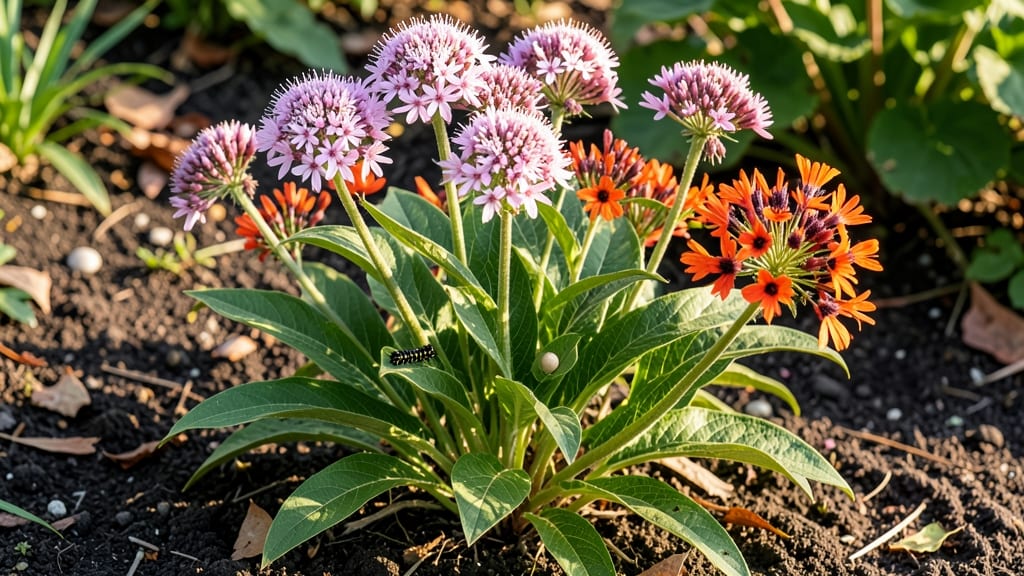
Monarch butterflies lay eggs exclusively on milkweed plants, as their caterpillars require this host plant to survive. Without milkweed, their lifecycle cannot complete, making it essential for their reproduction and habitat.
Monarch butterflies have evolved an incredible dependency on milkweed that goes beyond just food—it's their entire survival strategy. 🌿 The plant contains cardiac glycosides, toxic compounds that would kill most insects, but monarch caterpillars metabolize these toxins to become unpalatable to predators.
This unique adaptation means they can only thrive on milkweed species, with no acceptable alternatives in nature. What's fascinating is how this relationship has shaped both the butterfly's migration patterns and milkweed's spread across North America.
If you're trying to support monarch populations, planting the right milkweed varieties makes all the difference. Common milkweed thrives in open fields, while butterfly weed adapts well to gardens and dry conditions. Each species plays a role in the butterfly's lifecycle, from egg-laying to caterpillar feeding.
The key is providing continuous blooms throughout their migration season, typically from late spring to early fall in most regions.
💡 In This Article
- Why Milkweed Is the Only Host Plant for Monarch Butterfly Eggs
- Best Milkweed Varieties for Attracting Monarch Butterflies
Why milkweed is the only host plant for monarch butterfly eggs
The monarch butterfly's relationship with milkweed is one of nature's most specialized chemical partnerships. Milkweed plants contain cardiac glycosides—bitter, toxic compounds that would poison most insects. However, monarch caterpillars have evolved to not only tolerate but metabolize these toxins, storing them in their bodies as a defense mechanism.
This adaptation makes the caterpillars unpalatable to predators like birds, which learn to avoid their bright orange and black stripes after just one unpleasant encounter. 🔥 Without milkweed's unique chemistry, monarchs wouldn't survive past the caterpillar stage.
The process begins when female monarchs lay eggs exclusively on milkweed leaves. The eggs hatch into caterpillars that immediately start feeding on the plant's leaves, which contain up to 0.05% cardiac glycosides by dry weight.
What's remarkable is how these toxins become concentrated in the caterpillar's body—up to 100 times more potent than in the original plant tissue. This chemical transformation happens through specialized enzymes in the caterpillar's gut, creating a survival advantage that no other plant can replicate.
This evolutionary adaptation explains why monarchs can't use alternative plants. Other potential host plants, like parsley or dill, lack the necessary cardiac glycosides, leaving caterpillars vulnerable to predators.
The milkweed's toxicity also serves as a "quality control" mechanism—only the hardiest caterpillars survive to adulthood, ensuring the strongest monarchs pass on their genes. This chemical dependency has created a co-evolutionary arms race between monarchs and milkweed species over millions of years.
Regional milkweed variations add another layer to this relationship. For example, common milkweed (Asclepias syriaca) thrives in open fields and prairie habitats, while swamp milkweed (Asclepias incarnata) grows in wetter environments. Each species produces slightly different cardiac glycoside profiles, but all provide the essential nutrients monarch caterpillars need.
The butterfly's migration patterns have even synchronized with milkweed's seasonal growth cycles, creating a perfect ecological match.
What's particularly fascinating is how this relationship affects monarch behavior. Female butterflies can detect milkweed plants from up to 3 feet away using specialized sensory receptors, and they'll often inspect multiple plants before laying eggs. This precision ensures their offspring have the best chance of survival.
The plant's milky sap, which contains the cardiac glycosides, also acts as a natural pesticide against other insects, creating a nearly exclusive feeding ground for monarch caterpillars. 🌟
This biological specialization means monarchs can't adapt to other plants, even if they're nutritionally similar. For instance, while milkweed and foxglove both contain cardiac glycosides, monarchs won't lay eggs on foxglove because its chemical structure differs slightly.
The specificity of this relationship highlights how evolution shapes ecological niches—monarchs and milkweed have become so interdependent that their survival is intrinsically linked.