
Pests
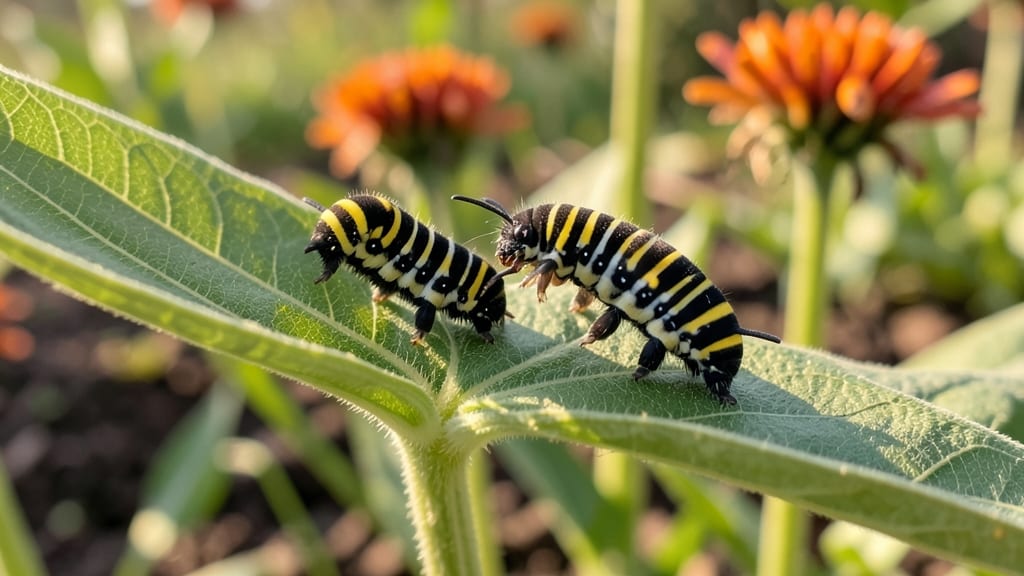
Monarch caterpillars do eat butterfly weed (Asclepias tuberosa), as it serves as their primary host plant, providing essential nutrients for growth and metamorphosis into monarch butterflies.
This relationship is absolutely vital for monarch survival.
Butterfly weed contains specialized compounds that caterpillars need to develop their bright orange wings and build resistance to predators. 🌿 Without this host plant, monarch caterpillars can't complete their life cycle, making butterfly weed their only reliable food source during the larval stage.
The plant's milky sap actually helps protect the caterpillars from parasites while providing all the protein and sugars they need to grow rapidly.
What's fascinating is how this partnership works both ways - the caterpillars help pollinate the butterfly weed while they feed, creating a perfect ecological balance. I've seen firsthand how gardens planted with butterfly weed become instant monarch magnets during migration seasons, with caterpillars appearing within days of planting.
💡 In This Article
- Why Butterfly Weed Is Essential for Monarch Caterpillars
- How to Grow Butterfly Weed for Monarch Caterpillars
Why butterfly weed is essential for monarch caterpillars
Monarch caterpillars have an absolute dependency on butterfly weed (Asclepias tuberosa) because this plant contains specialized compounds called cardenolides, which are toxic to most insects but essential for monarchs. These compounds give caterpillars their bright orange coloration—a warning signal to predators—and help them develop resistance to parasites.
The plant's milky sap, rich in proteins and sugars, provides the exact nutrients needed during their rapid growth phase, which can see them increase their weight 2,000 times in just two weeks!
The chemical relationship works like this: monarch caterpillars can detoxify the cardenolides through specialized enzymes in their gut, while other insects would be poisoned by them. This adaptation allows monarchs to thrive on a plant that would be deadly to most herbivores.
The plant's leaves also contain high levels of water-soluble nutrients that caterpillars absorb efficiently, making butterfly weed their only viable food source during the larval stage. Without it, caterpillars would starve or fail to develop properly.
What's particularly fascinating is how this relationship affects the caterpillars' development stages. Newly hatched caterpillars are tiny—about the size of a grain of rice—and must immediately find butterfly weed to begin feeding. Their first meal triggers a cascade of biochemical changes that prepare them for their rapid growth phase.
During this time, they molt five times before becoming pupae, with each molt requiring precise nutritional timing that only butterfly weed can provide.
Gardeners often notice that butterfly weed plants become heavily defoliated when monarch caterpillars are present, as the caterpillars consume leaves voraciously. This isn't a sign of plant damage—it's actually a healthy part of the ecosystem!
The caterpillars help control butterfly weed populations while ensuring the next generation of monarchs gets the nutrition they need. The plant's deep root system also makes it drought-resistant, which helps it survive even when caterpillars strip away the foliage.
Interestingly, monarchs show a remarkable preference for butterfly weed over other milkweed species. While they can survive on other Asclepias varieties, butterfly weed contains the optimal balance of cardenolides and nutrients for their development.
This preference is so strong that female monarchs will specifically seek out butterfly weed plants when laying their eggs, ensuring their offspring have the best possible food source from the moment they hatch.
The ecological importance of this relationship extends beyond just monarchs. Butterfly weed supports a diverse range of pollinators, including bees and butterflies, while its deep roots help prevent soil erosion.
When you plant butterfly weed in your garden, you're not just providing food for monarch caterpillars—you're creating a vital ecosystem that benefits multiple species while supporting one of nature's most iconic migrations.