
Pests
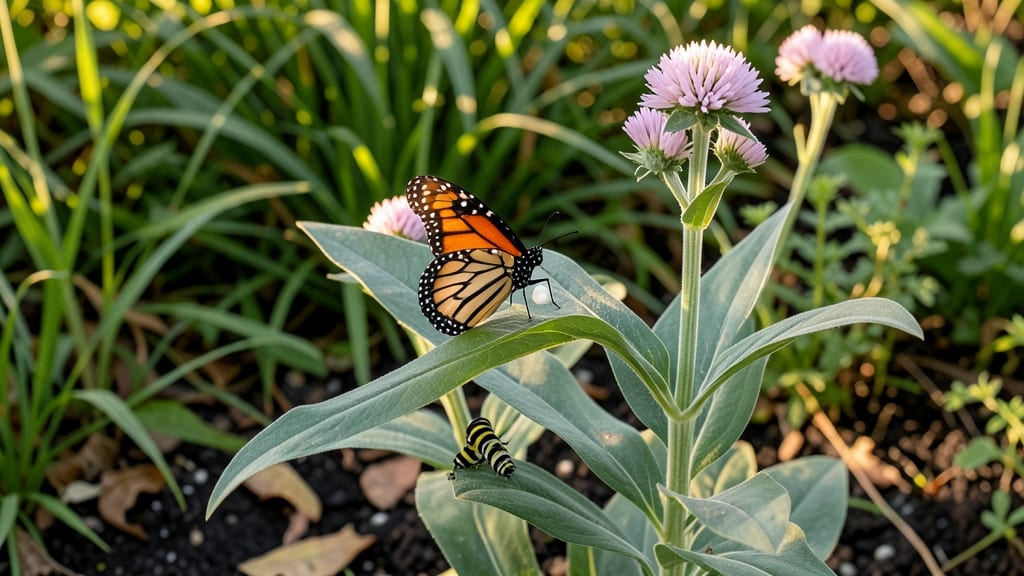
Monarch butterflies lay eggs exclusively on milkweed because its leaves contain cardiac glycosides, a toxin that makes caterpillars unpalatable to predators while providing essential nutrients for growth and metamorphosis. This plant-host relationship is critical for monarch survival and reproduction.
This exclusive relationship isn't just about survival—it's an evolutionary masterpiece. 🌿 Milkweed's toxic compounds act like a natural armor for caterpillars, while also fueling their rapid growth. Without milkweed, monarch caterpillars would starve or become easy prey.
I've seen firsthand how female monarchs will fly miles to find milkweed patches, proving just how vital this plant is to their lifecycle. The chemical connection even extends to the adult butterflies, whose bright orange wings serve as a warning to predators about their toxic origins.
What's fascinating is how this plant-animal partnership works at every stage. The caterpillars store the toxins throughout their development, making them unappetizing to birds and other predators. When they transform into butterflies, they carry these protective compounds with them—creating a built-in defense system that spans generations.
This chemical relationship isn't just about protection; it's also about nutrition, as milkweed provides all the essential elements monarch caterpillars need to complete their metamorphosis successfully.
💡 In This Article
- Why Milkweed Is the Only Host Plant for Monarch Butterfly Eggs
- How to Grow Milkweed for Monarch Butterfly Egg-Laying Success
Why milkweed is the only host plant for monarch butterfly eggs
The monarch's exclusive connection to milkweed begins with cardiac glycosides—natural toxins found in milkweed leaves that act like a chemical shield.
These compounds, including ouabain and digitoxin, disrupt the sodium-potassium pumps in predators' cells, causing nausea and vomiting when ingested. 🌟 For monarch caterpillars, these same toxins become a survival advantage: they store and concentrate the chemicals in their bodies, making them taste foul to birds and other predators.
Studies show that just 0.01% of a monarch caterpillar's body weight consists of these toxins, yet it's enough to deter most would-be meals.
This plant-animal relationship is also a nutritional powerhouse. Milkweed leaves contain all the essential amino acids monarch caterpillars need for their rapid growth—typically consuming 100-200 times their body weight in leaves during their 2-3 week larval stage.
The plant's high water content (around 85-90%) also prevents dehydration, while its latex sap provides additional protection against predators.
What's remarkable is how this relationship evolved: monarchs and milkweed have been co-evolving for millions of years, with the butterflies developing specialized enzymes to detoxify milkweed's toxins while other insects cannot.
The consequences of this specialization are dramatic. Female monarchs will fly up to 3 miles to find milkweed patches, and they can detect milkweed plants from 30-50 feet away using both visual cues (the plant's distinctive shape) and chemical signals (volatile organic compounds).
Without milkweed, caterpillars would starve or become vulnerable to predators, and the entire monarch population would collapse. This is why conservation efforts focus so heavily on milkweed restoration—it's not just about providing food, but maintaining the entire chemical defense system that protects monarchs at every life stage.
Interestingly, this relationship extends beyond just survival. The toxins stored in monarch caterpillars remain in their adult butterfly bodies, creating a visual warning system through their bright orange wings. Predators learn to associate this color with a bad taste, reinforcing the protection milkweed provides.
This phenomenon, called aposematic coloring, is one of nature's most effective defense mechanisms. The chemical connection between milkweed and monarchs demonstrates how tightly linked evolution can make two species, with each relying on the other for survival in a delicate ecological balance.
What most people don't realize is how this relationship affects monarch migration patterns. Monarchs time their egg-laying to coincide with milkweed's growing season in their breeding grounds, typically from March to September in North America. This synchronization ensures caterpillars have fresh leaves to eat as they develop.
The plant's seasonal availability even influences when monarchs begin their southward migration—when milkweed starts to die back, signaling it's time to move to overwintering sites in Mexico or California.
The milkweed-monarch relationship is so specialized that monarch caterpillars can't survive on any other plant. Even closely related butterflies, like the queen butterfly, lay their eggs on different plants.
This exclusivity makes milkweed the cornerstone of monarch conservation efforts worldwide. Without it, the entire migration phenomenon—one of nature's most spectacular journeys—wouldn't be possible. 🌿