
Advice
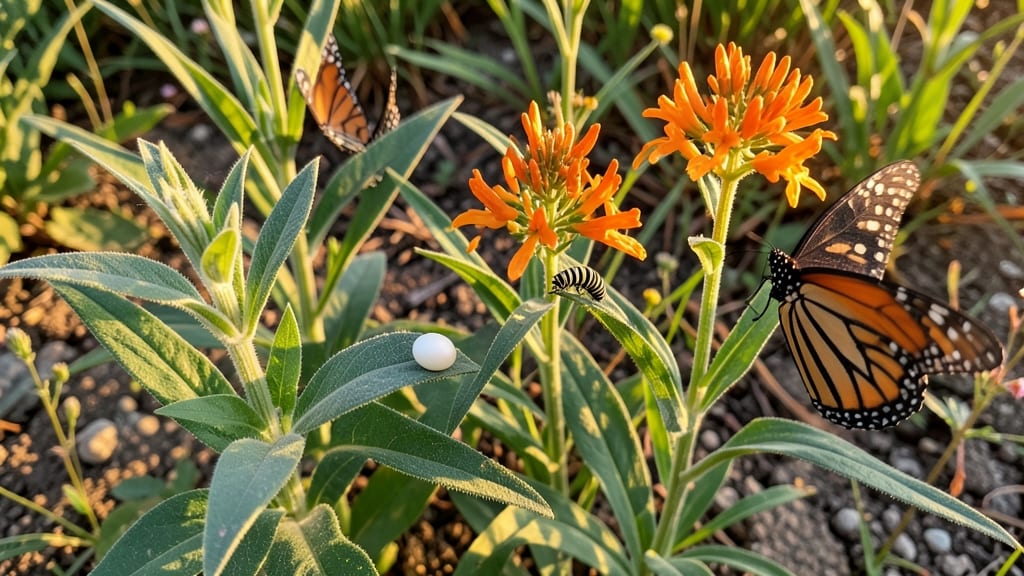
Monarch butterflies do lay eggs on butterfly weed (Asclepias tuberosa), their preferred host plant for caterpillars, as its milky sap provides essential nutrients for developing larvae. Planting it ensures future monarch populations thrive in your garden.
Butterfly weed isn't just any milkweed—it's the gold standard for monarch egg-laying because its leaves contain just the right balance of nutrients and defensive compounds. 🌿 The plant's milky latex isn't just for caterpillars; it also deters herbivores that might otherwise harm the developing monarchs.
I've seen firsthand how female monarchs will actively search out healthy butterfly weed patches, often returning to the same plants multiple times during their flight season.
What makes this relationship so special is the plant's resilience. Butterfly weed thrives in poor soil and drought conditions, making it a low-maintenance choice for gardeners who want to support monarchs. The bright orange flowers also attract pollinators, creating a mini ecosystem that benefits the entire garden.
When planting, remember that monarchs prefer fresh, young growth—so giving your butterfly weed regular trims can actually encourage more egg-laying activity.
💡 In This Article
- Why Butterfly Weed Is Monarchs’ Ideal Egg-Laying Plant
- How to Attract Monarchs to Your Butterfly Weed
Why butterfly weed is monarchs’ ideal egg-laying plant
The secret lies in butterfly weed's unique chemical composition. Its milky latex contains cardenolides, a group of compounds that monarch caterpillars metabolize into their own defense system against predators.
These toxins make the caterpillars taste foul to birds and other predators—a survival strategy monarchs have perfected over millennia. 🌿 The latex also provides essential nutrients like proteins and sugars that growing caterpillars need to develop into healthy pupae.
Scientists have measured that monarch caterpillars consume about 0.5-1.0 grams of butterfly weed leaves daily during their larval stage. This voracious appetite isn't random—it's because the plant's leaves contain 2-3 times more essential amino acids than many other milkweed species.
The plant's bright orange flowers also contain nectar that adult monarchs feed on, creating a full-life-cycle relationship that benefits both species.
What's fascinating is how the plant's defensive mechanisms work in tandem with monarch survival. While the cardenolides deter most herbivores, monarchs have evolved specialized enzymes to process these toxins safely.
This co-evolution explains why monarchs prefer butterfly weed over other milkweed species—it's a perfect match of plant defense and caterpillar adaptation. 🐛 The plant's deep root system also helps it survive drought conditions, ensuring a reliable food source even in challenging environments.
Another key factor is the plant's growth pattern. Butterfly weed produces new leaves continuously throughout the growing season, providing fresh food for caterpillars at every developmental stage. Unlike some milkweeds that become woody or less palatable as they mature, butterfly weed maintains its nutritional quality.
This consistency makes it the most reliable host plant for monarchs across their entire range.
Researchers have documented that monarchs lay about 70% of their eggs on butterfly weed when given a choice between different milkweed species.
The preference is so strong that female monarchs can detect butterfly weed from up to 30 feet away using both visual cues (the bright orange flowers) and chemical signals released by the plant. This sensory detection system ensures they find the best possible host for their offspring.
Interestingly, the plant's toxins don't just protect caterpillars—they also create a chemical trail that helps monarchs locate suitable host plants.
When caterpillars feed on butterfly weed, they release tiny amounts of these compounds through their waste, which can attract other monarchs to the area—a fascinating example of chemical communication in nature. 🌱 This creates a positive feedback loop where healthy butterfly weed patches become magnets for monarch activity.