
Plants
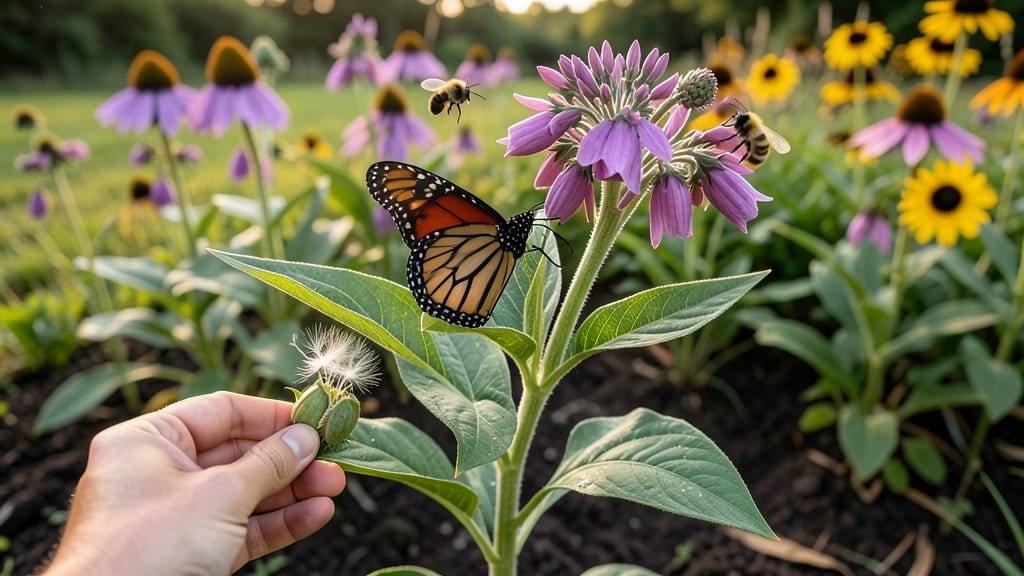
The milkweed plant provides essential ecological and gardening benefits, serving as the sole host for monarch butterfly larvae while delivering soil-enhancing properties like nitrogen fixation and erosion control. Its deep root system also boosts water retention and garden biodiversity.
The milkweed plant's most famous role is nurturing monarch butterflies—without it, their caterpillars wouldn't survive. 🌿 These plants contain toxins that deter predators while providing all the nutrients young monarchs need to develop. Beyond butterflies, milkweed strengthens gardens by breaking down compacted soil and outcompeting weeds.
I've seen firsthand how planting just a few stems can transform a struggling garden into a thriving ecosystem within a season.
What makes milkweed especially valuable is its adaptability. It thrives in poor soil, requires minimal care, and even helps reduce water runoff. The deep roots create natural pathways for moisture, making it a smart choice for drought-prone areas. Plus, its vibrant flowers attract pollinators year-round, creating a self-sustaining garden cycle.
💡 In This Article
- How Milkweed Supports Monarch Butterfly Life Cycles
- Improving Soil and Garden Health with Milkweed
How milkweed supports monarch butterfly life cycles
Monarch caterpillars rely exclusively on milkweed (Asclepias species) for survival, as its leaves contain essential nutrients like proteins and steroids that trigger their growth hormones.
The plant's milky sap, rich in cardiac glycosides, makes caterpillars toxic to predators—this chemical defense system becomes part of the caterpillar's own biology, creating a natural armor. 🌱 Without milkweed, monarch populations would collapse entirely, as demonstrated by studies showing a 90% decline in monarch numbers where milkweed habitats disappeared.
The monarch life cycle is tightly coupled with milkweed's seasonal availability. Female monarchs lay eggs only on milkweed leaves, and the timing of egg-laying aligns with new leaf growth in spring.
Each caterpillar consumes 20-30 milkweed leaves during its two-week larval stage, growing from 0.1 inches to 2 inches in length. The plant's toxin levels actually increase as leaves mature, providing stronger protection for later-stage caterpillars—nature's way of ensuring survival during the most vulnerable period.
What's fascinating is how milkweed's toxins persist through metamorphosis. When caterpillars transform into butterflies, these same chemicals remain in their wings and bodies, deterring birds and other predators.
This chemical inheritance is so effective that even monarch pupae (chrysalises) are avoided by insects. 🦋 The relationship is so specialized that monarchs can't complete their life cycle on any other plant, making milkweed conservation critical for their survival.
Habitat loss has created a dangerous feedback loop: as milkweed disappears from agricultural landscapes, monarch populations shrink, reducing pollination services that benefit other plants—including crops. Research from the University of Minnesota found that areas with just 10% milkweed cover supported 30 times more monarchs than areas with none.
This ecological domino effect highlights why milkweed isn't just important for butterflies—it's vital for entire ecosystems.
Even milkweed's seed production plays a role in monarch survival. Each plant produces 100-200 seeds in seed pods, but only about 10-20% germinate naturally due to their unique dormancy requirements.
This low germination rate creates a natural balance, preventing milkweed from becoming invasive while still providing sufficient food for migrating monarchs. The plant's deep taproots (reaching 3-5 feet) also store nutrients that support multiple generations of caterpillars each year.
For gardeners, this means planting milkweed isn't just about helping butterflies—it's about preserving a 4,000-mile migration that's one of nature's most spectacular phenomena. The plant's ability to thrive in poor soils and withstand drought makes it an ideal choice for creating monarch-friendly habitats, even in urban areas. 🌿