
Planting
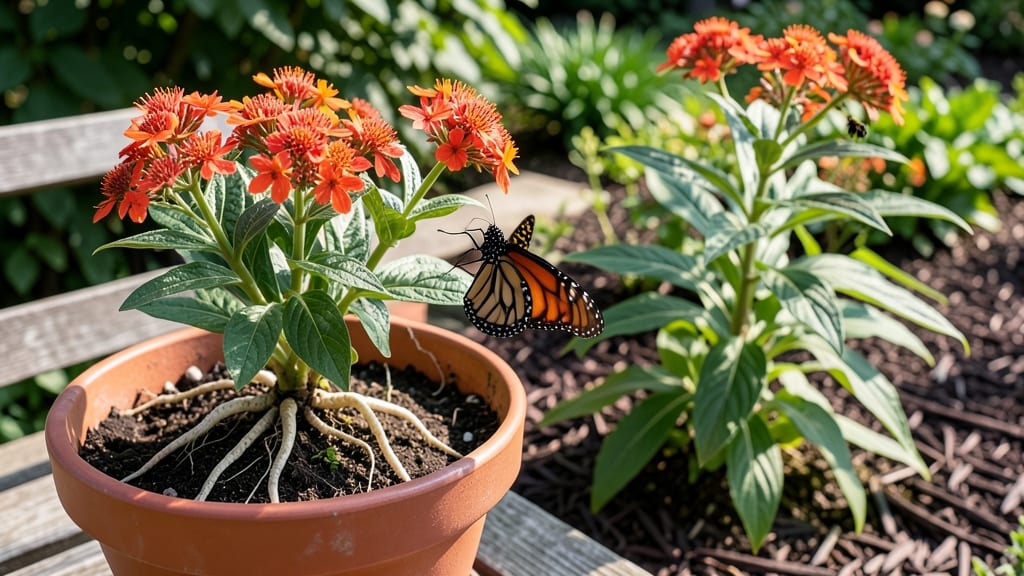
Mastering tropical milkweed plant care means welcoming monarch butterflies into your garden with vibrant red blooms and lush foliage. 🌟 This hardy perennial thrives in warmer climates and is the secret weapon for supporting monarch populations—just avoid the invasive Asclepias syriaca lookalikes that can harm local ecosystems.
It’s surprisingly low-maintenance once you get the basics right: full sun (at least 6 hours daily), well-draining soil (sandy loam works best), and moderate watering (about 1 inch per week).
Overwatering is the #1 killer, so let the top inch of soil dry out between waterings—this plant hates soggy roots.
By summer, you’ll see clusters of bright orange flowers that monarch caterpillars adore, plus thick, lance-shaped leaves perfect for their development. Prune back leggy stems in early spring to encourage bushier growth, and fertilize lightly with a balanced 10-10-10 mix once in spring—no need for heavy feeding.
Even in cooler zones, tropical milkweed survives as an annual, making it a foolproof choice for container gardens or borders. Just watch for aphids (spray with soapy water if needed) and avoid overcrowding—these plants reward space with bold, thorn-free stems that stand out all season.
📚 In This Guide
- What you need
- Instructions
- Tips and common mistakes
- Wrapping up and next steps
What you need
- ● Tropical milkweed plant: 1–3 nursery-grown plants (or seeds if starting from scratch)
- ● Seeds (if sowing): 5–10 seeds per pot or 100+ for direct sowing in garden beds
- ● Growing containers (if not planting in ground): 5–10 gallon pots with drainage holes (1 per plant)
- ○ Optional: Self-watering planters for low-maintenance care
- ● Soil: Well-draining potting mix (e.g., Miracle-Gro Potting Mix or Black Gold Natural & Organic)
- ● For garden beds: Amend native soil with compost (25–50% mix)
- ● Fertilizer: Balanced, slow-release fertilizer (10-10-10 or 20-20-20, 1 tbsp per plant)
- ○ Optional: Organic options like fish emulsion or worm castings
- ● Basic tools: Trowel or hand shovel
- ○ Garden gloves (optional but recommended—milkweed can be sticky!)
- ● Pruning shears (for trimming dead flowers/seeds)
- ● Watering supplies: Watering can or hose with gentle spray nozzle
- ○ Optional: Drip irrigation kit for automated care
- ● Location: Full sun spot (6+ hours of direct sunlight daily)
- ● Protection from strong winds (use stakes or trellises if needed)
- ● Pest control (preventative): Neem oil or insecticidal soap (for aphids/mealybugs)
- ○ Optional: Beneficial nematodes (for soil-dwelling pests)
Step-by-Step guide to growing and maintaining tropical milkweed
Here's how to cultivate thriving, thorn-free tropical milkweed that monarchs will flock to.
🌱 Step 1: Select the Right Location and Prepare the Soil
Tropical milkweed (Asclepias curassavica) thrives in full sun to partial shade—at least 6 hours of direct sunlight daily. I always plant mine in well-draining soil with a slightly sandy texture, as soggy roots invite fungal diseases. Amend heavy clay by mixing in 2-3 inches of compost and a handful of perlite to improve aeration.
This plant tolerates poor soil better than most milkweeds, but it won’t tolerate waterlogged conditions. If your garden has compacted soil, consider planting in a raised bed or large container with drainage holes. The roots need room to spread—give each plant 18-24 inches of space between neighbors to prevent competition.
☀️ Step 2: Plant and Establish for Optimal Growth
Start with healthy nursery-grown plants or seeds sown indoors 8-10 weeks before your last frost. Tropical milkweed germinates best in 70-80°F soil, so I use a seedling heat mat if starting early. Transplant outdoors after the last frost, spacing them 18 inches apart in rows 2 feet apart.
Water deeply at planting to settle the soil, then maintain 1 inch of water per week during establishment. You’ll know it’s thriving when new growth appears within 2-3 weeks—look for vibrant green leaves and sturdy stems. Avoid overhead watering to prevent fungal issues, especially in humid climates.
💧 Step 3: Water and Fertilize for Monarch-Friendly Health
Once established, tropical milkweed is drought-tolerant but produces more flowers with consistent moisture. Water deeply every 7-10 days during dry spells, letting the top 2 inches of soil dry out between waterings. Overwatering causes yellowing leaves, while underwatering leads to wilting and stunted growth.
Feed lightly in spring with a balanced, slow-release fertilizer (10-10-10)—too much nitrogen reduces flower production, which is critical for monarchs. I skip fertilizer after mid-summer to encourage natural dormancy. The plant’s deep taproot means it rarely needs supplemental nutrients once established.
✂️ Step 4: Prune and Maintain for Year-Round Appeal
Deadhead spent flowers to encourage continuous blooming, but leave seed pods for monarchs to lay eggs on. Cut back leggy growth in early spring to promote bushier, more compact plants. I prune mine back by one-third after the first flush of flowers to maintain vigor.
Watch for aphids or spider mites, which can stress the plant. A strong spray of water usually dislodges them, but severe infestations may require neem oil. Tropical milkweed is generally pest-resistant when healthy, but crowded plants attract more problems—keep spacing consistent.
🪴 Step 5: Overwintering and Long-Term Care
In colder climates, tropical milkweed may die back to the ground but regrows from the root crown in spring. Mulch with 2-3 inches of organic mulch in fall to protect roots from freezing. In warmer zones, it grows year-round with minimal care—just keep it well-watered during dry spells.
Divide mature clumps every 3-4 years to rejuvenate growth. Dig up the plant, separate the root sections, and replant immediately. This prevents overcrowding and ensures strong, healthy plants for monarchs. The more you maintain it, the more it rewards you with vibrant blooms and fluttering visitors.
Tips & tricks for thriving tropical milkweed
These practical insights will help you cultivate a thriving tropical milkweed that monarchs can't resist.
Sunlight Strategy: While tropical milkweed tolerates partial shade, the 6 hours of direct sunlight daily mentioned in Step 1 is non-negotiable for optimal flower production. I've found that positioning plants near the southern edge of your garden maximizes sunlight exposure while keeping them slightly shaded during peak afternoon heat. In containers, rotate them weekly to ensure even light exposure all around.
Soil Preparation Insight: The 2-3 inches of compost and perlite recommendation in Step 1 is brilliant for improving drainage, but don't overlook the importance of testing your soil's pH. Tropical milkweed prefers slightly acidic to neutral soil (pH 6.0-7.5). If your soil is heavy clay, consider mixing in 1 part sand to 3 parts soil to create the ideal sandy loam texture that prevents waterlogging.
Germination Secret: When starting from seeds, the 70-80°F soil temperature requirement in Step 2 is crucial. I've had the most success using a seedling heat mat set to 80°F and covering the tray with clear plastic wrap to create a mini greenhouse effect. This helps seeds germinate in just 7-10 days instead of the typical 2-3 weeks, giving you a head start on the growing season.
Pest Prevention: The 18-24 inches spacing between plants in Step 1 isn't just about preventing competition—it's your first line of defense against pests. Crowded plants create humid microclimates that attract aphids and spider mites. I've found that adding 1 teaspoon of diatomaceous earth around the base of each plant at planting time creates a natural barrier that deters many common garden pests without chemicals.
Pro Tips for Tropical Milkweed Plant Care
- These practical insights will help you cultivate a thriving tropical milkweed that monarchs can't resist.
- Sunlight Strategy: While tropical milkweed tolerates partial shade, the 6 hours of direct sunlight daily mentioned in Step 1 is non-negotiable for optimal flower production.
- Soil Preparation Insight: The 2-3 inches of compost and perlite recommendation in Step 1 is brilliant for improving drainage, but don't overlook the importance of testing your soil's pH.
Frequently asked questions
Got questions about keeping your tropical milkweed thriving?
Here are some of the most common concerns—plus quick, actionable answers to keep your plant (and those monarchs!) happy.
Can tropical milkweed survive winter in cold climates?
Unfortunately, no! Tropical milkweed (Asclepias curassavica) is not frost-hardy and will die back in temperatures below 30°F (-1°C). In colder zones, grow it as an annual or overwinter it indoors under bright light. Pro tip: If you’re in a mild-winter area, mulch heavily to protect roots!
How fast does tropical milkweed grow?
This plant is a speed demon—expect 12–24 inches (30–60 cm) per year, especially in warm, sunny conditions. With proper care, it can reach 5–6 feet (1.5–1.8 m) in a single growing season! Prune regularly to encourage bushier growth and more milkweed pods for butterflies.
Why are my tropical milkweed leaves turning yellow or spotted?
Yellowing leaves often signal overwatering or fungal issues (like powdery mildew). Brown spots? Likely aphids or mealybugs. Fix it: Improve drainage, trim affected leaves, and spray with neem oil. Pro tip: Space plants for airflow to prevent fungal spread!
Is tropical milkweed safe for monarchs year-round?
While it’s a great host plant, tropical milkweed can harbor _OE_ (a deadly parasite) if left in the ground over winter. For monarch health, replace it with native milkweeds (like Asclepias tuberosa) in fall or grow tropical milkweed in containers to remove it before cold weather.
Can I grow tropical milkweed in containers?
Absolutely!
Containers work well for small spaces or climates with harsh winters. Use a 5-gallon pot minimum with drainage holes, well-draining soil, and full sun. Bonus: Move pots indoors or to a garage in winter to extend the plant’s life. Just avoid overcrowding—root-bound plants struggle!
Wrapping up and next steps
Caring for a tropical milkweed plant is a rewarding way to support monarch butterflies while adding beauty to your garden! 🌿 With the right soil, sunlight, and pruning, this hardy plant thrives year-round in warmer climates—even attracting those iconic orange wings to your yard.
Start small, stay consistent, and soon you’ll be enjoying a thriving, butterfly-friendly oasis.
Ready to take the next step? Pick your plants, prep your space, and watch your garden transform into a monarch magnet! 🦋