
Trees
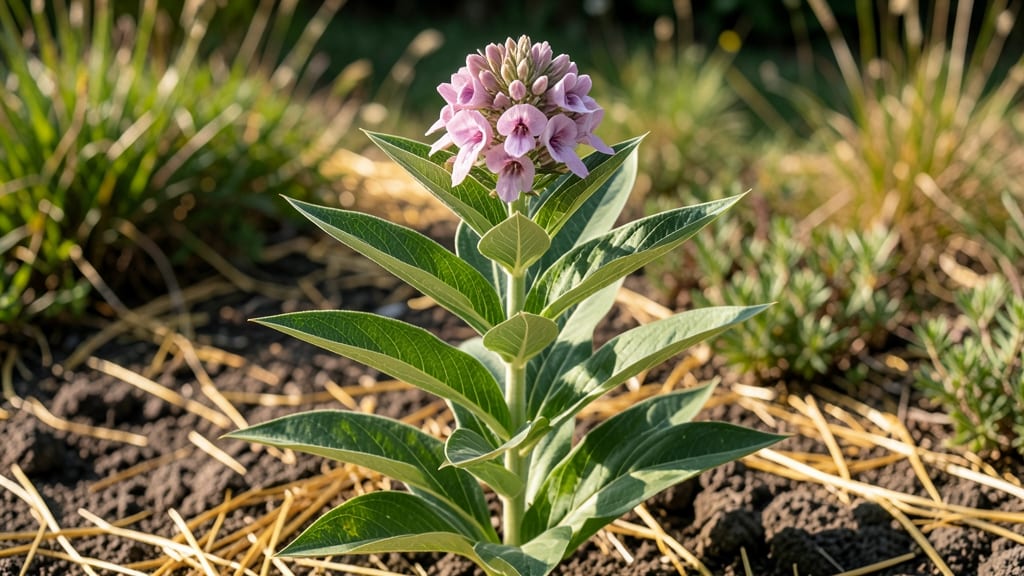
Finding pictures of common milkweed reveals its signature oval leaves with milky sap, clusters of pinkish-purple flowers, and distinctive spiky seed pods. Each growth stage—from sprout to seed—shows unique visual markers that help gardeners and nature enthusiasts identify it accurately in fields or cultivated spaces.
This hardy perennial stands out with its glossy, lance-shaped leaves that grow in opposite pairs along sturdy stems, often reaching 2-4 feet tall. 🌱 The flowers, which bloom in late spring to early summer, form dense umbels that attract monarch butterflies, while the seed pods develop into woody cylinders filled with fluffy seeds.
What makes identification easier is how each stage contrasts sharply with its surroundings—whether the fresh green of new shoots or the dramatic purple of mature blooms.
For photography, I recommend capturing close-ups of the flower clusters and seed pods when they're fully developed, as these stages show the most striking details.
A macro lens helps reveal the intricate textures of the leaves' veins and the fuzzy seeds inside the pods, while early morning light minimizes shadows for crisp shots.
💡 In This Article
- Milkweed Leaf, Flower, and Pod Visual Breakdown by Growth Stage
- Best Tools for Photographing Milkweed in Nature
Milkweed leaf, flower, and pod visual breakdown by growth stage
The journey of common milkweed begins with its seedling stage, where you'll spot tiny, rounded leaves with a waxy texture that appear in clusters. These early leaves are typically 1-3 inches long and grow in a rosette pattern close to the ground, creating a dense, ground-hugging appearance.
The milky sap—visible when leaves are broken—is already present here, acting as a natural defense against herbivores by making the plant unpalatable. 🌱
As milkweed enters its vegetative stage, the leaves elongate into their iconic oval-lance shape, measuring 3-6 inches long and 1-3 inches wide. The edges develop a slight waviness, and the leaves grow in opposite pairs along the stem, creating a symmetrical pattern.
This stage is where milkweed resembles its look-alike, swamp milkweed, but common milkweed's leaves are typically less hairy and have a smoother surface.
The flowering stage is the most visually striking, featuring dense clusters of pinkish-purple blooms that form umbrella-like shapes called umbels. Each cluster contains 50-100 flowers, with individual blooms measuring 1/4 inch wide.
The flowers emit a faint, sweet fragrance that attracts pollinators like monarch butterflies. What sets common milkweed apart is its smooth, green stems that lack the fuzzy texture found in other milkweed species.
Finally, the seed pod stage transforms the plant into a textured masterpiece. The pods start as green, football-shaped structures that gradually turn brown and split open to reveal fluffy, parachute-like seeds.
Each pod can contain 100-200 seeds, and when mature, they release seeds with a silky, cottony tuft that catches the wind. This stage is crucial for monarch butterfly conservation, as the seeds provide the only food source for their caterpillars.
To distinguish common milkweed from similar plants, focus on these key traits: smooth stems, less hairy leaves, and dense flower clusters. Unlike butterfly weed, which has orange flowers, common milkweed's blooms are distinctly pinkish-purple.
The milky sap is another dead giveaway—no other common milkweed look-alike produces this characteristic fluid. 🌿
For photography, the flowering and seed pod stages offer the most dramatic visuals. The contrast between the pinkish-purple flowers and the green foliage, as well as the textured pods, creates striking compositions.
Capture these stages in early morning light to avoid harsh shadows and emphasize the plant's natural colors.