
Advice
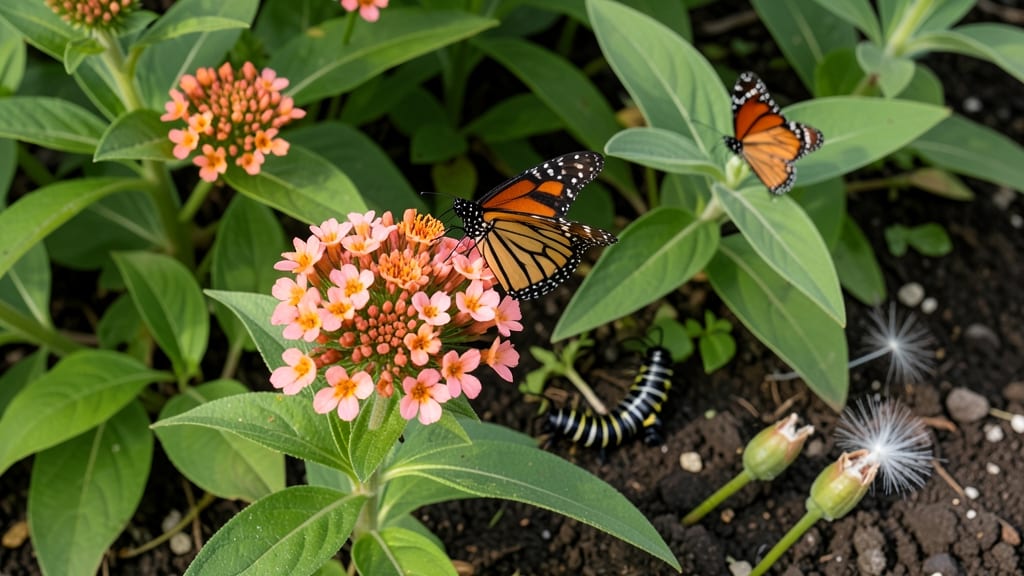
The milkweed monarch butterfly relationship is essential for survival, as milkweed plants serve as the sole host for monarch caterpillars to feed on and lay eggs, while their toxic compounds protect butterflies from predators and support their legendary migration patterns.
The monarch butterfly's life cycle completely depends on milkweed plants—without them, these iconic orange-and-black butterflies couldn't survive. 🌿 These plants contain toxic compounds called cardenolides, which monarch caterpillars consume and store, making them poisonous to predators like birds.
This unique partnership also fuels their incredible 3,000-mile migration, as the plants provide the energy-rich leaves needed for caterpillar growth. Without milkweed, monarch populations would collapse, making conservation efforts critical for their survival.
What makes this relationship even more fascinating is how milkweed's toxins become a survival advantage for monarchs. 🦋 These same compounds that would poison other animals instead act as a protective shield, allowing monarchs to thrive while deterring predators.
This evolutionary adaptation highlights how nature's partnerships can create mutually beneficial outcomes—something gardeners can replicate by planting milkweed to support local monarch populations.
💡 In This Article
- Why Milkweed Is the Monarch’s Only Host Plant
- How to Grow Milkweed for Monarch Butterflies
Why milkweed is the monarch’s only host plant
The monarch butterfly's dependence on milkweed isn't just preference—it's a biological imperative. Monarch caterpillars, or larvae, have evolved to exclusively feed on milkweed species (Asclepias genus) because these plants produce cardenolides, a group of cardiac glycosides that are toxic to most animals.
These compounds disrupt the sodium-potassium pump in animal cells, causing fatal heart arrhythmias in predators like birds. However, monarchs have developed a unique resistance to these toxins, allowing them to not only survive but thrive on milkweed's chemical defenses. 🌿
The relationship goes deeper than just food—it's a chemical partnership. When monarch caterpillars consume milkweed leaves, they sequester these cardenolides in their bodies, making them unpalatable and even toxic to predators.
This chemical storage begins during the caterpillar stage and continues into adulthood, where the toxins remain in the butterfly's wings and body. Studies show that monarchs can contain up to 0.5-1.0 mg of cardenolides per gram of body weight, a concentration that would be lethal to most other insects.
This toxic armor is so effective that predators like blue jays and black-headed grosbeaks will actively avoid monarchs after just one unpleasant encounter.
The evolutionary co-dependence between milkweed and monarchs is a prime example of mutualism, where both species benefit from their relationship. Milkweed plants have evolved to produce these toxins as a defense mechanism against herbivores, but monarchs have adapted to not only tolerate but require these compounds for their survival.
Without milkweed, monarch caterpillars would starve, and without monarchs, milkweed's seeds wouldn't be dispersed as effectively—though this dispersal is secondary to the primary survival benefit. The chemical synergy between the two creates a nearly impenetrable survival strategy that has persisted for millions of years. 🦋
This specialized diet also plays a crucial role in the monarch's legendary migration. The energy-rich milkweed leaves provide the necessary nutrients for caterpillars to grow rapidly, reaching their full size in just 2-3 weeks.
This rapid growth is essential for building the fat reserves needed for the adult butterfly's 3,000-mile journey to Mexico or California. The cardenolides stored during the caterpillar stage continue to serve as a protective shield during migration, reducing predation risks along the perilous flight path.
Without milkweed's unique combination of nutrients and toxins, the monarch's migration would be impossible.
What makes this relationship even more fascinating is the genetic specificity. Monarchs have evolved to recognize and prefer milkweed plants over hundreds of other potential host plants. Their antennae contain specialized receptors that detect the specific chemical signatures of milkweed, guiding them to lay eggs only on these plants.
This precision ensures that their offspring will have access to the necessary toxins and nutrients from the moment they hatch. The result is a finely tuned biological system where every stage of the monarch's life cycle is intricately linked to milkweed's survival strategies. 🌱
For conservationists, understanding this relationship highlights why milkweed loss is such a critical threat to monarch populations. Habitat destruction and herbicide use have reduced milkweed availability by up to 90% in some agricultural regions, directly correlating with declining monarch numbers.
By protecting milkweed, we're not just preserving a plant—we're safeguarding the entire monarch life cycle, from egg to migration-ready butterfly. This deep biological connection makes milkweed the cornerstone of monarch survival. 🌟