
Plants
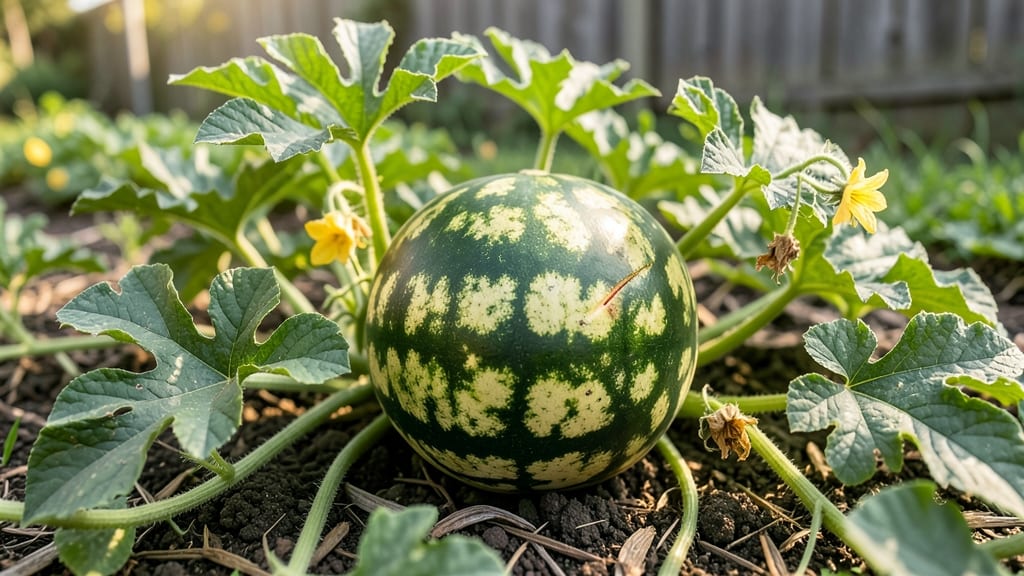
Planting watermelon in Michigan after the last frost—typically between mid-May and early June—is your best shot at juicy, vine-ripened fruit before summer’s end.
But here’s the catch: Michigan’s short growing season means one wrong move—planting too early or too late—and you’ll either lose seedlings to frost or watch your vines struggle in the heat. I’ve seen both happen, and neither is pretty.
The key isn’t just the calendar—it’s the soil temperature. Watermelons need at least 70°F to germinate, and cooler Michigan soils can stall seeds for weeks. Below, I’ll show you how to time it right, from testing soil warmth to picking the perfect spot in your garden.
You’ll also discover how to stretch your season with mulch, row covers, and heat-tolerant varieties—because even in USDA zones 5b-6b, a little strategy goes a long way toward that first sweet slice of summer.
Michigan’s ideal watermelon planting windows by region
Michigan’s diverse climate means your watermelon planting dates depend heavily on whether you’re in the Upper Peninsula, Northern Lower Peninsula, or Southern Michigan. Each region has unique last frost dates and heat zone compatibility, so blindly following a one-size-fits-all schedule will leave you disappointed.
I’ve grown watermelons across all three regions, and the difference in timing is night and day—literally, since USDA zones 5b-6b can vary by 2-3 weeks from south to north.
The golden rule? Plant watermelons after your area’s last frost date AND when soil temps reach at least 70°F at 4-inch depth. In Michigan, this typically falls between late May and early June, but Northern gardeners often need to wait until mid-June.
Below, I’ll break down the exact windows for each region, including whether to direct sow or transplant seedlings for the best results.
| Region | Last Frost Date | Ideal Planting Window | Soil Temp Requirement | Method | Notes |
|---|---|---|---|---|---|
| Southern Michigan (e.g., Detroit, Kalamazoo) | Mid-April to early May | Late May to early June | 70°F+ at 4" depth | Direct sow OR transplant | Longest growing season; try early varieties like 'Sugar Baby' (65 days). |
| Northern Lower Peninsula (e.g., Grand Rapids, Traverse City) | Early to mid-May | Early to mid-June | 70°F+ at 4" depth | Transplant seedlings (start indoors 3-4 weeks before) | Cooler nights; use black plastic mulch to warm soil faster. |
| Upper Peninsula (e.g., Marquette, Houghton) | Late May | Mid-June to early July | 75°F+ at 4" depth (warmer needed) | Transplant hardened seedlings | Shortest season; choose fast-maturing varieties like 'Black Diamond' (70 days). |
For Southern Michigan, you’ve got the most flexibility—both direct sowing and transplanting work well. I’ve had success with direct sowing in late May, especially for fast-maturing varieties like 'Sugar Baby' (65 days to harvest).
The key is to wait until the soil is consistently warm, as even a few cool nights can stall germination. If you’re transplanting, start seeds indoors 4-6 weeks before your target planting date using biodegradable pots to avoid root disturbance.
In the Northern Lower Peninsula, where nights stay cooler longer, transplanting seedlings gives you a 2-3 week advantage. Start seeds indoors under grow lights in early May, then harden them off for 10-14 days before planting in early June.
Use black plastic mulch to accelerate soil warming—this can add 5-7°F to soil temperature, making all the difference in a shorter season. I’ve seen seedlings emerge 3 days faster with this trick alone.
The Upper Peninsula presents the biggest challenge due to its shorter growing season and cooler summers. Here, transplanting is non-negotiable—direct sowing rarely works because the soil stays too cool too long.
Choose heat-tolerant, fast-maturing varieties like 'Black Diamond' (70 days) or 'Crimson Sweet' (80 days), and start seeds indoors in late April. Acclimate seedlings outdoors for 2 weeks before transplanting in mid-June, and use row covers for the first 2 weeks to protect from late frosts.
Pro tip: No matter your region, avoid planting watermelons in cold, wet soil. Excess moisture leads to rot and fungal diseases, which can wipe out seedlings before they even sprout.
Amend your soil with compost or aged manure 2-3 weeks before planting to improve drainage, and raise beds if your garden has heavy clay. I’ve lost entire seed batches to damping off in poorly drained soil—don’t let that be you!
If you’re in a microclimate (like a sunny hillside or near a large body of water), adjust your planting window accordingly. For example, Detroit’s urban gardens often warm up 1-2 weeks earlier than rural areas due to the urban heat island effect.
Monitor your local Michigan State University Extension frost maps and use a soil thermometer for real-time data—this is the only way to get it right every time.
Remember, watermelons need 90-100 days to mature, so count backward from your average first frost date (mid-October in most of Michigan). If your math shows a harvest window shorter than 90 days, opt for smaller, faster varieties or consider container growing in warm microclimates.
With the right timing and a little regional know-how, you’ll be slicing into homegrown watermelons before summer’s end—no matter where in Michigan you call home.
Soil temperature rules for watermelon germination success
Watermelon seeds are finicky about soil temperature, and planting too soon can leave you with weak seedlings or no germination at all. For Michigan gardeners, understanding these critical thresholds is the difference between a bountiful harvest and wasted effort.
The ideal germination temperature for watermelon seeds sits between 70°F and 95°F, with 80°F being the sweet spot for speedy sprouting.
Cold soil below 60°F can stall germination completely, while temperatures above 95°F may cause seeds to rot before they sprout. Since Michigan’s spring soil warms unevenly—especially in USDA zones 5b-6b—timing your planting to match these conditions is essential.
I’ve learned the hard way that rushing seeds into chilly soil leads to disappointment, so patience here pays off big time.
⚠️ Critical Warning: Cold Soil Kills Germination
If your soil hasn’t hit 70°F at a 4-inch depth, wait to plant. Watermelon seeds won’t germinate below this threshold, and even if they do, seedlings will be weak and prone to disease. Use a soil thermometer (just $10) to check daily—especially in Michigan’s unpredictable springs.
To test your soil’s readiness, bury a soil thermometer 2-4 inches deep in a shaded spot (direct sun skews readings). Check it for 3 consecutive days between 9 AM and 11 AM—this is when soil temps peak naturally.
In Southern Michigan, this usually aligns with late May to early June, while Northern regions may need to wait until early June.
If your soil is still too cool, try these tricks: Lay down black plastic mulch 1-2 weeks before planting to warm the soil faster, or use biodegradable heat mats for seed trays.
I’ve had success with both methods, especially in cooler years. Just remember, heat mats alone won’t compensate for cold soil—they’re a supplement, not a replacement.
Slow germination? Don’t panic—it could mean your seeds need a warmth boost. Soak seeds in lukewarm water for 24 hours before planting, or mix them with sand to improve contact with warm soil.
In my experience, older seeds (over 2 years) also germinate more slowly, so always plant fresh seeds for the best results.
Once seedlings emerge, maintain soil temps between 75°F and 85°F for robust growth. Use drip irrigation or soaker hoses to keep roots warm and moist without shocking the plants. And if a late frost threatens? Cover young plants with frost blankets—just remove them during the day to avoid overheating.
Pro tip: Watermelons thrive in consistent warmth, so avoid planting near reflective surfaces like white fences or concrete, which can cause temperature swings. Instead, choose a south-facing bed with loose, well-draining soil—this combo gives your melons the stable conditions they crave.