
Picking
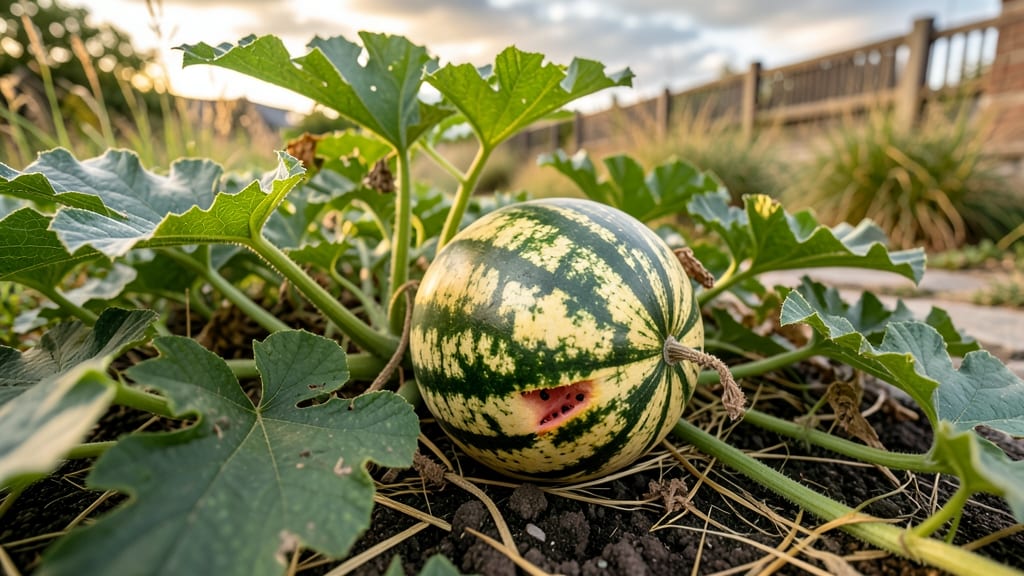
Ripe watermelon on the vine means sweet, juicy perfection 🍉 — but one wrong move, and you end up with a mealy mess or a rock-hard disappointment.
Picture this: you’ve nurtured your watermelon plants all season, and now the moment of truth arrives. How do you know it’s actually ready? The answer isn’t just about size or color—it’s a mix of visual cues, a little science, and timing that most gardeners miss until it’s too late.
In this guide, I’ll break down the three field-tested checks that tell you when your watermelon is finally ripe—no guesswork required. We’re talking field spot color, stem dryness, and the classic thump test, plus how to adjust for your local climate.
Skip the trial-and-error harvests and learn how to pick the perfect watermelon every time, whether you’re growing Sugar Baby or Crimson Sweet. Your taste buds (and your compost pile) will thank you.

How to check watermelon ripeness on the vine using 3 key visual cues
Nothing beats the satisfaction of harvesting a perfectly ripe watermelon straight from the vine—juicy, sweet, and bursting with flavor. But how do you know it's ready without cutting into it?
The answer lies in three field-tested visual cues that reveal ripeness before the fruit even detaches. I’ve used these methods for years, and they’ve never failed me.
First, let’s address the most common mistake: assuming size equals ripeness. A watermelon can grow large but still be hard and bland inside. Instead, focus on these three non-negotiable signs that your watermelon is finally ready to pick.
These cues work for heirloom varieties like Crimson Sweet and hybrid types such as Sugar Baby, though color variations exist between them.
Pro Tip: Check your watermelons every 2-3 days in the final weeks of growth. Ripening happens quickly, and missing the window can mean the difference between a perfect harvest and a disappointing mess. Now, let’s dive into the three key indicators.
| Ripeness Indicator | What to Look For | Unripe vs. Ripe |
|---|---|---|
| Field Spot Color | Yellow/cream patch on the side touching the ground |
Unripe: White or pale green Ripe: Cream/yellow (like a ripe cantaloupe) |
| Tendril Dryness | Brown, crispy tendrils near the stem |
Unripe: Green, flexible tendrils Ripe: Dry, brittle tendrils (like straw) |
| Thump Test | Hollow sound when tapped with knuckles |
Unripe: Thud (solid, dull sound) Ripe: Deep, echoing "thwack" (like a drum) |
| Bonus: Rind Color | Deep, consistent hue (varies by variety) |
Unripe: Patchy, dull color Ripe: Vibrant, uniform (e.g., Sugar Baby: light green stripes) |
The first cue is the field spot color, a telltale sign that’s often overlooked. Look at the bottom of the watermelon, where it rested on the ground. If it’s cream-colored or yellow, your watermelon is ripe.
This spot develops as the fruit matures and absorbs sunlight from below. In heirloom varieties, this spot might be more pronounced, while hybrids like Charleston Gray often have a softer transition.
Next, check the tendrils near the stem. These little vines tell you more than you might think. When ripe, they’ll be dry, brown, and crispy—almost like straw. If they’re still green and flexible, the watermelon needs more time.
This is a critical clue because it indicates the vine is shutting down its nutrient supply to the fruit, a sign of ripeness. I’ve seen gardeners miss this cue and pick watermelons that were still hard and seedy inside.
The thump test is the most reliable method, and it’s simple: tap the watermelon with your knuckles. A ripe watermelon will sound hollow and deep, almost like a drum. If it sounds dull or thuds like a solid object, it’s not ready yet.
This test works because the flesh becomes more juicy and less dense as it ripens. For extra accuracy, tap near the stem end—the sound will be clearest there.
Regional variations matter when it comes to rind color. In hotter climates, like USDA Zone 9 or 10, watermelons often ripen faster and develop deeper colors. For example, Crimson Sweet will have a richer red stripe when fully ripe, while Sugar Baby varieties stay lighter green.
If you’re growing in cooler zones (like Zone 7 or 8), the color might take longer to develop, so don’t rush—wait for all three cues to align.
One common mistake I see is relying only on size. A watermelon can reach its expected weight but still be underripe inside. Always cross-reference the field spot, tendril dryness, and thump test before picking.
And remember: overripe watermelons can get mushy and develop off-flavors, so timing is everything. If you’re unsure, wait another day—your patience will pay off with a sweeter, juicier harvest.
Finally, consider the growth conditions in your area. Watermelons grown in high heat (above 90°F) may ripen faster, while cooler temperatures can slow the process.
If you’re in a shorter growing season, like the Pacific Northwest, prioritize the thump test and tendril dryness over color, as cooler weather can mute rind vibrancy. Adjust your expectations based on your local climate, and you’ll never miss a ripe watermelon again.
Now that you
Common mistakes that trick gardeners into picking watermelons too early (or late)
Even experienced gardeners can fall for common watermelon ripeness traps. The green-stem test is the most famous myth—many assume a green stem means unripe, but dryness, not color, signals readiness.
I’ve picked watermelons with yellow stems that were still sour inside, and I’ve waited too long on others with green stems that were perfectly sweet.
Another trick is assuming size equals ripeness. A watermelon can reach its expected weight (like 20 pounds for a Sugar Baby) but still taste bland. Meanwhile, smaller melons sometimes ripen faster in hotter climates.
I once harvested a 6-pound heirloom that was sweeter than a 30-pound hybrid because of late-summer heat waves.
Weather plays a huge role in ripening. Cool nights or unpredictable rain can slow sugar development, while consistent 90°F+ days speed it up. I’ve seen watermelons ripen in 50 days in Texas summers but take 90 days in cooler Pacific Northwest zones. Ignoring your local climate leads to wasted harvests.
🚨 Warning Signs Your Watermelon Is Ripe (or Overripe)
- ✅ Creamy yellow spot at stem end (not green!)
- ✅ Hollow thump when tapped—like a drum
- ✅ Dry, brown stem near the vine (not green)
- ❌ Soft spots or wrinkled rind = overripe
- ❌ Pale, uneven color = underripe
Pro Tip: Never cut into a watermelon to test—this invites rot. Use these non-destructive checks instead!
Even field spot color can be misleading. Some heirloom varieties (like Moon and Stars) stay green until fully ripe, while hybrids often develop yellow or tan patches weeks before they’re ready.
I once grew Black Diamond watermelons that looked ripe by color but needed 10 more days to develop their signature sweetness.
Here’s my warning signs checklist to avoid mistakes: ☑️ Stem dryness (not green!) = ready ☑️ Heavy weight for its size = water-filled and ripe ☑️ Uniform color (no pale patches) = mature ❌ Soft spots = rot or overripe ❌ Sour smell near the stem = underripe ❌ Cracked rind = too late to harvest
Remember: Patience pays off. I’ve learned the hard way that waiting an extra week often means the difference between watery flesh and bursting sweetness. Use these checks, and you’ll never waste another watermelon again! 🍉