
How To
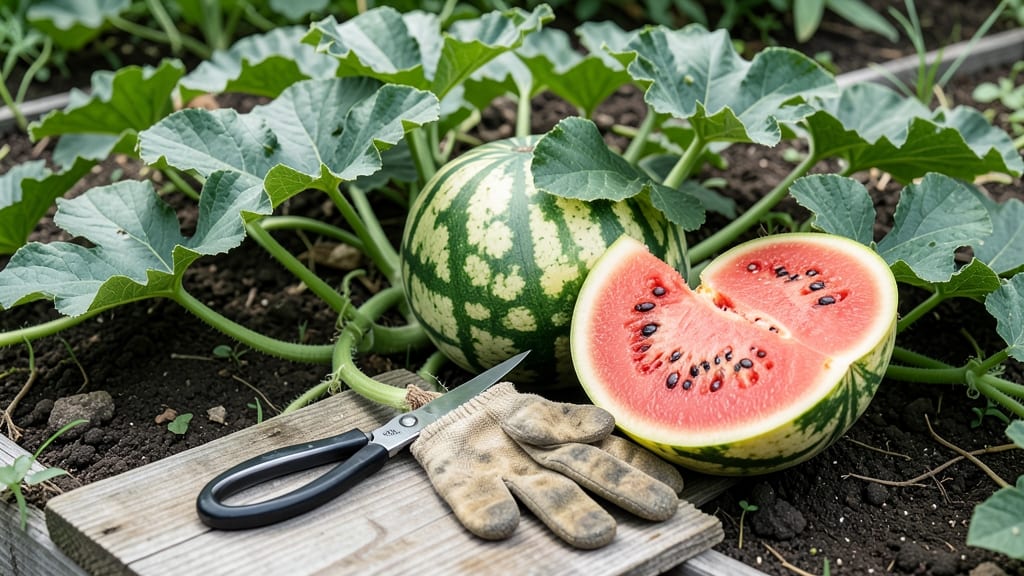
To know when your watermelon is ready to pick, watch for three key signals: a deep, consistent color, a dried stem, and a hollow thump when tapped 🍉.
Picking too early means bitter, underripe fruit—but waiting too long ruins its sweetness. Farmers rely on these same cues to guarantee a harvest with perfect flavor, and you can use them too, even in your backyard garden.
First, the rind shifts from dull to shiny and firm, often with a creamy "field spot" where it rested on the ground. Then, the stem near the fruit turns brown and dries out, signaling it’s time to check the classic thump test.
Below, I’ll break down each cue—plus what to do if your watermelon doesn’t match the signs—and how to store it once you’ve picked the perfect one.

3 Visual cues to identify a perfectly ripe watermelon
Nothing beats the joy of biting into a sweet, juicy watermelon straight from your garden. But timing your harvest is everything—pick too soon, and you’ll get bitter, underripe fruit.
Wait too long, and the melons turn overripe and mushy. The key? Mastering these three foolproof visual cues that farmers use every season to guarantee peak ripeness.
These indicators work independently, so you can rely on just one if needed. But when all three align, you’ve got a perfectly ripe watermelon ready to slice into. The best part?
You don’t need fancy tools—just your eyes, ears, and a little hands-on knowledge. Let’s dive into the field-tested secrets that’ll transform your harvest from "meh" to "magnificent."
🌱 3 Pro Tips for Picking the Sweetest Watermelon
- 🔹 Rind Color: Look for a deep, consistent hue with a slightly dull sheen—no green stripes or patchy spots.
- 🔹 Thump Test: Tap the melon and listen for a deep, hollow sound (like a drum). A dull thud means it’s still firming up.
- 🔹 Stem Curl: Check the stem near the fruit—it should be dry, brown, and curled (not green or lush).
The first cue is all about rind color changes. A ripe watermelon’s skin should transition from dull green to a deep, matte finish with no streaks. For classic red-fleshed varieties like Crimson Sweet, the rind turns a creamy yellow on the side that touches the ground.
Yellow-fleshed types, like Yellow Doll, develop a golden hue all over. Pro tip: Avoid melons with green stripes or white patches—those are still maturing.
Next, grab your watermelon and thump it like a pro. Tap the melon’s blossom end (the flat side) with your knuckles. A ripe watermelon sounds hollow and deep, almost like a drum. If it sounds dull or flat, it’s not ready yet.
This trick works because the internal flesh becomes crisp and airy as it ripens. For extra accuracy, tap two melons side by side—the riper one will sound louder.
Don’t overlook the stem’s secret signal. The tendril near the fruit’s stem should be dry, brown, and curled (almost like a tiny dead vine). If it’s still green and lively, the melon needs more time.
This cue is especially critical for seedless watermelons, which often ripen 2-3 days earlier than seeded varieties. A curled stem means the plant has stopped feeding the fruit, signaling it’s time to harvest.
Here’s where many gardeners go wrong: assuming size equals ripeness. A watermelon can be big but bland if picked too early, or small but sweet if left on the vine just right.
Always prioritize the three visual cues over guesswork. For example, a 10-pound watermelon with a green stripe is likely underripe, while a 5-pounder with a curled stem could be perfectly sweet.
For container-grown watermelons, these cues still apply—but check for ripeness earlier since limited space can speed up maturation. If your melon is in a 5-gallon pot, it might ripen in 65-70 days instead of the usual 75-90 days.
Monitor the rind’s firmness closely, as container plants can overripe faster due to heat stress.
Once you’ve confirmed ripeness, harvest with care. Use a sharp knife or pruners to cut the stem 1-2 inches above the fruit. Avoid twisting or pulling, which can damage the vine.
Store ripe watermelons in a cool, dry place (like a garage or basement) for up to 2 weeks. If you’re not ready to eat it yet, leave it on the vine—overripe melons lose sweetness quickly.
Now that you’re armed with these three visual cues, your watermelon harvests will be sweeter and more reliable than ever. The next time you’re tempted to pick a melon based on size alone, pause and check the rind, thump, and stem. Your taste buds will thank you!
Watermelon ripeness by variety: what to look for beyond the basics
Not all watermelons ripen the same way—seedless varieties often lack the classic "field spot," while yellow-fleshed types like Yellow Doll develop a pale cream hue instead of deep red.
Even the thump test can sound different on smaller heirloom varieties like Sugar Baby versus giant Crimson Sweet melons. Understanding these differences prevents wasted harvests and ensures perfect sweetness.
For seedless watermelons, focus on rind texture and stem color since the absence of seeds removes one traditional cue. Meanwhile, yellow-fleshed varieties may never develop the deep green rind of red-fleshed types, requiring you to rely more on weight and underside color instead.
Let’s break down the unique signals for each popular category.
| Variety Type | Key Ripeness Cues | Special Notes |
|---|---|---|
| Seedless (e.g., Seedless, Sugar Baby) | Shiny, creamy-yellow rind; brown, dried stem; hollow thump | No field spot—check underside for yellowing |
| Seeded (e.g., Crimson Sweet, Charleston Gray) | Deep green rind with creamy "field spot"; brown stem; firm texture | Field spot should be yellowish-white, not white |
| Yellow-Fleshed (e.g., Yellow Doll, Moon and Stars) | Pale cream rind; stem turns brown; slight sweet aroma | Rind stays lighter—focus on stem dryness and weight |
| Heirloom (e.g., Moon and Stars, Minnesota Midget) | Striped rind (if applicable); brown stem; small size (3-5 lbs) | Size varies—thump test is critical for small melons |
For seedless watermelons, the field spot (the creamy patch on the rind) may be faint or absent, so prioritize the underside of the melon. A ripe seedless watermelon will show a yellowish-white patch where it rested on the ground.
Meanwhile, seeded varieties like Charleston Gray develop a bold cream-colored spot that’s unmistakable when ripe.
Yellow-fleshed watermelons like Yellow Doll often confuse gardeners because their rinds stay pale green or beige even when ripe. Instead of relying on color, check for a brown, dried stem and a slightly sweet scent near the blossom end. These melons also tend to be smaller (3-8 lbs), so their thump test will sound different—firm but not overly hollow.
If you’re growing heirloom varieties, like Moon and Stars, their striped rinds or miniature sizes (often under 5 lbs) make traditional cues harder to spot. For these, press your thumb into the rind—a ripe heirloom will leave a shallow dent that springs back slowly.
Also, smaller melons may never develop a strong field spot, so stem dryness becomes your best indicator.
Pro tip: Harvest in the morning when melons are coolest for the most accurate readings. Store ripe watermelons in a shady, dry spot (not the fridge) for up to a week—overripe melons lose sweetness quickly and attract pests. 🌱