
Watering
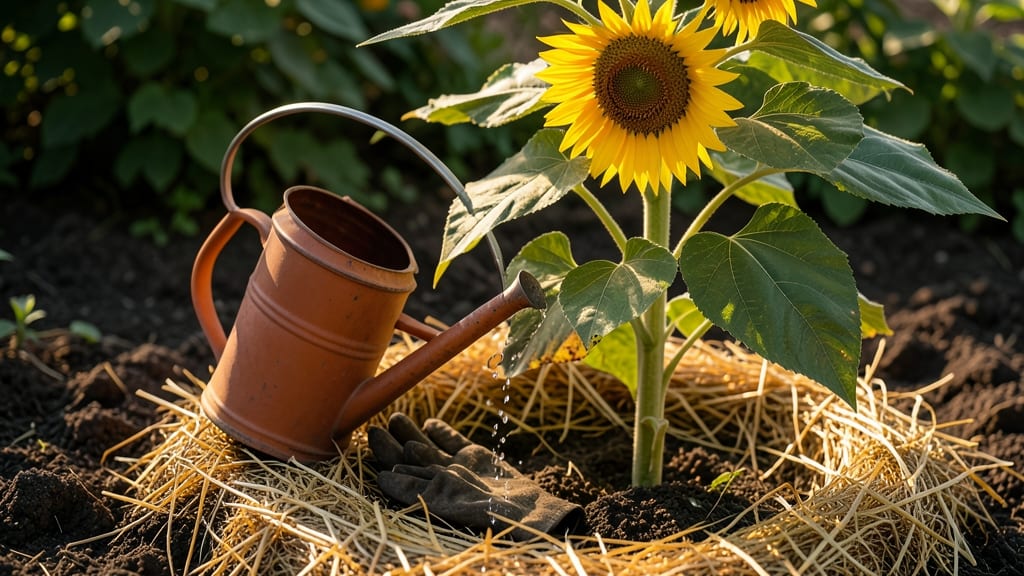
Watering sunflower plants the right way is the difference between a 12-foot giant and a sad, stunted stem that never blooms.
Picture this: you’ve spent weeks waiting for those 🌻 seedlings to pop up, only to watch them wilt by noon because you watered too little—or drowned them by overdoing it. The truth? Sunflowers thrive on a simple routine, but one wrong move can send them into a downward spiral.
In USDA Zone 6a, where I’ve grown sunflowers for years, the key is deep, infrequent watering—especially during their April-May planting window. Too much surface moisture? Root rot. Too little? They’ll bolt upright but stay skinny.
Below, I’ll walk you through the exact schedule, soil checks, and seasonal tweaks that keep your sunflowers reaching for the sky without a single droop.
You’ll learn how often to water (spoiler: it’s not daily), how to tell if your soil is too wet or too dry, and the one trick that saves sunflowers during droughts. By the end, your plants will be taller, healthier, and ready to bloom—no guesswork involved.


The morning watering schedule that prevents sunflower wilting
Sunflowers thrive when their roots receive consistent moisture, but timing matters just as much as quantity. Watering in the early morning (between 6-9 AM) prevents fungal diseases by letting foliage dry before nightfall. This simple adjustment can mean the difference between towering stalks and wilted disappointment.
Your sunflowers need 1-2 inches of water per week, delivered deeply to encourage root development. Shallow watering creates weak roots that can't support their impressive height. Let's break down the perfect morning routine that keeps your sunflowers reaching for the sky.
- 1 Water before 10 AM to maximize moisture absorption and minimize evaporation. Aim for 6-9 AM when temperatures are coolest.
- 2 Deep watering (6-8 inches) encourages roots to grow downward, supporting 6-14 ft stalks. Use a trowel to check soil moisture.
- 3 Water at soil level, not the leaves, to prevent powdery mildew. Use a soaker hose or drip irrigation for precision.
- 4 Adjust for heatwaves: Increase frequency to every 2 days when temperatures exceed 90°F (32°C). Monitor soil moisture daily.
- 5 Reduce in rain: Skip watering if 1 inch of rain falls in 24 hours. Overwatering causes root rot in heavy clay soils.
For young seedlings (first 4 weeks), keep soil consistently moist but never soggy. Use a spray bottle to mist gently, then transition to deeper watering as stems harden. This gradual adjustment prevents shock and promotes strong root systems.
During budding and flowering (weeks 6-12), maintain 1 inch of water weekly. This is when your sunflowers need the most hydration to support their heavy seed heads. Look for drooping petals as a sign of thirst—this often means watering was insufficient the previous day.
In summer heatwaves, switch to daily watering in the morning and consider mulching with straw. The mulch layer locks in moisture and regulates soil temperature, which is crucial when daytime highs exceed 95°F (35°C).
Autumn brings different challenges. As temperatures drop below 70°F (21°C), reduce watering to every 5-7 days. Your sunflowers will naturally slow growth, but they still need moisture to develop seeds properly before frost.
Always check soil moisture before watering. Stick your finger 2 inches deep—if it feels dry, it's time to water. If damp, wait another day. This simple test prevents both overwatering and underwatering, both of which stress your plants.
Pro tip: Use a rain gauge to track rainfall. If you've had 0.75 inches of rain in the past week, you can skip your morning watering. This conserves water while preventing root diseases from over-saturated soil.
With this morning routine, your sunflowers will grow straight and strong, reaching their full 6-14 ft potential without wilting. The key is consistency—just like their love for full sun, they crave reliable moisture at the right time.
How much water do sunflowers need? A seasonal breakdown
Sunflowers thrive on consistent moisture, but their water needs shift dramatically from seedling stage to full bloom. Too little water stunts growth, while too much causes root rot.
The key is understanding their seasonal watering rhythm—which I’ve broken down by growth phase to help you avoid common pitfalls.
Young sunflowers (first 4-6 weeks) need daily moisture checks because their shallow roots can’t reach deep water sources. As they mature, you’ll gradually reduce frequency but increase water depth to encourage strong root development. Here’s how to adjust your routine month by month:
| Growth Stage | Water Frequency | Water Depth | Soil Moisture Check | Seasonal Notes |
|---|---|---|---|---|
| Seedling (0-4 weeks) | Every 1-2 days | 1/2 inch per watering | Top 1 inch dry | Use shallow trays for seedlings |
| Vegetative (4-8 weeks) | Every 3-4 days | 1-2 inches per watering | Top 2 inches dry | Deep water at soil level |
| Budding (8-12 weeks) | Every 4-5 days | 2-3 inches per watering | Top 3 inches dry | Critical for flower development |
| Flowering (12+ weeks) | Every 5-7 days | 3-4 inches per watering | Top 4 inches dry | Reduce in late summer |
During peak summer heat (June-August), increase watering to every 2-3 days and water early morning to prevent evaporation. In spring and fall, reduce to every 5-7 days—sunflowers are surprisingly drought-tolerant once established.
Watch for wilting leaves (underwatering) or yellowing stems (overwatering). For soil checks, insert your finger 2 inches deep—if dry, water thoroughly. Mulch with 2-3 inches of straw to retain moisture and suppress weeds.
Container-grown sunflowers dry out faster—check soil moisture daily in summer. Use self-watering pots or place containers in saucers filled with water for consistent hydration.
Remember: Deep watering (soaking until water runs out drainage holes) builds stronger roots than frequent shallow watering. Adjust based on your local climate—sunflowers in arid regions need more frequent deep watering than those in humid areas.