
Aphids
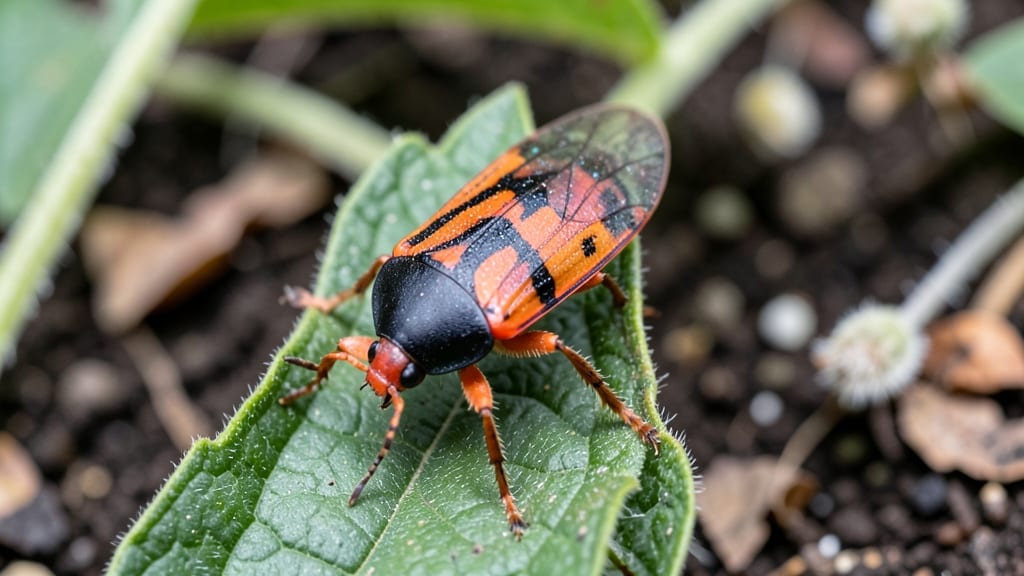
The milkweed bug life cycle includes four distinct stages—egg, nymph, and adult—with development taking 30-60 days depending on environmental conditions. Nymphs undergo five molts while feeding solely on milkweed sap before becoming fully grown adults.
The milkweed bug's journey from egg to adult is a fascinating study in specialization. 🌿 Each nymph stage reveals unique adaptations—like bright orange markings warning predators of their toxic milkweed diet—while adults develop elongated snouts to access deeper sap pockets.
Temperature plays a critical role: cooler weather slows development, while warm spring conditions accelerate the process, sometimes cutting the cycle to just 30 days.
What makes this cycle particularly interesting is how tightly coupled it is to the host plant. 🌱 Milkweed isn't just food—it's the bug's entire ecosystem. The sap provides essential nutrients at every stage, and without it, the bugs would struggle to complete even the earliest molts.
Gardeners can support thriving populations by planting Asclepias species like common milkweed or butterfly weed, which produce the richest sap for optimal bug development.
💡 In This Article
- Key Developmental Traits in Each Milkweed Bug Stage
- Host Plant Dependence: How Milkweed Fuels Growth
Key developmental traits in each milkweed bug stage
The milkweed bug's transformation begins with eggs that are tiny (0.5mm) and oval-shaped, typically laid in clusters of 20-30 on milkweed leaves. These eggs have a distinctive yellow-orange hue that darkens to reddish-brown as they mature, a visual cue that helps predators recognize their toxic connection to milkweed.
The egg stage lasts 5-10 days at optimal temperatures (75-85°F), but can stretch to 2 weeks in cooler weather.
Newly hatched nymphs emerge with black bodies and bright orange markings—a warning coloration that signals their milkweed-derived toxins to predators. These markings become more pronounced with each of the five molts they undergo, growing from 2mm at hatching to 12-15mm as adults.
Each molt lasts 3-5 days and involves shedding their exoskeleton completely, a process that leaves them vulnerable for 24 hours until their new exoskeleton hardens.
The most dramatic transformation occurs during the final nymph stage, where the bug develops its signature elongated snout for accessing deeper milkweed sap reserves. This adaptation allows adults to feed on 20% more sap per hour than nymphs, supporting their larger size.
Temperature dramatically affects growth rates—bugs in 90°F+ conditions complete development in just 30 days, while those in 60°F may take 60+ days.
Adult milkweed bugs exhibit sexual dimorphism, with males developing slightly larger snouts (3mm longer) than females. Their black and orange coloration remains but becomes more uniform, losing the nymph's segmented warning patterns.
This color shift coincides with their reproductive maturity, when females begin laying eggs just 48 hours after mating—a rapid timeline that ensures continuous population growth during warm seasons.
What's particularly fascinating is how their molting frequency correlates with milkweed sap availability. When raised on Asclepias syriaca (common milkweed), nymphs molt 20% faster than those fed on Asclepias tuberosa (butterfly weed), demonstrating how plant species chemistry directly influences their development timeline. 🔥
The final adult stage is marked by reduced mobility compared to nymphs, as their larger bodies require more energy to move.
This adaptation reflects their shift from rapid growth to reproduction, with adults living 30-45 days in the wild—just enough time to complete one full reproductive cycle before environmental conditions change.