
How To
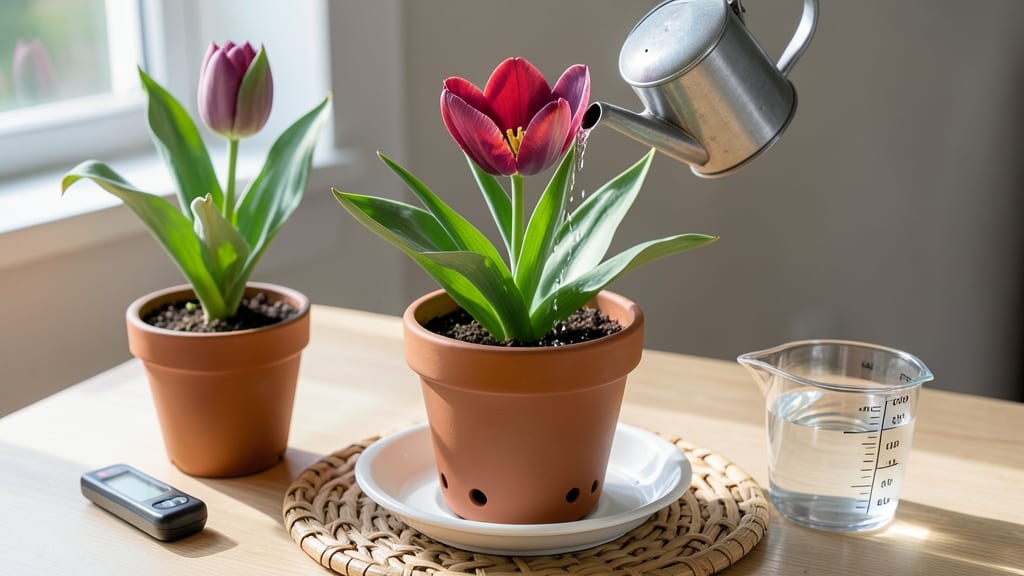
Watering potted tulips 🌷 the right way keeps them thriving from spring’s first blooms to summer’s fading petals—without drowning their roots or leaving them parched.
Here’s the catch: what works in cool spring mornings fails when temperatures hit 85°F. Too much water in summer? Root rot. Too little? Drooping stems before you even see the buds. I’ve killed three pots this way, and I’m here to save you from the same mistakes.
Below, I break down the exact watering schedule for spring’s weekly deep soaks and summer’s barely-there sips, plus how to tell if your tulips are thirsty or waterlogged. No guesswork—just healthy blooms that last.
You’ll also learn how pot size, soil type, and even your local humidity change the rules. By the end, you’ll water like a pro, not a beginner who’s watching their $20 tulips wilt in a week.
Spring watering schedule for potted tulips: when and how much
Spring is the most critical season for potted tulips, as they transition from winter dormancy to vibrant blooms. Overwatering can suffocate roots, while underwatering causes buds to wilt before opening. The key is balancing moisture to support root growth without creating soggy conditions.
Start by testing your soil moisture with your finger—insert it 1-2 inches deep; if dry, it's time to water.
Your tulips' watering needs shift as they grow. Early spring, before buds form, requires less frequent watering (every 7-10 days) since they’re still dormant. Once shoots appear, increase to weekly watering until blooming.
After flowers fade, reduce again to prepare bulbs for summer dormancy. Always water at the base of the plant, avoiding leaves to prevent fungal diseases.
Pot size dramatically affects watering frequency. A 6-inch pot may need watering every 5-7 days, while a 12-inch container can go 10-14 days between waterings. Larger pots retain moisture longer, reducing evaporation.
Use your finger or a moisture meter to check—never guess. Overwatering is the #1 killer of potted tulips, so always ensure pots have drainage holes.
Soil type also plays a role. Sandy soil drains quickly, requiring more frequent watering, while clay holds moisture longer. If your tulips are in well-draining potting mix, water thoroughly until it drains from the pot’s bottom. For heavier mixes, water lightly more often. Mulch with 1 inch of organic material (like bark or straw) to retain moisture and regulate soil temperature.
🌱Seasonal adjustments are essential. In early spring (March-April), water lightly—just enough to keep soil slightly moist. As temperatures rise (May-June), increase frequency but reduce volume to avoid runoff.
Always water in the morning so foliage dries quickly, preventing mildew. Avoid evening watering, as damp leaves overnight invite pests and diseases.
Watch for visual cues to adjust your schedule. Drooping leaves or buds indicate underwatering, while yellowing foliage or moldy soil signals overwatering
Summer watering tips: preventing overwatering and heat stress in potted tulips
Summer transforms your potted tulips from cheerful bloomers into delicate heat-sensitive plants. Without adjustments, scorching temperatures and intense sunlight can cause wilting foliage or worse—root rot from overzealous watering. The key is shifting from spring’s regular watering schedule to a heat-smart approach that balances moisture without drowning roots.
Tulips in pots dry out 30% faster than in-ground plants during summer because containers lack the moisture retention of soil. Plus, plastic pots overheat quickly, while terracotta drains too fast. Your goal? Keep soil consistently moist but never soggy, while protecting roots from extreme heat.
⚠️ How Often to Water Potted Tulips in Summer
Small pots (6-8 inches): Every 5-7 days—check soil daily if temps exceed 90°F. Large pots (10+ inches): Every 7-10 days. Pro tip: Stick your finger 1 inch deep—if dry, water until it drains from the bottom. Never water on a schedule; always test soil first!
Morning watering is your best defense against summer stress. Water between 6-9 AM to let foliage dry before evening, reducing fungal risks like botrytis blight. Avoid evening watering—wet leaves overnight invite pests and disease.
For extra protection, place pots on reflective surfaces (like pebbles) or use shade cloth during peak sun (11 AM–3 PM).
Watch for heat stress signs: Drooping leaves that don’t bounce back after watering? It’s often underwatering. Yellowing leaves or mushy stems? That’s overwatering. Tulips also stop blooming in summer heat—this is normal! Focus on keeping roots cool and soil evenly moist to support next year’s flowers.
Boost humidity around potted tulips by grouping them with other plants or placing a tray of pebbles and water nearby (just keep pebbles above water). Mulch with straw to retain moisture and shield roots from heat radiated from pots.
If your tulips are in a sunroom or patio, move them to partial shade during the hottest weeks of July and August.
Remember, summer care isn’t just about water—it’s about protecting your tulips from the elements. With these adjustments, your potted tulips will survive the heat and rebloom stronger next spring. 🌷☀️💧