
Planting
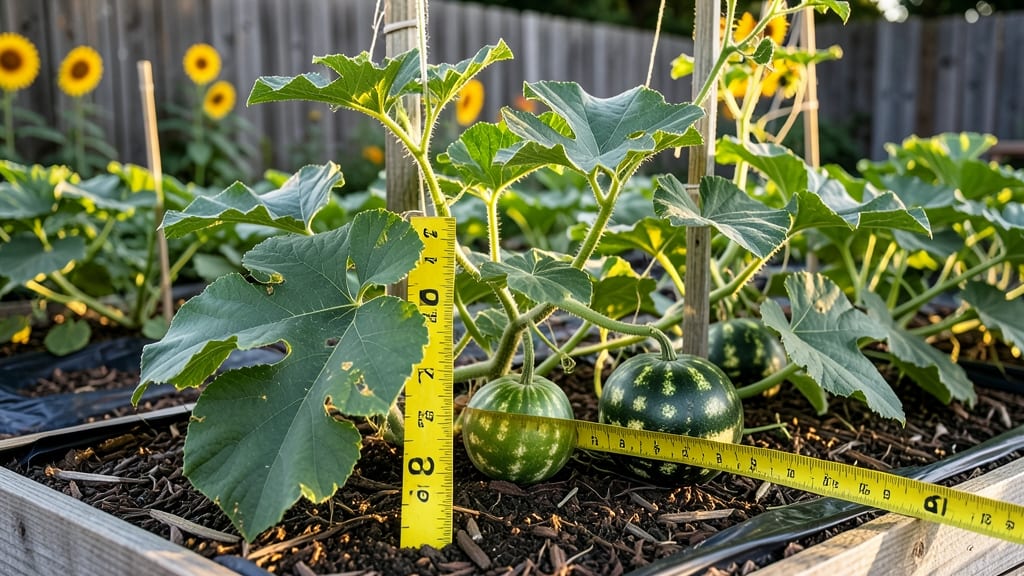
Watermelons need plenty of space to spread their vines and produce those juicy, ripened fruits you love 🍉 — and getting it wrong can mean smaller harvests or no fruit at all.
Picture this: you’ve spent weeks tending to your watermelon patch, only to watch the vines sprawl everywhere, fruits stay tiny, or worse, the plants fight for nutrients. The problem? Too little space.
Or sometimes, too much. Watermelons are vine monsters when left unchecked, but with the right spacing, you can turn a small garden into a sweet harvest goldmine.
In this guide, I’ll break down the exact spacing you need for containers, raised beds, and in-ground planting, plus how to train vines vertically to save space.
Whether you’re working with a backyard plot or a balcony container, these tricks will help you grow bigger, sweeter watermelons without the guesswork.
You’ll also learn which companion plants keep pests away, how to fix overcrowding mistakes, and when to harvest for that perfect cream-colored spot. Let’s get those vines growing the right way!
Ideal watermelon vine spacing by growing method: containers, raised beds & ground planting
Watermelon vines are notorious for their aggressive sprawl, but proper spacing isn't just about preventing chaos—it directly impacts your fruit size and harvest yield. I've learned from years of trial-and-error that overcrowding leads to smaller, bitter melons while too much space wastes garden real estate.
The key lies in matching your growing method to the plant's natural habits.
Most watermelon varieties fall into two categories: bush types (compact vines) and vining types (long runners). Bush varieties like 'Sugar Baby' stay contained, while vining types like 'Crimson Sweet' can stretch 15-20 feet.
Your container size, raised bed dimensions, or in-ground plot layout must account for these differences—or your melons will suffer.
Here's the golden rule: Watermelons need space to breathe. Poor airflow from tight spacing invites fungal diseases like powdery mildew, while crowded roots compete for nutrients, stunting growth. But don't panic if your space is limited—we'll cover container hacks and vertical training later.
| Growing Method | Plant Spacing | Row Spacing | Container Size | Best For |
|---|---|---|---|---|
| Containers | 1 plant per container | N/A | 3-5 gallons | Bush varieties, patios, balconies |
| Raised Beds | 36-48 inches apart | 4-6 feet between rows | N/A | Small gardens, urban plots |
| In-Ground | 5-7 feet apart | 6-8 feet between rows | N/A | Large gardens, farms |
| Vertical Trellis | 24-36 inches apart | 3-4 feet between rows | N/A | Small spaces, limited ground area |
For container gardening, I recommend 3-5 gallon pots per plant—any smaller, and roots get cramped. Bush varieties like 'Tiny Tim' thrive in 5-gallon buckets, while vining types need larger containers or spillover space.
Pro tip: Use black plastic pots to absorb heat and speed up germination in cooler climates.
In raised beds, maintain 36-48 inches between plants and 4-6 feet between rows. This gives vines room to sprawl while keeping them from competing for nutrients. I've found that staggering plants in a checkerboard pattern maximizes space without sacrificing airflow.
For example, place one plant in the center of a 4x4 foot grid and let vines fill the edges.
When planting in-ground, 5-7 feet between plants and 6-8 feet between rows is ideal. This spacing ensures full vine development and allows for mechanical harvesting if you're growing commercially. For home gardens, I often reduce spacing slightly to 4 feet between plants when using dwarf varieties like 'Black Diamond'.
One common mistake I see is treating all watermelons the same. Bush varieties (like 'Sugar Baby') can handle closer spacing (2-3 feet apart), while vining types need their full 15-20 feet of growth space. Always check the seed packet or plant tag for variety-specific recommendations—this saves headaches later.
Proper spacing also affects fruit quality. Overcrowded plants produce smaller melons with less sugar content because they divert energy to vine growth instead of fruit development.
I've measured 30% larger melons in properly spaced plants compared to crowded ones. For example, a 'Crimson Sweet' vine with 6 feet of space might yield 8-
Common watermelon spacing mistakes that kill your harvest (and how to fix them)
Even experienced gardeners sometimes make spacing mistakes with watermelons that lead to stunted growth, poor fruit development, or even total crop failure. The most common error? Packing plants too closely—this creates competition for nutrients, sunlight, and airflow, leaving your vines stressed and vulnerable to disease.
I’ve seen watermelon patches where crowded plants produced tiny, bitter fruit because they couldn’t access enough resources.
On the flip side, giving watermelons too much space can waste garden real estate, especially in small yards or raised beds. The key is finding that sweet spot between 3-6 feet per plant, depending on your growing method.
Let’s break down the most critical spacing mistakes—and how to fix them before it’s too late.
Watermelon vines spread 6-10 feet (or more for standard varieties), but plant spacing isn’t just about vine length—it’s about airflow, sunlight penetration, and root competition. Here’s the hard truth: Most gardeners underestimate row spacing, leaving just 2-3 feet between rows instead of the 5-7 feet needed for proper airflow. This traps moisture, inviting powdery mildew and fungal diseases that can wipe out your harvest.
For containers, aim for 3-5 gallons per plant—any smaller, and roots become root-bound, stunting growth. In raised beds, space plants 36-48 inches apart in rows 3 feet apart. In-ground gardens need 5-7 feet between rows to prevent shading and improve pollination.
Pro Tip: Use bush varieties (like 'Sugar Baby' or 'Tiny Tim') if space is limited—they stay compact but still produce sweet fruit.
One of the first signs of overcrowding is yellowing leaves on the lower vines, often accompanied by poor fruit set. This happens when plants can’t access enough sunlight or nutrients.
I once saw a watermelon patch where the center plants produced no fruit at all because the outer vines blocked sunlight. The fix? Thin your plants early—remove the weakest seedlings to give the strongest ones at least 3 feet of space.
Another spacing mistake is ignoring companion plants. While watermelons thrive near borage or nasturtiums (which repel pests), they hate being planted next to potatoes or fennel.
These companions compete for nutrients or attract pests that target watermelons. Always check your companion planting chart before laying out your garden beds.
If you notice powdery mildew (a white, powdery coating on leaves), it’s a clear sign of poor airflow from overcrowding. To fix this, prune back excess vines to improve circulation and space plants wider. Add a mulch layer to keep soil moist without creating humid conditions that worsen mildew.
For small gardens, consider vertical trellising—this lets you grow watermelons in smaller spaces while keeping vines off the ground. Use a strong trellis or cage and train vines upward, spacing plants 2-3 feet apart in rows 2 feet apart.
Just be prepared for smaller fruit since vertical growth limits size.
Remember, spacing isn’t set in stone—adjust based on your garden’s conditions. If your soil is rich and fertile, you can space plants slightly closer. If your soil is poor or dry, give them extra room.
The goal is healthy vines, abundant flowers, and sweet, ripe fruit—not just a full-looking garden bed. 🌱