
How To
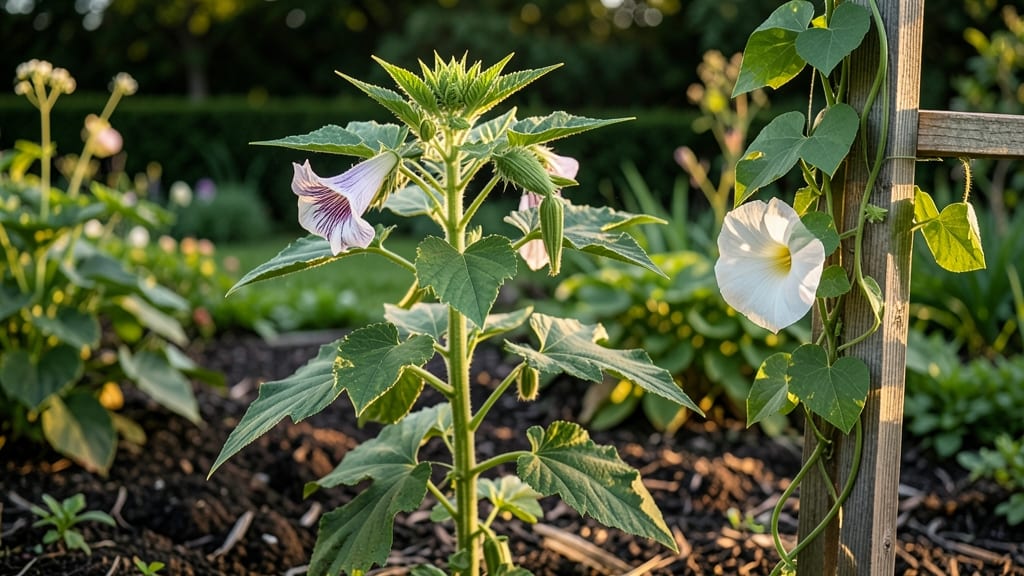
Growing moonflowers from jimson weed seeds is the fastest way to transform a bare fence into a fragrant, leafy curtain by summer. 🌿 These vines shoot up 6-10 feet in a single season, their glossy leaves forming a lush privacy screen while their milky-white blooms open at dusk, filling the air with a sweet, tropical scent.
The secret to their rapid growth lies in their love of sun and space—plant seeds directly in the ground after your last frost date, spacing them 12 inches apart along trellises or fences.
They thrive in well-draining soil but aren’t picky about fertility, making them perfect for beginners who want quick results without fuss. By midsummer, you’ll have a vine-covered backdrop that blooms every evening, attracting moths and hummingbirds.
The more you prune back leggy growth, the bushier and more productive the plant becomes—think of it as training a living, fragrant curtain. This vine handles heat and humidity beautifully, making it ideal for southern climates.
Just be mindful of its fast-spreading habit—give it room to stretch or it’ll overtake nearby plants. With minimal care, you’ll have a fragrant, flowering privacy screen by late summer.
📚 In This Guide
- What you need
- Instructions
- Tips and common mistakes
- Wrapping up and next steps
What you need
- ● Jimson Weed Moonflower Seeds: 5–10 seeds (start with a few to test your growing conditions).
- ● Growing Containers or Garden Bed: Containers: 5–10 gallon pots with drainage holes (1 per plant).
- ● Garden Bed: Well-draining soil in a sunny, sheltered spot (6+ feet wide for vining).
- ● Potting Mix: 2–3 bags of high-quality, well-draining potting soil (or amend garden soil with compost).
- ● Trellis or Support Structure: 6–10 ft tall trellis, fence, or pergola (for climbing).
- ● Watering Can or Hose: With a gentle spray nozzle for seedlings.
- ● Fertilizer: Balanced, slow-release granular fertilizer (10-10-10 ratio) or organic compost.
- ● Pruning Shears: For trimming and shaping (sterilized with rubbing alcohol).
- ○ Seed Starting Kit: Optional for indoor germination (heat mat helps!).
- ● Mulch: Straw or wood chips to retain moisture and suppress weeds.
- ● Plant Ties or Twine: To secure vines to trellises until established.
- ● pH Test Kit: To check soil pH (ideal range: 6.0–7.0).
- ○ Garden Gloves: For handling prickly stems (optional but recommended!).
- ● Pest Control: Neem oil or insecticidal soap (for aphids or spider mites).
Step-by-Step instructions for growing Jimson weed moonflower vines
Here's how to cultivate this dramatic, fragrant vine that grows faster than most gardeners expect.
🌱 Step 1: Choose the Perfect Planting Location
Jimson weed moonflower thrives in full sun to partial shade, with at least 6 hours of direct sunlight daily for optimal flowering. I always pick a spot with south-facing exposure—this vine grows aggressively and needs room to climb or sprawl without competition. Avoid low-lying areas where cold air settles, as the plant is frost-sensitive.
Test your spot by observing how much sunlight it gets over a week. If nearby plants are thriving in full sun, your location is likely suitable. The vine's large, heart-shaped leaves will tell you immediately if it's struggling—yellowing leaves mean it's getting too much shade, while pale, stretched growth signals insufficient light.
☀️ Step 2: Prepare the Soil for Fast Growth
This vine tolerates a wide range of soil types but grows fastest in well-draining, slightly acidic soil with a pH between 6.0 and 7.0. Before planting, work in 2-3 inches of compost into the top 12 inches of soil—this boosts nutrient availability and encourages rapid root development. I like to add a handful of aged manure for extra nitrogen, which fuels the vine's vigorous growth.
If your soil is heavy clay, mix in sand or perlite to improve drainage. Jimson weed moonflower hates soggy roots, and waterlogged conditions will stunt its growth or cause root rot. You'll know your soil is ready when it crumbles easily between your fingers and holds moisture without becoming waterlogged.
🌿 Step 3: Plant Seeds or Transplants at the Right Time
For fastest results, plant seeds after the last frost date when soil temperatures reach at least 65°F. I like to start seeds indoors 6-8 weeks before transplanting in biodegradable pots—this gives them a head start and reduces shock when moved outdoors. Plant seeds ½ inch deep and keep the soil consistently moist until germination, which typically occurs in 10-14 days.
If using transplants, choose established plants with healthy, dark green leaves and no signs of wilting. Space them 3-5 feet apart—this vine spreads quickly and can reach 10-15 feet in a single season. Water deeply after planting to settle the roots, and mulch around the base with 2-3 inches of organic mulch to retain moisture and suppress weeds.
💧 Step 4: Water and Fertilize for Rapid Growth
Jimson weed moonflower has moderate water needs—water deeply once a week during the first growing season, then reduce to every 10-14 days once established. The key is to water at the base of the plant in the morning to allow foliage to dry quickly, preventing fungal diseases. You'll know it's time to water again when the top 2 inches of soil feel dry.
Fertilize lightly once a month during the growing season with a balanced, water-soluble fertilizer (10-10-10). Over-fertilizing leads to lush foliage but fewer flowers, and this vine grows fast enough without heavy feeding. You'll see the fastest growth when the leaves are deep green and vibrant, with new vines emerging every few weeks.
✂️ Step 5: Train and Maintain for Privacy and Beauty
This vine grows fast and aggressively, so train it early to climb a trellis, fence, or arbor. I use soft twine or garden ties to gently guide the stems upward, adjusting as the plant grows. Prune back any leggy or overgrown vines in early spring to encourage bushier growth and more flowers.
Deadhead spent blooms regularly to prolong flowering and prevent self-seeding, which can become invasive. The fragrant, trumpet-shaped flowers open at night, attracting moths and hummingbirds—a bonus for any garden. By mid-summer, you'll have a lush, privacy-providing vine with stunning night-blooming flowers, all growing faster than expected.
Tips & tricks for growing Jimson weed moonflower vines
This fast-growing beauty rewards patience with dramatic results—here’s how to maximize its potential without common pitfalls.
Sunlight Strategy: While the instructions call for 6 hours of direct sunlight daily, I’ve found that south-facing locations with morning sun and afternoon shade produce even more vibrant blooms. The vine’s large leaves act like solar panels—rotate plants occasionally to ensure even exposure, especially if growing near taller structures. Too little light? Expect leggy growth and fewer flowers.
Soil Prep Secret: The 2-3 inches of compost and aged manure mentioned in Step 2 are non-negotiable, but here’s the pro move: mix in ½ cup of bone meal at planting time for a phosphorus boost. This encourages stronger root systems and more robust flowering. Test your soil’s pH before planting—if it’s outside the 6.0-7.0 range, adjust with lime (to raise pH) or sulfur (to lower it) before amending with compost.
Germination Hack: Those 10-14 days for germination can feel like forever, but here’s how to speed things up: soak seeds in warm water for 24 hours before planting. This mimics natural rainfall and can trigger germination in as few as 7-10 days. Use a heat mat set to 75°F if your soil stays below 65°F—warmth accelerates the process without risking rot.
Watering Wisdom: The once-a-week watering guideline works, but timing matters more than frequency. Water in the early morning to prevent fungal issues, and always check the top 2 inches of soil—if it’s dry, it’s time. Overhead watering? Avoid it. Wet foliage invites powdery mildew, especially in humid climates. A drip irrigation system set at the base keeps leaves dry while delivering moisture directly to roots.
Pro Tips for Jimson Weed Moonflower
- This fast-growing beauty rewards patience with dramatic results—here’s how to maximize its potential without common pitfalls.
- Sunlight Strategy: While the instructions call for 6 hours of direct sunlight daily, I’ve found that south-facing locations with morning sun and afternoon shade produce even more vibrant blooms.
- Soil Prep Secret: The 2-3 inches of compost and aged manure mentioned in Step 2 are non-negotiable, but here’s the pro move: mix in ½ cup of bone meal at planting time for a phosphorus boost.
Frequently asked questions
Got questions about growing Jimson weed moonflower (Ipomoea alba)? You’re not alone! Here are some of the most common concerns—and straightforward answers to help you succeed.
Is Jimson weed moonflower really fast-growing?
Yes! This vine is a rapid climber, often reaching 10–20 feet in a single season with the right support (like a trellis or fence). With consistent watering and warm soil, you’ll see 6+ inches of growth per week during peak summer months.
How do I keep it from spreading too aggressively?
Jimson weed moonflower is a perennial in warm climates (USDA zones 9–11) and can self-seed prolifically. To control it:
- Trim back vines after flowering to reduce seed production.
- Mulch heavily around the base to smother weeds competing for nutrients.
- In cooler zones, grow it as an annual and remove dead vines in fall.
Why aren’t my moonflowers blooming?
Moonflowers are night-blooming and need full sun (6+ hours/day) to trigger flowers. Common fixes:
- Insufficient light: Move to a sunnier spot or prune nearby shade trees.
- Over-fertilizing: Too much nitrogen = leafy growth, no flowers. Use a low-nitrogen, high-phosphorus fertilizer instead.
- Stress: Check for pests (like spider mites) or underwatering—moonflowers wilt quickly when thirsty.
Can I grow Jimson weed moonflower in pots?
This vine thrives in large containers (20+ gallons) with:
- A fast-draining mix (60% potting soil, 30% perlite, 10% compost).
- A trellis or cage (it needs vertical support to climb).
- Regular watering (containers dry out faster—check soil daily in heatwaves).
Are there non-invasive alternatives with similar flowers?
If you love moonflowers but want lower-maintenance options, try:
- Morning glories (Ipomoea purpurea): Annual, fast-growing, and self-cleaning (deadhead to reduce seeds).
- Sweet potato vine (Ipomoea batatas): Decorative foliage, no flowers, and edible tubers in some varieties.
- Black-eyed Susan vine (Thunbergia alata): Bright orange blooms, perennial in zones 10–11, but slower growth.
Wrapping up and next steps
Growing Jimson weed moonflower is a rewarding journey that brings fragrant beauty and natural privacy to your garden—without the high-maintenance hassle! 🌿 Whether you’re drawn to its fast growth, striking flowers, or pest-repelling properties, this vine proves that stunning results come with just a little patience and care.
Now that you’re armed with the right knowledge, why not take the next step? Start small with a single plant, experiment with companion plants, or even share your newfound expertise with fellow gardening enthusiasts. Your garden—and your neighbors—will thank you! 🌸