
Plants
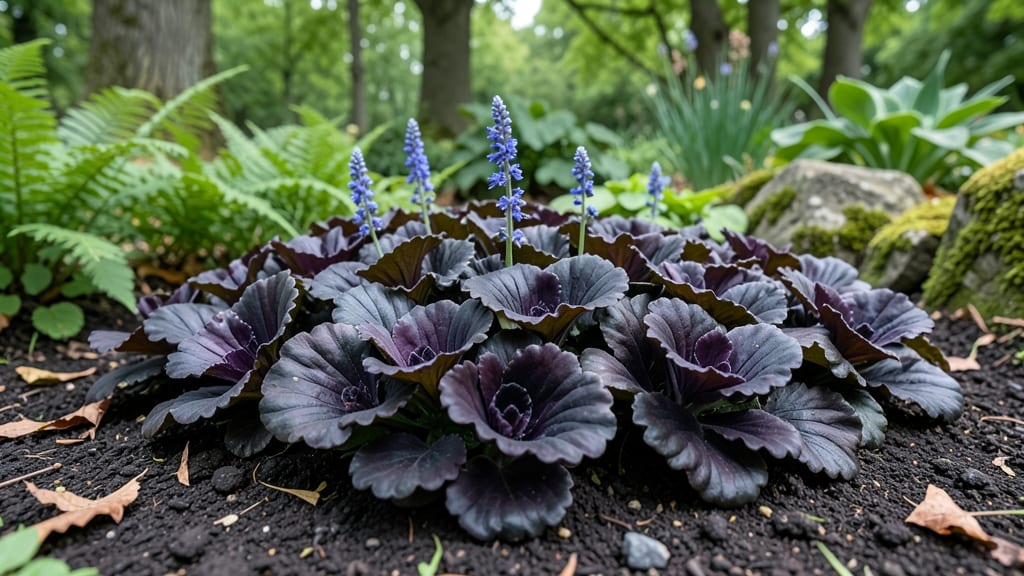
Your garden just got a fragrant, velvety ground cover—the **bugleweed *Black Scallop***—that thrives on neglect. 🌿 Ajuga reptans 'Black Scallop' transforms shady spots with its deep purple-black foliage and delicate blue flower spikes—plus, it smells like mint when you brush against it.
The secret to keeping it lush? Pruning twice a year, not once, and avoiding the common mistake of overwatering.
Start by planting in partial shade with well-draining soil—this tough plant handles everything from dry spells to occasional foot traffic. In early spring and late summer, trim back spent foliage to encourage fresh growth, and watch it spread into a dense, weed-blocking carpet.
Perfect for borders, slopes, or under trees, it’s the low-maintenance star that outshines most ground covers.
📚 In This Guide
- What you need
- Instructions
- Tips and common mistakes
- Wrapping up and next steps
What you need
- ● Pruning shears: Bypass-style, sharp, and sterilized (1 pair) – for clean cuts.
- ● Garden gloves: Heavy-duty, cut-resistant (1 pair) – to protect your hands from thorns or rough edges.
- ○ Loppers: For thicker stems (optional but helpful) (1 pair).
- ● Disinfectant (70% isopropyl alcohol or bleach solution): To sterilize tools between cuts (small bottle).
- ● Garden twine or plant ties: For securing new growth (1 roll).
- ● Mulch (organic or inorganic): To retain moisture and suppress weeds (1-2 bags, depending on area).
- ● Watering can or hose with a gentle spray nozzle: For post-pruning hydration (1).
- ● Hand pruners: For precision trimming of smaller branches (1 pair).
- ● Fertilizer (balanced or slow-release): To boost regrowth after pruning (1 bag).
- ● Plant food spray: For quick nutrient absorption (small bottle).
- ● Knee pads or stool: For comfort during extended pruning sessions (1).
- ● Trash bags: For collecting pruned debris (2-3 bags).
Step-by-step pruning guide for bugleweed 'Black Scallop'
This evergreen perennial thrives with strategic pruning—here’s how to maintain its signature dark foliage and dense growth year after year.
✂️ Step 1: Early Spring Cleanup for Fresh Growth
Start pruning in early spring as new shoots emerge, typically around late February to March in most climates. Use clean, sharp pruners to remove any dead or damaged stems at the base—these appear brown and brittle compared to the healthy green growth. I always cut just above a leaf node to encourage branching and fuller regrowth.
This is also the time to thin out overly crowded stems. Look for areas where growth appears sparse—these are your targets. Aim to reduce the plant’s center by one-third to improve air circulation and prevent fungal issues. The goal is to create a balanced shape while preserving the dense, scalloped foliage that makes this cultivar so striking.
☀️ Step 2: Mid-Summer Trimming to Encourage Density
In June or July, when the plant has established 6-8 inches of new growth, it’s time for a light trim. Focus on shaping rather than heavy pruning—cut back any leggy stems by one-third to one-half to encourage bushier growth. This is especially important for 'Black Scallop,' which can become sparse if left unchecked.
Watch for stems that grow toward the sun or shade; these will produce uneven foliage. Pinch back the tips of these stems just above a set of leaves to redirect energy to lateral branches. You’ll see new growth within 2-3 weeks—this is your signal that the plant is responding well. Avoid pruning after mid-August to allow time for new growth to harden off before winter.
🌿 Step 3: Fall Preparation for Winter Hardiness
As temperatures drop and growth slows in late September to October, give your bugleweed a final trim. Remove any stems that look weak or diseased, cutting them back to healthy wood. This prevents pests and pathogens from overwintering in the plant. I also reduce the height by about 20% to lower the plant’s center of gravity, which helps it withstand winter winds.
Leave the foliage intact if possible—it provides some winter protection for the crown. If you’re in a harsh climate with heavy snow, you can lightly mulch around the base with 2-3 inches of organic mulch to insulate the roots. The dense foliage of 'Black Scallop' naturally sheds water, so avoid over-mulching, which can lead to rot.
⏰ Step 4: Post-Winter Inspection and Light Pruning
In very early spring, before new growth appears, inspect the plant for any winter damage. Remove any dead stems at the base, but avoid heavy pruning—this can stimulate new growth too early, which may be damaged by late frosts. If the plant looks healthy but sparse, a light trim in late spring (after the last frost) can help refresh it.
Here’s the thing—bugleweed is resilient, but consistency matters. If you skip a year of pruning, you’ll notice the plant becomes leggy and loses its signature scalloped appearance. A little maintenance now ensures that fragrant, dark foliage remains the star of your garden for seasons to come.
Tips & tricks for pruning bugleweed 'Black Scallop'
Mastering the art of pruning this striking perennial ensures your 'Black Scallop' stays lush and fragrant all year. Here’s what I’ve learned after years of trial and error in my own garden.
Tool Selection: Invest in a pair of bypass pruners with sharp, clean blades—dull tools crush stems instead of making clean cuts. I also keep a small bottle of rubbing alcohol nearby to disinfect my pruners between cuts, especially when removing diseased stems. This simple step prevents spreading pathogens to healthy parts of the plant.
Timing Secret: The 2-3 week window after mid-summer trimming is critical for observing plant response. If you don’t see new growth within this period, your cuts may have been too severe. For best results, prune on a mild, overcast day to reduce stress on the plant—hot sun immediately after pruning can shock the foliage.
Visual Cues for Pruning: When thinning in early spring, look for stems that are one-third thinner than others—these are candidates for removal. For shaping, imagine an inverted cone shape: wider at the base, gradually narrowing toward the top. This natural form allows sunlight to penetrate all foliage layers, preventing fungal issues while maintaining that signature scalloped appearance.
Winter Protection Strategy: In harsh climates, I’ve found that 2-3 inches of organic mulch (like shredded leaves or straw) around the base provides just enough insulation without smothering the plant. The key is to apply it after the ground freezes—earlier application can trap too much moisture and encourage rot. Always leave the foliage intact unless it’s severely damaged by frost.
Pro Tips for Bugleweed Black Scallop
- Mastering the art of pruning this striking perennial ensures your 'Black Scallop' stays lush and fragrant all year.
- Tool Selection: Invest in a pair of bypass pruners with sharp, clean blades—dull tools crush stems instead of making clean cuts.
- Timing Secret: The 2-3 week window after mid-summer trimming is critical for observing plant response.
Frequently asked questions
about pruning Bugleweed Black Scallop to keep its fragrant canopy thriving year-round.When is the best time to prune Bugleweed Black Scallop?
The ideal time to prune is early spring (March-April) or late summer (August-September). Early spring encourages fresh growth, while late summer prevents winter dieback. Avoid pruning in extreme heat or cold—wait for mild weather!
How much should I trim back Bugleweed Black Scallop?
Light to moderate pruning works best—cut back 1/3 of the plant’s height to maintain shape and airflow. Avoid heavy pruning (more than 1/2), as this can stress the plant. Use clean, sharp shears for precise cuts just above a leaf node.
Does Bugleweed Black Scallop need winter pruning?
No, skip winter pruning! This plant is hardy but dormant in cold months. Wait until early spring to trim. If frost-damaged stems appear, prune them after the last frost to encourage regrowth.
What if my Bugleweed Black Scallop looks leggy after pruning?
Leggy growth is normal post-pruning! Boost density by fertilizing lightly with a balanced 10-10-10 in spring and ensuring it gets 4+ hours of sunlight daily. Pinch back new growth tips to encourage bushier foliage.
Are there alternatives to pruning for shaping?
Yes! For a low-maintenance look, try thinning out instead of shearing—remove only the longest, overcrowded stems to improve airflow. You can also weave stems into a trellis for a natural, fragrant hedge.
Wrapping up and next steps
Mastering the art of pruning Bugleweed Black Scallop can transform your garden into a fragrant, year-round oasis! With the right tools, timing, and techniques, you’ll keep this beauty lush and thriving. Don’t let hesitation hold you back—start small, stay consistent, and watch your garden flourish.
Ready to elevate your green space? Grab your shears and give your Bugleweed Black Scallop the care it deserves today! 🌿✨
- Next step: Schedule your first pruning session—spring is perfect, but don’t wait!
- Bonus tip: Share your progress with fellow gardeners for extra motivation!