
Blooming
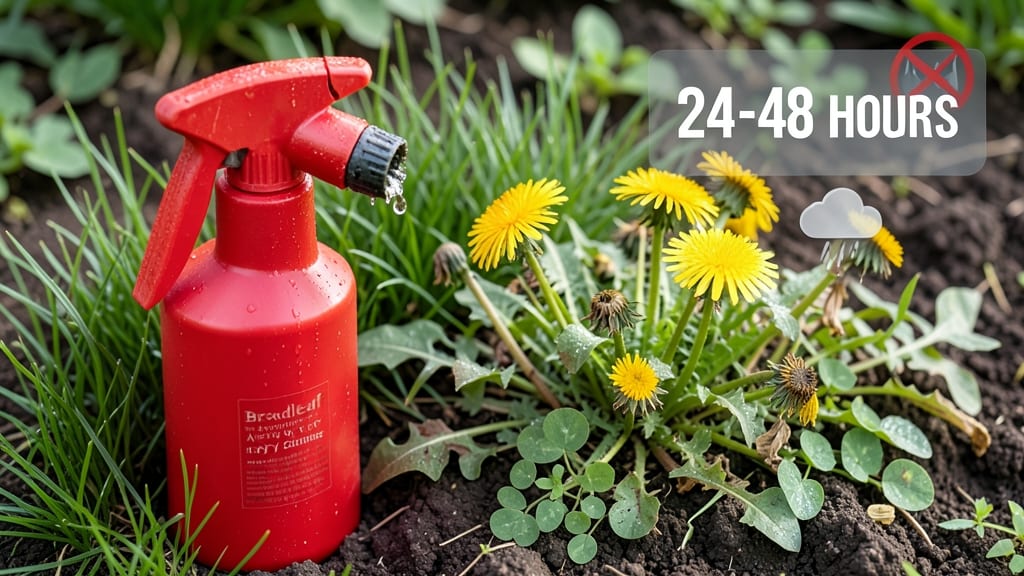
Waiting 4 to 24 hours before rain after applying weed killer depends on the product type—synthetic herbicides need 4+ hours, while natural/organic sprays require 6+ hours. Always check the label for exact drying time before expecting precipitation to avoid washing away the treatment.
Timing matters because rain can dilute or wash away the active ingredients in weed killer before they have a chance to work. 🌧️ Synthetic herbicides often dry faster, but organic options need extra time to bind properly to plant surfaces.
I always apply treatments in the early morning when temperatures are cooler and evaporation rates are slower—this gives the product the best chance to set before afternoon showers roll in. If rain is forecasted within hours, consider using a protective covering or scheduling your application for a drier day.
For pre-emergent weed killers, the waiting period is especially critical since they need to create a barrier in the soil. Post-emergent sprays, on the other hand, can sometimes tolerate slightly shorter drying times, but humidity plays a huge role—high moisture levels can reduce effectiveness regardless of the product type.
Always double-check the label, as some brands even specify whether light rain or a full storm will impact results.
💡 In This Article
- Why Rain Washes Away Weed Killer Effectiveness
- Best Practices for Applying Weed Killer Before Rain
Why rain washes away weed killer effectiveness
Rain disrupts weed killer effectiveness by physically washing away active ingredients before they can penetrate plant systems. Most herbicides rely on direct contact with plant leaves or soil to work—when water hits treated areas, it dilutes the concentration and carries the chemicals away.
For example, glyphosate-based products need at least 4 hours to bind to plant foliage, while organic options like vinegar-based sprays require 6+ hours to properly break down cell walls.
This is why synthetic herbicides often dry faster: their chemical formulations are designed for rapid absorption, unlike organic alternatives that depend on slower, moisture-dependent reactions.
The absorption process varies dramatically between pre-emergent and post-emergent weed killers. Pre-emergent herbicides create a soil barrier that prevents weed seeds from germinating—rain can wash these away or dilute their concentration below effective levels.
Post-emergent sprays, which target existing weeds, are slightly more forgiving but still vulnerable to rain within 24 hours of application.
High humidity exacerbates the problem by slowing evaporation, leaving active ingredients sitting on surfaces where they can be easily washed away. 🌧️ For instance, a 50% humidity day might extend drying time by 30-50% compared to a dry, sunny afternoon.
Chemical structure plays a key role in how rain affects different weed killers. Synthetic herbicides like 2,4-D or dicamba rely on systemic absorption—meaning they need time to enter plant tissues before rain can wash them off.
Organic options, such as acetic acid in vinegar-based sprays, work by causing immediate cell damage, but this process requires prolonged contact (often 6-8 hours) to be effective.
The texture of the treated surface matters too: rough grass blades absorb chemicals differently than smooth leaves, which can alter how quickly rain washes them away.
Timing isn't just about hours—it's about environmental conditions. Wind can accelerate evaporation, while overcast skies slow it down.
For example, applying weed killer on a 75°F day with 30% humidity might require only 4 hours before rain, but the same product on a 60°F day with 80% humidity could need 12+ hours.
This variability is why manufacturers specify drying times under "ideal conditions"—real-world applications often demand extra caution. Always check the label for your specific product's tolerance to moisture.
What most people overlook is how rain affects the herbicide's mode of action. Some products, like pre-emergent corn gluten meal, need to remain in place for weeks to fully suppress weeds—even light rain can reduce their effectiveness by 20-40% if applied too soon.
Post-emergent sprays, meanwhile, may still work if rain arrives within 24 hours, but their potency drops significantly. For instance, a 0.5-inch rainstorm can remove up to 60%** of surface-applied herbicide within minutes. This is why professional landscapers often use protective coverings or schedule treatments for dry periods.
Understanding these mechanisms helps explain why some weed killers fail after rain. The active ingredients in products like triclopyr (used in brush killers) need 6-8 hours to fully penetrate woody plants—rain before this window can leave weeds unharmed.
Meanwhile, contact herbicides like paraquat work instantly but require immediate dry conditions to prevent runoff. The key takeaway? Rain isn't just about washing away the product—it's about disrupting the entire chemical process that makes weed killers effective in the first place. 💧