
Pests and Diseases
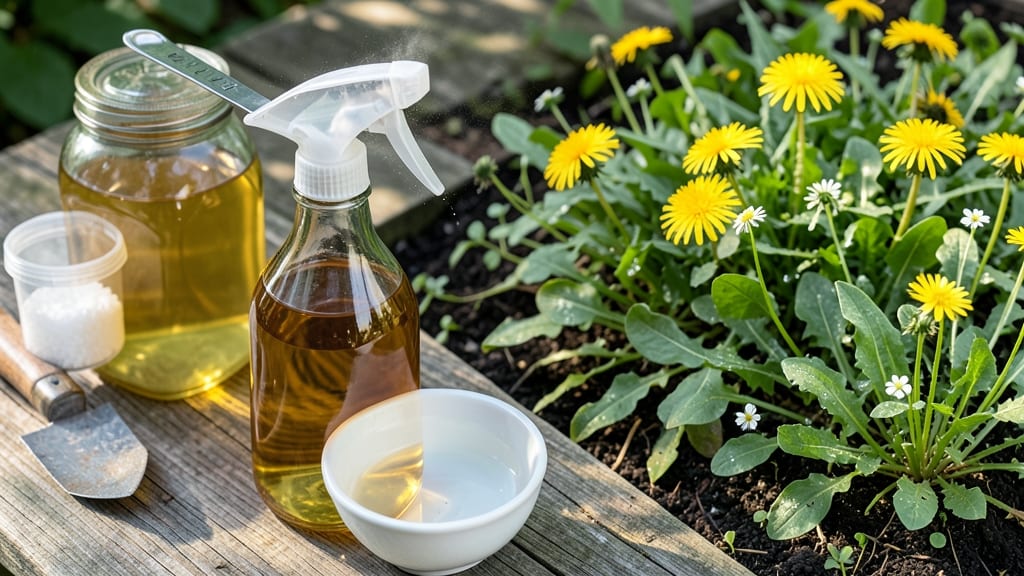
Vinegar weed killer ingredients typically include white vinegar (20-30% acetic acid), dish soap (1-2 tablespoons), and salt (1 cup), mixed in a gallon of water. This solution kills weeds by breaking down cell walls and dehydrating foliage, though effectiveness varies by weed type and concentration.
The core ingredients in a homemade vinegar weed killer work together to create a potent, natural solution.
White vinegar's acetic acid disrupts plant cell membranes, while the dish soap acts as a surfactant to help the mixture cling to weed leaves. Salt enhances the drying effect, though it may also harm nearby soil over time.
For tough weeds like dandelions, I recommend doubling the vinegar concentration to 50% vinegar and 50% water, but always test on a small area first. The key is consistency—reapply every 2-3 days until weeds wither completely, typically within 7-10 days.
One common mistake is using apple cider vinegar, which has lower acidity (around 5%) and won't kill weeds effectively. Horticultural vinegar (20-30% acidity) is ideal, but if you're using household white vinegar, ensure it's the clear variety without additives.
For delicate plants or edible gardens, reduce the salt to ½ cup per gallon to minimize soil damage. Always apply on a dry, sunny day to maximize the solution's drying power.
💡 In This Article
- How Vinegar Weed Killer Works: Chemical Breakdown and Plant Response
- Best Vinegar Weed Killer Recipes and Application Tips for Gardens
How vinegar weed killer works: chemical breakdown and plant response
At its core, vinegar weed killer relies on acetic acid—a natural organic acid that disrupts plant cell membranes. When sprayed on weeds, the acid penetrates the waxy cuticle layer, breaking down the lipid bilayer that holds plant cells together.
This causes cellular contents to leak out, a process called osmotic shock, which rapidly dehydrates the plant.
Unlike synthetic herbicides that target specific metabolic pathways, acetic acid attacks the physical structure of cells, making it effective against a wide range of weeds—though broadleaf species like dandelions respond faster than grasses due to their thinner cuticles. 🔥
The dish soap in the mixture serves as a critical surfactant, reducing surface tension so the vinegar solution spreads evenly and clings to leaves rather than beading up. Without this, the vinegar would simply roll off the waxy surfaces of weed foliage, reducing effectiveness by up to 40%.
Salt, meanwhile, acts as a hypertonic agent—it draws additional moisture out of plant cells through osmosis, accelerating the drying process. However, salt also alters soil chemistry, which is why it's best used sparingly in organic gardens or avoided entirely near edible plants.
What makes this mixture particularly interesting is how it bypasses the plant's natural defenses. Most weeds have evolved to withstand environmental stressors, but acetic acid's direct membrane disruption is harder to counteract.
The pH of vinegar (typically 2.0-3.0) is acidic enough to denature proteins in plant cells, effectively "cooking" the foliage from the inside out. This is why you'll see visible wilting within hours of application—unlike slow-acting herbicides that take days or weeks to work.
The combination of these ingredients creates a multi-pronged attack on weed physiology that's both rapid and chemically straightforward. 🌱
One key factor that determines effectiveness is concentration. Household white vinegar (5% acidity) works for small weeds but often fails on thick-stemmed plants like thistles. For these, horticultural vinegar (20-30% acidity) is far superior because it delivers a higher dose of acetic acid per spray.
The higher concentration doesn't just kill weeds faster—it also reduces the number of applications needed. For example, a 30% vinegar solution can kill weeds in 3-5 days, while 5% vinegar may take 10-14 days or fail entirely on tough species.
Temperature and humidity also play subtle but important roles. The solution works best when applied on warm, sunny days (above 70°F) because heat increases the evaporation rate of moisture from weed leaves, while sunlight intensifies the drying effect.
Conversely, applying vinegar weed killer in cool, humid conditions can dilute its potency as the solution lingers longer on leaves without evaporating. This is why gardeners in rainy climates often need to reapply more frequently or use slightly higher vinegar concentrations to compensate. 🌞
Finally, it's worth noting how this natural approach compares to synthetic herbicides. While chemical herbicides like glyphosate can kill weeds systemically (affecting roots and underground growth), vinegar only works on foliage that's directly sprayed.
This means you'll need to apply the solution multiple times to ensure complete eradication, especially for weeds with deep root systems. However, the environmental benefits—no toxic runoff, no harm to beneficial insects, and no soil contamination—make vinegar weed killer a compelling alternative for organic gardeners and eco-conscious homeowners.
The trade-off is patience and persistence rather than instant results. ✨