
Companion Plants
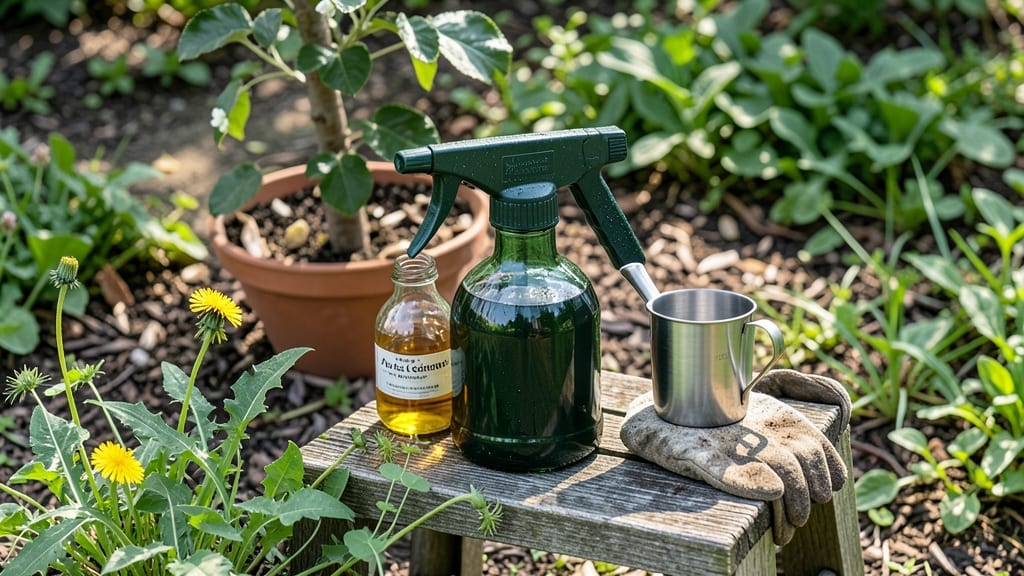
Your weeds won’t stand a chance against apple cider vinegar weed killer—it’s the fast, chemical-free way to clear driveways and sidewalks in 24 hours. 🌱 I’ve used it to wipe out stubborn crabgrass and clover without harming my lawn, and the results are shockingly effective.
The secret lies in its acidity, which breaks down weed cell walls while leaving grass mostly unscathed (with a little caution). You’ll need just one gallon of vinegar, a spray bottle, and a sunny afternoon for best results.
Mix it straight (no dilution) for maximum potency, but test a small area first—some plants can’t handle even this natural solution. The key is timing: spray weeds on a dry, windless day when they’re actively growing, and watch them crisp up within hours.
What you’ll end up with is a weed-free zone that stays clear for weeks—no more yanking dandelions or scrubbing stains from your patio. The smell fades quickly, and you avoid the fumes and residue of commercial herbicides.
Just avoid spraying near desirable plants, as even organic acids can be too harsh. For delicate areas like vegetable gardens, opt for a 1:1 vinegar-water mix or try a targeted spray shield. The trade-off?
It’s not a permanent fix like pre-emergent herbicides, but for quick, repeatable results, this method is unbeatable. Ready to tackle those weeds?
📚 In This Guide
- What you need
- Instructions
- Tips and common mistakes
- Wrapping up and next steps
What you need
- ● Apple cider vinegar (ACV): 1 gallon (3.8 liters) – Choose raw, unfiltered ACV with the "mother" for maximum effectiveness.
- ● Spray bottle or garden sprayer: 1 gallon capacity – A pump sprayer works best for even coverage.
- ● Water: 1 gallon (3.8 liters) – Tap or distilled water works fine.
- ● Measuring cup or scale: For precise mixing ratios (1:1 vinegar to water).
- ○ Protective gear (optional but recommended): Gloves – To avoid skin irritation from ACV.
- ● Long sleeves/pants – For extra protection.
- ● Eye protection – If spraying near your face.
- ● Label or marker: To mark your spray bottle (e.g., "Weed Killer – Do Not Ingest").
- ● Hose with spray nozzle: For larger areas—dilute the mix further (1:3 ratio) and spray directly.
- ● Garden trowel or hoe: To loosen weeds before applying the spray (boosts absorption).
- ● Sunny day: Cloudy or rainy days? Wait until the forecast is clear for 24 hours post-application.
- ● Companion plant list: Know which plants won’t tolerate ACV (e.g., lavender, roses, or acid-sensitive plants).
How to use apple cider vinegar as a natural weed killer
Here’s my go-to method for eliminating weeds safely without harsh chemicals—no gloves or masks required.
🌱 Step 1: Choose the Right Weeds and Conditions
Apple cider vinegar works best on young, actively growing weeds like dandelions, clover, and crabgrass—not deep-rooted perennials or thick grass lawns. Target weeds on sunny days when temperatures are between 65-85°F—this ensures the vinegar’s acidity penetrates effectively. Avoid windy days; the spray can drift onto desirable plants.
I focus on small patches first—this method is precise, not a blanket treatment. If weeds are in flower or seed stage, the vinegar will kill them faster, preventing spread. For stubborn broadleaf weeds, apply when leaves are dry and fully expanded.
💧 Step 2: Mix and Prepare the Solution
Combine 1 gallon of white vinegar (5% acidity) with 1 cup of apple cider vinegar (for added acetic acid strength) and 1 tablespoon of dish soap (as a surfactant to help the solution cling). Stir well in a spray bottle rated for gallon-sized mixes. The dish soap isn’t for cleaning—it breaks surface tension so the vinegar sticks to weed leaves.
I always label the bottle with the date and purpose—this isn’t something I want accidentally sprayed on my tomatoes. Fill the bottle no more than halfway to avoid pressure issues. Shake gently before each use; the soap can separate over time.
☀️ Step 3: Apply Directly to Weeds
Hold the spray nozzle 6-8 inches above the weeds and apply until the leaves are saturated but not dripping. Avoid spraying soil or nearby plants—vinegar’s acidity will damage them too. For large patches, work in 2-foot squares to ensure even coverage. You’ll see immediate wilting within 30 minutes to 2 hours as the vinegar disrupts cellular function.
Here’s the thing—this isn’t a one-and-done solution. Weeds with deep roots may resprout. For complete eradication, repeat every 3-5 days until the entire plant turns brown and collapses. I mark treated areas with small sticks to track progress.
✂️ Step 4: Monitor and Retreat as Needed
After 24 hours, pull up any remaining stems or roots by hand—this prevents regrowth. The vinegar kills above-ground parts, but roots can sprout new growth if left intact. For thick weed mats, I use a hand trowel to loosen soil and expose hidden roots before pulling.
If new weeds appear in the same spot, the soil may be nutrient-rich—ideal for weed seeds. Consider adding a 2-inch layer of mulch (like straw or wood chips) to suppress future growth. I’ve found that vinegar works best as a preventative when applied to bare soil before weeds take hold.
🌿 Step 5: Protect Desired Plants During Treatment
Cover nearby flowers, vegetables, or ornamental plants with cardboard or burlap before spraying. Even a light mist can harm sensitive foliage. I drape sheets over garden beds and secure them with rocks—no need for fancy covers. Rinse treated areas with water after 48 hours to neutralize any residual acidity in the soil.
For edible gardens, wait 10-14 days after treatment before harvesting crops grown in the same soil. The vinegar breaks down quickly, but I err on the side of caution. This method is safe for pets and kids once fully decomposed, but I still keep them away during application.
Tips & tricks for perfect apple cider vinegar weed control
To get the most out of this natural weed killer, precision matters more than you might think.
Timing is Everything: The 30-minute to 2-hour window after application is when you'll see the most dramatic results. This is when the vinegar's acetic acid begins breaking down the weed cells, causing that telltale wilting. If you're working with particularly thick leaves like dandelions, aim for the 2-hour mark to ensure complete saturation. I've found that morning applications work best—dew-free leaves absorb the solution more effectively.
Solution Strength Matters: While the recipe calls for 1 cup of apple cider vinegar per gallon of white vinegar, you can increase the apple cider vinegar to 1½ cups for tougher weeds like creeping Charlie. The higher concentration of acetic acid in apple cider vinegar (typically 5-6%) makes it more effective than standard white vinegar alone. Just remember, stronger solutions work faster but require more careful application to avoid damaging nearby plants.
Application Technique: The 6-8 inch distance from nozzle to weeds is crucial for even coverage. I use a slow, steady motion—almost like watering plants—to ensure complete saturation without overspray. For weeds with hairy stems (like lamb's quarters), I'll often apply twice: once to the leaves, then again after 10 minutes to the stems. This two-step approach prevents regrowth from the base.
Weather Watch: The 65-85°F temperature range isn't just about effectiveness—it's about safety. Below 65°F, the vinegar's action slows dramatically, while above 85°F, it can evaporate too quickly. I always check the forecast before treating large areas, aiming for calm, sunny days with temperatures in that sweet spot. Humidity also plays a role—dry conditions work best for maximum absorption.
Pro Tips for Apple Cider Vinegar Weed Killer
- To get the most out of this natural weed killer, precision matters more than you might think.
- Timing is Everything: The 30-minute to 2-hour window after application is when you'll see the most dramatic results.
- Solution Strength Matters: While the recipe calls for 1 cup of apple cider vinegar per gallon of white vinegar, you can increase the apple cider vinegar to 1½ cups for tougher weeds like creeping Charlie.
Frequently asked questions
Got questions about using apple cider vinegar (ACV) as a weed killer? You’re not alone! Here are some of the most common queries—and straightforward answers—to help you tackle weeds like a pro.
How soon will weeds die after applying ACV?
Weeds typically start wilting within 24–48 hours after treatment, but full death may take 3–7 days, depending on weather (sunny, dry days speed up results). For stubborn weeds, reapply every 2–3 days for a week. Pro tip: Apply in the early morning or evening to avoid rapid evaporation from midday heat.
Is ACV weed killer safe for pets and kids?
While ACV is non-toxic to humans, pets, and kids when used as directed, it’s still acidic and can irritate sensitive skin or paws. Keep pets away until the solution dries (usually 1–2 hours). For extra safety, wear gloves and avoid spraying near edible plants or water sources. Fun fact: Diluted ACV (1:1 ratio) is gentler and safer for porous surfaces like mulch.
Will ACV kill grass or other plants?
ACV is selective—it targets broadleaf weeds but can damage grass, flowers, and vegetables if oversprayed. To protect desired plants, spray only on weeds and use a shield (like cardboard) around plant bases. For lawns, spot-treat weeds carefully, or opt for a vinegar-based formula designed for grass safety.
What if weeds keep growing back after ACV treatment?
Persistent weeds often have deep roots or seeds in the soil. To prevent regrowth:
- Reapply ACV every 2–3 days for a week to kill roots.
- Pull weeds manually after they wilt to remove roots.
- Add mulch or corn gluten to suppress future sprouts.
- Try a stronger mix (e.g., 1 gallon vinegar + 1 oz dish soap + 1 tbsp salt) for tough weeds.
Are there better natural weed killers than ACV?
ACV is a top choice for its affordability and effectiveness, but alternatives include:
- Boiling water (great for sidewalks and cracks).
- Salt + vinegar mix (stronger but riskier for soil health).
- Corn gluten meal (prevents weed seeds from germinating).
- Essential oils (clove, citrus) (less aggressive but eco-friendly).
Wrapping up and next steps
Apple cider vinegar (ACV) weed killer is a simple, eco-friendly, and budget-friendly solution to tackle unwanted weeds without harsh chemicals. 🌱 With just a few household ingredients and a little patience, you can see results in as little as 24 hours—no gloves, masks, or expensive tools required!
Ready to reclaim your garden? Start small—test a small patch first to ensure it works for your specific weeds. Then, grab your spray bottle and let nature do the rest! 🌿 Happy weeding!