
Light Requirements
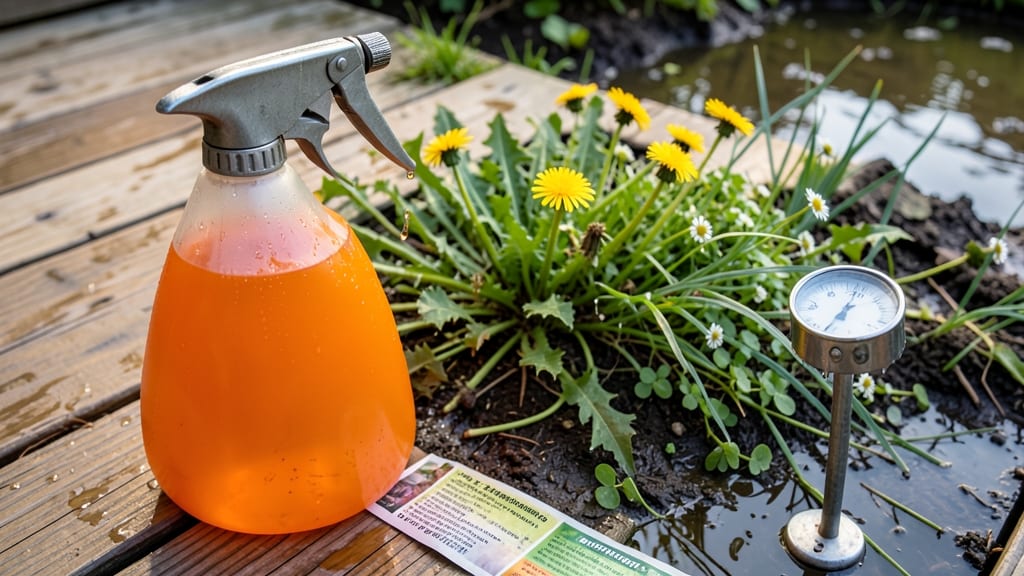
You can't spray weed killer after it rains—wait at least 24–48 hours, as rain dilutes the herbicide, prevents proper absorption, and washes it away before it can kill weeds. Always follow the product label for exact timing.
Rain transforms your lawn into a chemistry experiment gone wrong for weed killers. 🌧️ The moisture creates a barrier that prevents the active ingredients from sticking to weeds, while also washing away the chemical before it can work.
Even if you spray after a light shower, the soil may still retain enough dampness to reduce effectiveness. I recommend checking if the ground feels dry at least 2 inches down—this gives you the best chance for successful treatment.
Some herbicides are formulated to handle light moisture better than others, so always read the label for specific instructions. For example, pre-emergent herbicides may require different timing than post-emergent ones. If you're dealing with persistent weeds after rain, consider using a granular product instead—it's less affected by wet conditions.
💡 In This Article
- How Rain Affects Weed Killer Absorption and Effectiveness
- Best Practices for Applying Weed Killer After Rainy Weather
How rain affects weed killer absorption and effectiveness
The key issue with spraying weed killer after rain lies in how moisture disrupts the herbicide's chemical properties. Most herbicides rely on direct contact with plant surfaces and foliage to work.
When rain falls, it creates a thin water film on leaves and soil, which acts like a barrier that dilutes the active ingredients before they can penetrate the weed's system.
For example, glyphosate-based herbicides need to stay on the target plant for at least 6-12 hours to be effective—rain washing it away within hours defeats this requirement.
Moisture also alters the herbicide's adhesion properties. The active ingredients in weed killers often contain surfactants that help them stick to plant surfaces. Rain disrupts these surfactants by creating a slippery surface layer that prevents proper attachment.
Think of it like trying to stick a sticker to a wet surface—it just slides off. Additionally, rain can cause the herbicide to leach into the soil too quickly, where it may break down before reaching the weed's roots or foliage.
This is particularly problematic for systemic herbicides that need time to be absorbed and transported within the plant.
Timing matters because weeds absorb water through their leaves and roots. When you spray after rain, the weeds are already hydrated, which means they're less likely to take up the herbicide through their surfaces.
The plant's stomata (tiny pores) may remain open from the rain, but the herbicide gets washed away before it can enter. For instance, dicamba-based products rely on proper foliar uptake, and rain can reduce their effectiveness by up to 70% if applied within 24 hours of precipitation.
This is why waiting for the soil to dry out is critical—it allows the herbicide to adhere and be absorbed properly.
Another factor is how rain affects the soil's pH and microbial activity. Many herbicides work best in specific pH ranges, and rain can temporarily alter soil acidity. If the soil becomes too acidic or alkaline after rain, the herbicide's chemical structure may change, reducing its potency.
For example, 2,4-D, a common weed killer, is less effective in highly acidic soils, which rain can exacerbate. Additionally, increased microbial activity in wet soil can accelerate the breakdown of herbicides, further reducing their lifespan on the target weeds.
Consider this real-world scenario: You spray a lawn with a glyphosate-based herbicide after a light shower, only to see the weeds remain unaffected. The herbicide likely didn't have enough time to adhere or be absorbed because the soil and foliage were still damp.
This is why professionals always recommend waiting until the ground is dry—not just the surface, but at least 2 inches deep. Use your finger to check: If the soil feels moist below this depth, wait longer.