
Advice
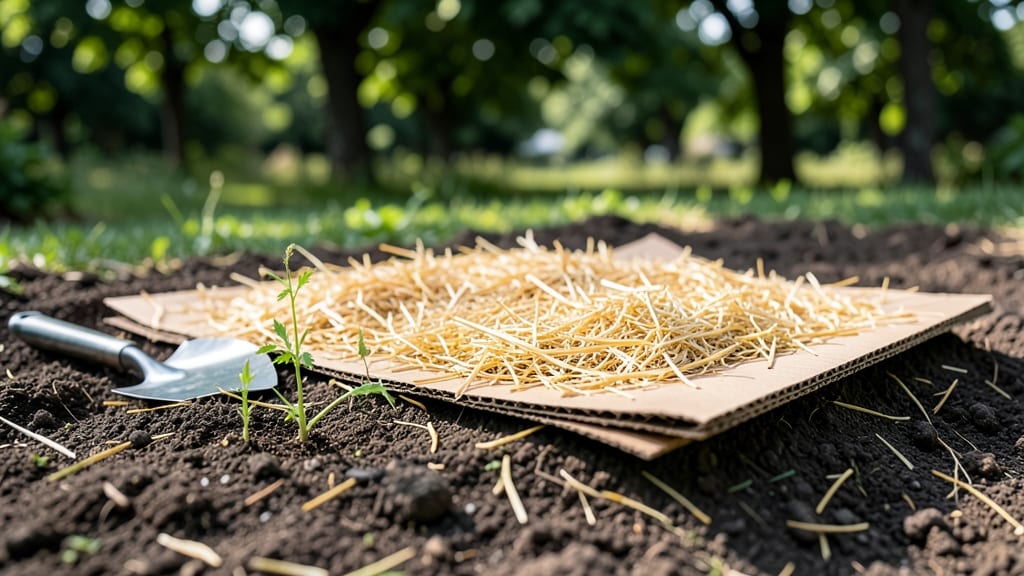
Cardboard prevents weeds by blocking sunlight, but its effectiveness depends on thickness (at least 2-3 layers) and material quality—untreated, unbleached cardboard works best while printed or wax-coated types may degrade faster under moisture. Always bury edges to deter pests and ensure full coverage.
Cardboard works as a weed barrier because it smothers seeds by cutting off their sunlight supply—their primary energy source. 🌱 The thicker the layers, the longer it lasts, but even standard cardboard can block 90% of light for months.
Untreated cardboard also breaks down naturally, becoming part of the soil as it decomposes, unlike plastic mulches that don't integrate. I've found that burying edges prevents critters from lifting it, while adding a layer of mulch on top extends its lifespan by protecting against rain and wind erosion.
For best results, choose unbleached, non-glossy cardboard—these types decompose more predictably and don't leave harmful residues. 🌿 Printed or wax-coated cardboard may take longer to break down, but they still work for short-term weed suppression.
The key is proper installation: overlap sheets by at least 2 inches and bury the edges with soil to create a seamless barrier. This method is especially effective in garden beds where you want to kill existing weeds before planting new crops.
💡 In This Article
- How Cardboard Blocks Weed Growth and Decomposes
- Best Cardboard Types and Preparation for Weed Suppression
How cardboard blocks weed growth and decomposes
Weeds rely entirely on photosynthesis to grow, and cardboard disrupts this process by blocking 90-95% of sunlight when layered correctly. The paper fibers create a dense mat that prevents light penetration to the soil surface, starving weed seeds of the energy they need to sprout.
Even a single layer of standard cardboard (about 0.01 inches thick) can achieve this, but adding 2-3 layers extends the suppression period by blocking more light and slowing decomposition. 🌱 The key mechanism is light deprivation—without sunlight, weed seeds remain dormant or die within weeks, unlike mulch that merely suppresses but doesn't kill existing weeds.
Decomposition speed varies dramatically by cardboard type. Untreated, unbleached cardboard breaks down in 3-6 months due to natural cellulose content that soil microbes easily digest. Printed or wax-coated varieties can take 6-12 months because inks and coatings create hydrophobic barriers that repel moisture.
The decomposition process involves soil microbes (bacteria and fungi) consuming the cellulose fibers, which releases nutrients back into the soil—a process called "sheet mulching" or "lasagna gardening." Thicker cardboard lasts longer but may leave behind microplastics if treated, which is why organic gardeners prefer plain corrugated boxes.
Moisture plays a critical role in both weed suppression and cardboard breakdown. When buried with edges, the cardboard stays damp longer, accelerating microbial activity that decomposes the material while maintaining the weed-blocking barrier.
However, excessive moisture can cause cardboard to swell and warp, creating gaps where weeds might sprout. 💧 This is why gardeners often add a 2-inch layer of mulch (straw or wood chips) on top—it regulates moisture while protecting the cardboard from wind and erosion.
The ideal balance is keeping the cardboard consistently moist but not waterlogged, which typically occurs in 40-60% soil moisture conditions.
Temperature affects decomposition rates too. In warmer climates (75°F+), cardboard may degrade in just 2-3 months, while cooler regions (50°F) can extend this to 9-12 months.
The breakdown process releases nitrogen as microbes consume the cellulose, which can temporarily "lock up" nitrogen in the soil—hence why gardeners often add compost or nitrogen-rich amendments when installing cardboard.
This is a trade-off: the weed suppression is immediate, but the soil fertility boost takes time to manifest as the cardboard decomposes.
One common misconception is that all cardboard works equally. In reality, corrugated cardboard (with its fluted layers) outperforms flat cardboard because the air pockets improve drainage and microbial access. The flutes also create a more stable barrier that resists shifting from wind or animal activity.
For long-term suppression (12+ months), some gardeners combine cardboard with landscape fabric or black plastic, though this reduces the soil benefits of decomposition. The trade-off is always between immediate weed control and long-term soil health.
For visual learners, imagine this: a weed seed lying dormant in soil covered by 0.02-inch thick cardboard receives only 5% of normal sunlight. Without energy, its metabolic processes shut down within 10-14 days.
Meanwhile, the cardboard's cellulose fibers begin breaking down as soil microbes feast on them, slowly transforming into organic matter. This dual-action—blocking light while feeding soil life—is why cardboard remains a favorite among organic gardeners for both its effectiveness and eco-friendliness. 🌿