
Watering
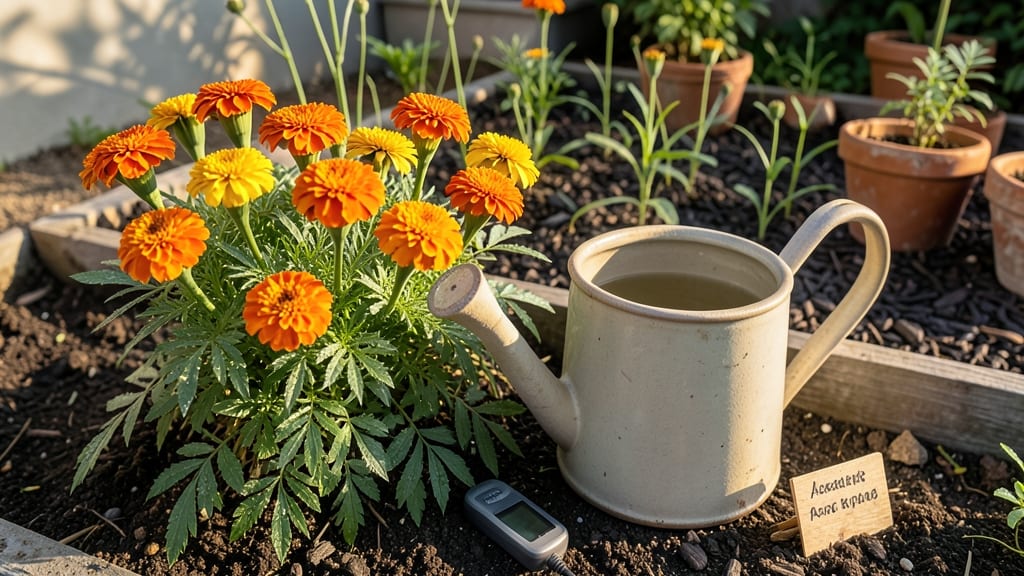
How much water do marigolds really need: the science behind their soil moisture needs
Marigolds thrive in moderate soil moisture, but their water needs often get misunderstood. While they love sunshine, they’re surprisingly drought-tolerant once established. The key lies in their root system, which spreads widely to access moisture efficiently.
Overwatering is the real enemy—it leads to root rot and yellowing leaves, not dehydration.
Think of marigolds like sunbathers: they need just enough hydration to stay comfortable, not soaked like a beach towel. Their native habitats in dry climates (like Mexico and South America) prove they prefer well-draining soil over soggy conditions.
This means your watering schedule should adapt to your local climate and soil type.
Did you know? Marigolds store water in their leaves and stems, acting like natural reservoirs. This adaptation helps them survive dry spells—once they reach maturity. Young seedlings, however, are more delicate and need consistent moisture to establish strong roots.
| Growth Stage | Water Frequency | Soil Moisture Goal | Key Signs |
|---|---|---|---|
| Seedlings (0-4 weeks) | Every 2-3 days | Consistently moist | Wilted leaves = thirsty |
| Established Plants (4-8 weeks) | Every 5-7 days | Top 1-2 inches dry | Yellow leaves = overwatered |
| Mature Plants (8+ weeks) | Every 7-10 days | Dry between waterings | Drooping = underwatered |
| Summer Heatwave | Every 3-5 days | Top 1 inch dry | Crispy edges = thirsty |
| Winter Dormancy | Monthly (light) | Minimal moisture | Mushy stems = rot risk |
Climate plays a huge role in marigold water needs. In hot, dry regions like Arizona or California, marigolds may need watering every 3-5 days during summer. Meanwhile, in humid climates like Florida, you’ll want to water less frequently to avoid fungal issues.
Always check the top 1-2 inches of soil—if it’s dry, it’s time to water.
The root zone is where action happens. Marigolds develop a shallow but extensive root system, meaning they spread horizontally rather than growing deep. This makes them vulnerable to waterlogged soil, which cuts off oxygen and triggers rot.
To prevent this, amend your soil with compost or perlite to improve drainage.
Container-grown marigolds dry out faster than in-ground plants because pots have limited soil volume. If your marigolds are in 5-gallon containers, water them every 2-3 days during summer.
For larger pots (10+ gallons), stretch it to every 5-7 days. Always water until it drains from the bottom—this ensures roots get oxygen.
Yellowing leaves are a classic overwatering sign in marigolds. Unlike underwatering (which causes wilting), overwatering leads to soft, mushy stems and leaves that turn yellow or brown at the edges. If you spot this, reduce watering and improve drainage immediately. Let the soil dry out completely before watering again.
Mulching is your secret weapon for consistent moisture. Apply a 2-inch layer of organic mulch (like straw or shredded leaves) around your marigolds to retain soil moisture and regulate temperature.
This reduces evaporation and keeps roots cool—perfect for summer heat or drought-prone areas. Just keep mulch 2 inches away from stems to prevent rot.
Marigolds are not thirsty plants—they’re survivors. Once established, they can go 7-10 days without water in ideal conditions. The key is to water deeply but infrequently, encouraging roots to grow deeper.
Shallow, frequent watering leads to weak roots and disease. Think of it like training your marigolds to be self-sufficient.
Pro tip: Use the "finger test" to check moisture. Stick your finger 1-2 inches into the soil. If it feels dry, water; if it’s damp, wait.
This simple trick saves marigolds from both drought stress and root rot. Pair it with morning watering to let leaves dry before nightfall, reducing fungal risks.
Signs of overwatering vs. underwatering marigolds: what your plant is really telling you
Marigolds 🌼 might look sturdy, but they’re surprisingly sensitive to watering mistakes. Overwatering and underwatering both cause stress, but the symptoms look different. Learning to read your plant’s signals will save you from soggy roots or wilting blooms.
Start by checking the soil moisture—stick your finger 1-2 inches deep. If it’s damp, hold off on watering. If it’s dry, your marigolds are thirsty. Leaf color and stem firmness are your next clues.
Pros:
- Lush, dark green leaves
- Fix: Let soil dry out; improve drainage
Cons:
- Yellow leaves
- Mushy stems
- Fix: Reduce watering; repot if needed
Pros:
- None (overwatering is always harmful)
Pros:
- Strong, upright stems
- Fix: Water deeply when soil is dry
Cons:
- Root rot
- Fungal diseases
- Fix: Use well-draining soil; water at base
Cons:
- Crispy, brown edges
- Drooping leaves
- Fix: Mulch to retain moisture
Yellowing leaves are a red flag for overwatering. If the leaves turn yellow and feel mushy, your marigolds are drowning. Root rot spreads quickly in soggy soil, so act fast by reducing water and improving drainage with perlite or sand.
Drooping leaves and dry, crispy edges mean underwatering. Unlike wilting from heat, these leaves stay limp even at night. Water deeply in the morning to revive them—aim for 1 inch of water per week during dry spells.
For container-grown marigolds, check soil moisture daily. Containers dry out faster, so water when the top inch feels dry. Mulch helps retain moisture and keeps roots cool in summer.
Pay attention to bloom production, too. Overwatered marigolds produce fewer flowers, while underwatered ones may stop blooming entirely. Adjust your watering routine based on your local climate and soil type.