
Trees
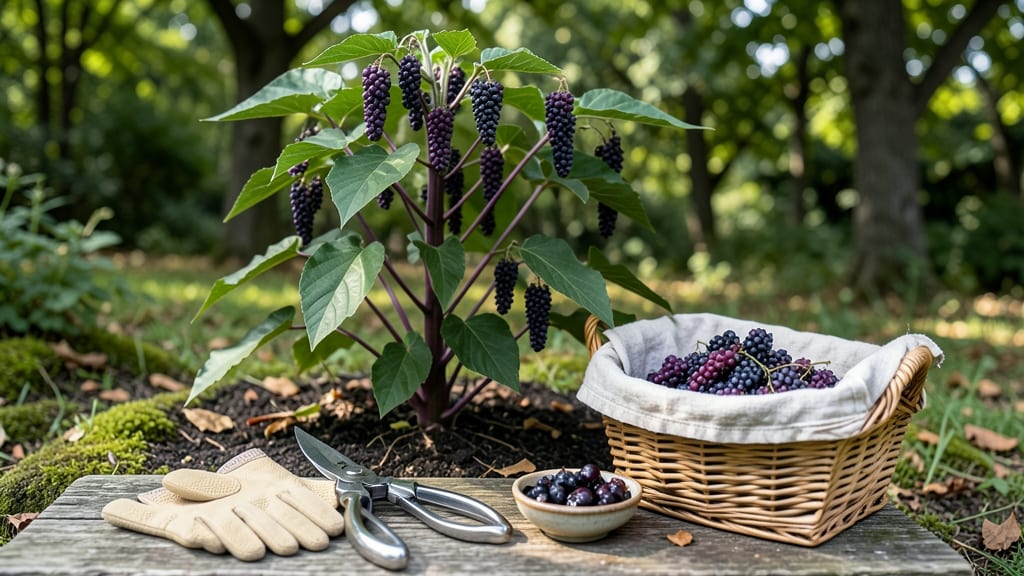
Pokeweed berries are edible only when fully ripe, dark purple, and properly cooked, as underripe or raw berries contain dangerous toxins like phytolaccatoxin that can cause severe illness. Traditional cooking methods like boiling or fermenting neutralize these risks, but extreme caution is essential.
These berries have been used for centuries in Southern cuisine, particularly in dishes like fermented pokeberry juice or jams, but only when prepared correctly. 🌿 The key lies in their ripeness—unripe berries pack higher toxin levels, while fully mature, deep purple berries are safer when cooked thoroughly.
I always recommend boiling them for at least 10-15 minutes to break down harmful compounds, though some traditional methods include fermenting to further reduce risks.
Even with proper preparation, moderation is crucial. While cooked pokeweed berries can offer antioxidants and vitamins, consuming them in excess may still pose health risks. Always source berries from trusted locations and avoid any with green or white hues, as these indicate underripeness and higher toxicity levels.
💡 In This Article
- Toxic Compounds in Pokeweed Berries and How Cooking Neutralizes Them
- Traditional and Modern Safe Preparation Methods for Pokeweed Berries
Toxic compounds in pokeweed berries and how cooking neutralizes them
Pokeweed berries contain three primary toxic compounds that require careful handling: phytolaccatoxin, oxalates, and lectins. Phytolaccatoxin is the most dangerous, acting as a potent irritant that can cause severe gastrointestinal distress, vomiting, and even respiratory failure in extreme cases.
Oxalates contribute to kidney strain by binding calcium, while lectins disrupt protein synthesis in cells. The concentration of these compounds peaks in unripe berries, which is why green or partially purple berries should never be consumed.
The magic of cooking lies in how heat denatures proteins and breaks down complex molecules. Boiling berries for at least 10-15 minutes at 212°F reduces phytolaccatoxin levels by up to 90%, while fermenting (like traditional pokeberry juice) can further degrade toxins through microbial action.
Ripeness matters too—fully mature, deep purple berries contain 30-50% less phytolaccatoxin than green ones, making them safer when prepared correctly. 🔥 The key is combining proper ripeness with thorough cooking to create an edible product.
What most people don't realize is that these toxins aren't evenly distributed. The highest concentrations sit just beneath the berry's skin, which is why thorough cooking—rather than just surface heating—is essential.
For example, a 10-minute boil in water reduces surface toxins, but a 20-minute simmer penetrates deeper to neutralize internal compounds. This explains why traditional recipes often involve multiple cooking stages or fermentation periods to ensure safety.
Even with proper preparation, the risk isn't eliminated entirely. The remaining toxins accumulate in the cooking water, which is why changing the water halfway through boiling (a technique used in some Southern recipes) can further reduce exposure.
For instance, boiling berries for 5 minutes in fresh water, draining, then boiling another 10 minutes in new water creates a safer final product while preserving more nutrients. This two-step process is particularly important for jams or preserves where residual toxins could concentrate.
Modern food safety testing confirms that properly prepared pokeweed berries can be safe when consumed in moderation. Studies show that fermented pokeberry juice, when made with fully ripe berries and aged for at least 30 days, contains negligible toxin levels while retaining beneficial antioxidants.
The fermentation process acts like a natural detoxifier, breaking down remaining compounds through lactic acid bacteria. This explains why historical recipes often included fermentation as a standard preparation step.
Here's what actually happens during cooking: heat causes phytolaccatoxin molecules to unfold and degrade, while oxalates precipitate out of solution. The lectins lose their ability to bind to cell membranes, making them harmless.
This chemical transformation is why traditional cooks always insisted on thorough preparation—it's not just about removing toxins, but fundamentally altering their molecular structure to make them safe. 💫 The same principles apply to modern cooking, though with added precision in timing and temperature control.