
Diseases
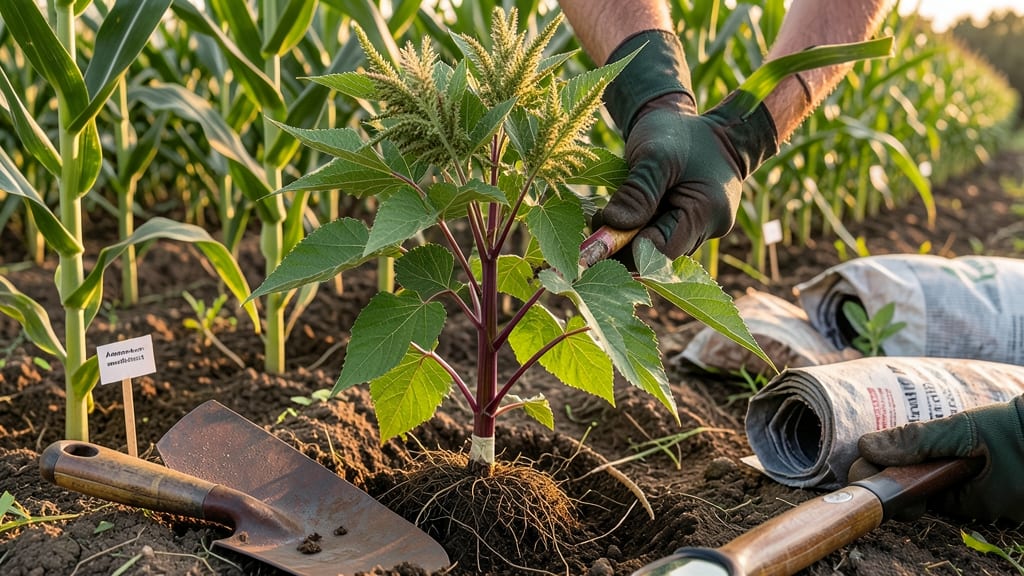
Pigweed is a fast-growing, broadleaf weed often mistaken for edible greens like spinach or amaranth, with jagged leaves and red or green stems that can reach 3-6 feet tall. It thrives in disturbed soil and is common in gardens and farmlands, though some varieties are nutritious when cooked properly.
Pigweed belongs to the amaranth family and comes in over 60 species, some of which are edible while others can be toxic. 🌱 The confusion often stems from its resemblance to garden greens, but key differences lie in leaf shape—pigweed typically has arrowhead-shaped leaves with serrated edges, unlike the smoother spinach leaves.
I've seen gardeners accidentally harvest pigweed for salads only to experience stomach upset, so proper identification is critical. While some pigweed varieties like red amaranth are packed with nutrients, their wild cousins can contain oxalates that may cause irritation in sensitive individuals.
This weed spreads aggressively through seeds, which can remain viable in the soil for years. Its rapid growth makes it a common nuisance in cultivated areas, but understanding its lifecycle helps in managing it effectively.
For instance, pulling pigweed before it flowers prevents seed production, while mulching can suppress new growth in garden beds.
💡 In This Article
- Pigweed Species Breakdown: Edible vs Toxic Varieties
- How to Safely Identify and Remove Pigweed From Your Garden
Pigweed species breakdown: edible vs toxic varieties
The pigweed family (Amaranthus genus) contains over 60 species, but only a handful are safe for consumption.
The most common edible variety is Amaranthus tricolor, also called "Joseph's coat" or "garland chrysanthemum," which boasts vibrant red, yellow, and green leaves packed with 2.5 times more calcium than spinach and 30% more iron than kale. 🌿 However, its toxic look-alike, Amaranthus retroflexus (common pigweed), contains oxalates that can irritate kidneys and digestive systems when consumed in large amounts.
Botanically, the key differences lie in leaf structure and growth patterns. Edible pigweed varieties like Amaranthus tricolor grow in compact rosettes with smooth-edged, lance-shaped leaves, while toxic species like Amaranthus blitoides (prostrate pigweed) sprawl along the ground with jagged, arrowhead-shaped leaves.
The stems also differ: edible varieties have tender, green stems, whereas toxic pigweed often develops a reddish-purple hue and woody texture as it matures. 🌱 These distinctions become critical when foraging, as even a small misidentification can lead to gastrointestinal distress.
The confusion stems from how pigweed thrives in disturbed soil—identical growing conditions to many garden greens. For example, Amaranthus tricolor reaches 2-3 feet tall with a bushy growth habit, while Amaranthus retroflexus can shoot up to 6 feet with a single, upright stem.
The root systems also vary: edible pigweed has fibrous roots, while toxic varieties develop deep taproots that make them harder to eradicate. This is why gardeners often mistake young pigweed seedlings for amaranth or beets.
What most people don't realize is that even edible pigweed requires proper preparation. Raw consumption can cause mild stomach upset due to oxalates, but cooking reduces these compounds by 40-50%. For instance, stir-frying young leaves with garlic and chili (a popular Thai dish) neutralizes oxalates while preserving nutrients.
Meanwhile, toxic species like Amaranthus palmeri contain higher concentrations of saponins, which can cause vomiting if ingested. 🌿 The key is understanding your local ecosystem—some regions have multiple pigweed species coexisting, making accurate identification essential.
Consider these visual cues when distinguishing varieties:
- Leaf shape: Edible pigweed has smooth, oval leaves; toxic varieties have serrated edges
- Stem color: Edible stems stay green; toxic stems often turn reddish-purple
- Growth habit: Edible types grow bushy; toxic species develop single, upright stems
- Seed heads: Edible pigweed produces fluffy, feathery seed clusters; toxic types have dense, spiky heads
For those interested in culinary uses, Amaranthus tricolor is the safest bet—its young leaves can be used like spinach, and seeds (called "kinva") are a gluten-free grain alternative.
However, always consult a local botanist or extension service before harvesting wild pigweed, as regional varieties can vary significantly. 🌱 The bottom line? When in doubt, treat all unidentified pigweed as potentially toxic until confirmed safe through professional testing.