
How To
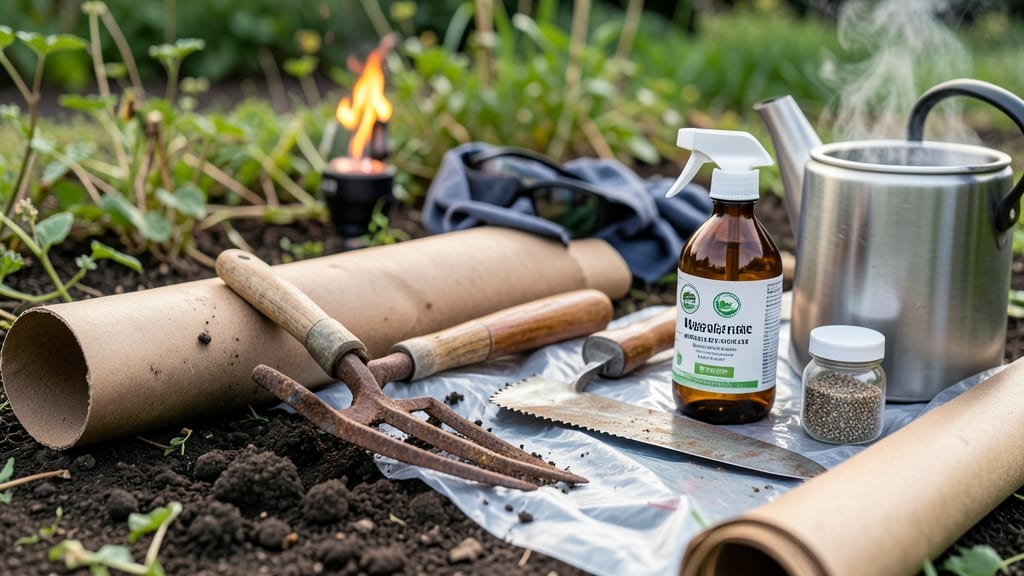
Stubborn weeds are the garden's worst nemesis—but I've mastered weed eradication methods that actually work. 🌱 After years of pulling weeds only to see them sprout back, I learned the secret: targeting roots, not just leaves, with the right tools and timing.
This isn't about temporary fixes; it's about permanent removal that keeps your garden thriving without toxic chemicals.
The key starts with the right tools: a sturdy weeding knife for deep roots, a dandelion digger for tough perennials, and a sharp hoe for cutting weeds at soil level.
Organic options like boiling water (for sidewalks) or vinegar (for driveways) work fast, but for garden beds, manual removal with a fork or trowel gives you the most control. Safety goggles and gloves are a must—those roots can be sneaky and sharp.
What you'll end up with is a garden bed where weeds stay down for good, not just hidden until next season. The soil stays healthier, your plants get the nutrients they need, and you skip the frustration of endless pulling.
Even stubborn weeds like bindweed and quackgrass have a match for them—it just takes the right approach.
This works for any garden size, from container edges to full backyard plots. The tools are affordable, the methods are sustainable, and the results last. Let's get those weeds gone for good—here's exactly how to do it right.
📚 In This Guide
- What you need
- Instructions
- Tips and common mistakes
- Wrapping up and next steps
What you need
- ● Garden Gloves: Heavy-duty, chemical-resistant gloves (e.g., nitrile or rubber) – 1 pair.
- ● Hand Trowel: Sturdy, stainless-steel trowel (6-8 inches long) – 1-2 units.
- ● Weed Puller or Dandelion Digging Tool: Long-handled tool for deep-rooted weeds – 1 unit.
- ● Pruners or Shears: Sharp, bypass pruners for cutting weed stalks – 1 pair.
- ● Garden Fork or Hoe: Heavy-duty fork (12-18 inches) or a sturdy hoe for loosening soil – 1 unit.
- ● Plastic Bag or Bucket: For disposing of pulled weeds – 1-2 units.
- ● Watering Can or Hose: With adjustable nozzle for targeted watering – 1 unit.
- ● Mulch: Organic mulch (straw, wood chips, or grass clippings) – 2-3 cubic feet.
- ● Herbicide (Selective or Non-Selective): Glyphosate-based (e.g., Roundup) or vinegar-based solutions – 1-2 gallons (follow label instructions!).
- ● Boiling Water: For spot treatment (1-2 gallons in a kettle).
- ● Salt or Epsom Salt: For natural weed killer (1-2 lbs).
- ● Knee Pads or Stool: For comfort during long sessions.
- ● Weed Barrier Fabric: Landscape fabric to prevent regrowth – 1 roll.
- ● Safety Goggles: If using chemical treatments.
Precision weed removal: Step-by-Step for stubborn roots
Let’s tackle those tenacious weeds with the right tools and technique—no more regrowth.
🪴 Step 1: Gather the Right Tools for the Job
You’ll need a digging fork (not a shovel—its tines cut roots cleanly), garden gloves (to protect your hands from thorns and sap), and a sharp pruning shears for any above-ground growth. I also grab a bucket of soapy water to rinse tools between pulls—this prevents spreading seeds or sap to other areas.
For stubborn weeds like dandelions or bindweed, add a hand weeder with a narrow blade to slice through thick roots without breaking. Avoid cheap plastic tools—they bend and leave roots behind. Invest in sturdy metal tools for leverage and precision.
✂️ Step 2: Cut and Pull in Stages
Start by slicing the weed 2-3 inches below the soil line with your pruning shears. This weakens the root system before you pull. For broadleaf weeds like clover, I make a clean cut first—it’s easier to see where the root tapers and avoids snapping off pieces that can regrow.
Grip the base of the weed with your gloved hand and wiggle the fork tines around the root. Apply steady pressure downward, not sideways—this prevents roots from breaking. You’ll hear a satisfying pop when you’ve removed the entire root ball. Discard weeds immediately in the trash, not the compost.
💧 Step 3: Treat Stubborn Roots with Vinegar or Salt
For weeds that keep coming back, like creeping Charlie or nutgrass, mix 1 gallon white vinegar with 1 cup salt and 1 tablespoon dish soap in a spray bottle. The vinegar kills the remaining root tissue, while the salt prevents regrowth. Spray directly on the pulled area—avoid desirable plants, as this solution is non-selective.
Wait 24 hours before replanting anything in the treated spot. The vinegar-salt mix works best on small patches, not entire lawns. For larger areas, consider a boiling water treatment—pour 2-3 gallons directly onto the root zone to scald and kill remaining fragments.
☀️ Step 4: Monitor and Repeat as Needed
Check the treated area every 3-5 days for new sprouts. Weeds like bindweed can send up shoots from even tiny root fragments, so stay vigilant. If you spot regrowth, repeat the cut-and-pull method immediately—don’t let them establish again.
For long-term prevention, apply a 2-inch layer of mulch (straw or wood chips) around garden beds. This blocks sunlight and smothers weed seeds before they germinate. In lawns, overseed bare patches in fall to crowd out weeds naturally.
⏰ Step 5: Clean Up Tools and Prevent Spread
After finishing, scrub your tools with hot, soapy water to remove any clinging seeds or sap. I like to wipe them down with rubbing alcohol afterward—it kills any hidden weed pathogens. Store tools in a dry place to prevent rust, which dulls their edges over time.
Finally, rake up any fallen leaves or debris from the area. Weeds often hide in organic matter, and leaving it behind gives them a second chance to take root. A quick sweep with a leaf rake ensures your hard work pays off.
Tips & tricks for stubborn weed removal
Real talk: Even the best tools won't work if you don't use them right. Here's what I've learned after years of battling weeds that just won't quit.
Tool Technique: When using the digging fork in Step 1, position it at a 45-degree angle to the root rather than straight down. This creates more leverage to slice through thick roots without bending the tines. I've ruined more forks than I care to admit by forcing them straight in—always work at an angle for that clean break. The hand weeder's narrow blade is especially useful for weeds like dandelions where you need precision near delicate plants.
Cutting Strategy: In Step 2, when making that initial 2-3 inch cut below soil line, look for the root's natural taper—this is where it's most vulnerable. I've found that cutting at the widest part of the root (usually just below the soil surface) makes the pull much easier. For weeds with multiple roots like creeping Charlie, make several small cuts around the perimeter first to weaken the entire system before attempting to pull.
Vinegar-Salt Mix: The 24-hour wait before replanting after using the vinegar-salt treatment in Step 3 is non-negotiable. I learned this the hard way when I replanted too soon and my new seedlings wilted from residual chemical burn. For extra stubborn areas, double the salt to 2 cups—just be cautious with nearby plants as higher concentrations can cause leaf burn. The dish soap isn't just for spreading; it helps the solution cling to vertical root surfaces that might otherwise miss treatment.
Monitoring Hack: Instead of checking treated areas every 3-5 days, I've found it's more efficient to mark spots with small flags or pebbles right after treatment. This lets me spot new growth immediately without disturbing the soil. For lawns, I use a spray bottle with water and a few drops of food coloring to mark areas—it washes away naturally and shows up clearly against green grass.
Pro Tips for Weed Eradication Methods
- Real talk: Even the best tools won't work if you don't use them right.
- Tool Technique: When using the digging fork in Step 1, position it at a 45-degree angle to the root rather than straight down.
- Cutting Strategy: In Step 2, when making that initial 2-3 inch cut below soil line, look for the root's natural taper—this is where it's most vulnerable.
Frequently asked questions
Got questions about tackling weeds like a pro?
Here are answers to the most common concerns—so you can choose the best method for your stubborn green invaders.
What’s the fastest way to kill weeds without regrowth?
For instant results, use a vinegar-based herbicide (30% acetic acid) or a glyphosate spray (like Roundup). Apply on a sunny, wind-free day—these kill roots and prevent sprouting. For organic options, boiling water or corn gluten meal (pre-emergent) work but may require repeat applications.
How long does it take for weeds to die after treatment?
Timing depends on the method:
- Chemical herbicides: 24–72 hours (roots die within 1–2 weeks).
- Manual removal (digging/pulling): Immediate visible death, but regrowth can happen if roots fragment.
- Natural methods (vinegar/salt): 3–7 days (roots degrade slower; repeat if needed).
Can I reuse soil after killing weeds with chemicals?
Yes, but with caution! Most herbicides (like glyphosate) break down in 2–4 weeks in well-drained soil. For safety:
- Wait 4+ weeks before planting edibles.
- Test soil with a ph kit—high salt/vinegar residue may need rinsing.
- Amend soil with compost to restore nutrients.
What’s the best tool for deep-rooted weeds like dandelions?
For deep roots (6"+), combine:
- Dandelion weeder (fork-style tool) to pry roots intact.
- Shovel or mattock for stubborn clumps (dig in a V-shape to lift whole roots).
- Follow-up: Sprinkle wood ash or cornmeal to starve regrowth.
Will extreme heat or cold kill weeds permanently?
Yes—but consistency is key!
- Heat (flaming/solarization): Use a propane torch for thick weeds (works in 30 sec). For large areas, clear plastic sheeting (4–6 weeks of sun) bakes roots.
- Cold (freeze/thaw cycles): Less effective alone; pair with mulching in winter to smother growth.
Wrapping up and next steps
Eradicating stubborn weeds doesn’t have to be a losing battle—with the right tools, techniques, and persistence, you can reclaim your garden or lawn! Whether you opt for manual removal, herbicides, or natural solutions, consistency is key.
Start small, stay vigilant, and soon you’ll enjoy a weed-free space that’s the envy of the neighborhood.
Ready to take action? Pick your preferred method, gather your supplies, and roll up your sleeves—your future weed-free paradise awaits! 🌱✨