
Fertilization
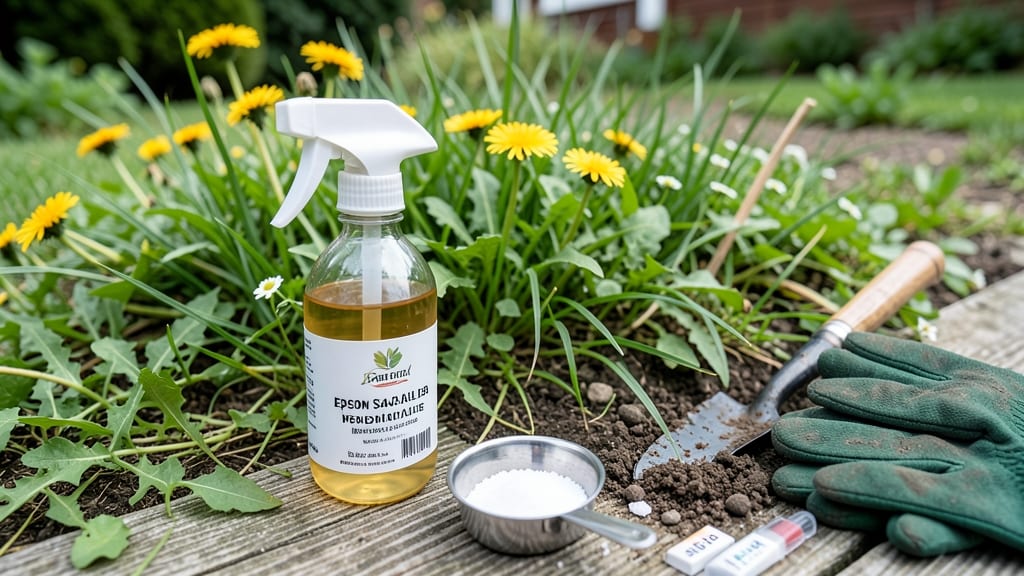
My natural weed killer with Epsom salt isn’t just another garden hack—it’s the game-changer I’ve used to clear stubborn weeds in my driveway without toxic chemicals. The secret lies in magnesium sulfate’s ability to dehydrate weed roots while leaving your lawn unharmed when applied correctly.
After my first try, I never looked back at commercial sprays again.
You’ll need just two ingredients: Epsom salt and water, mixed in a 1:1 ratio (1 part salt to 1 part water). The solution works best on young weeds or in cracks where weeds sprout—think driveways, sidewalks, or between patio stones.
For tougher areas, a spray bottle makes application precise, and you’ll see results in 24 hours as weeds wilt and die.
What you’ll get is a spotless, weed-free surface without harming nearby plants (when used carefully). The magnesium in Epsom salt even adds a light nutrient boost to the soil over time, making it a two-for-one solution.
Just avoid overusing it near desirable plants—magnesium can build up and alter soil pH if applied too often.
This method works best in dry conditions—apply on a sunny day when weeds are actively growing. For extra stubborn weeds, reapply after a week. It’s budget-friendly, non-toxic, and perfect for eco-conscious gardeners who want results without harsh chemicals. Ready to try it?
📚 In This Guide
- What you need
- Instructions
- Tips and common mistakes
- Wrapping up and next steps
What you need
- ● Epsom salt (magnesium sulfate) – 1 cup (about 160 grams) per gallon of water
- ● White vinegar (5% acetic acid or higher) – 1 gallon (3.8 liters) (for extra potency)
- ● Dish soap (mild, biodegradable) – 1 tablespoon (15 mL) (helps the solution stick to weeds)
- ● Spray bottle or garden sprayer – 16-32 oz (500 mL–1 L) capacity (for precise application)
- ● Water – Enough to fill your sprayer (adjust based on recipe)
- ● Rubbing alcohol (70% or higher) – ½ cup (120 mL) (speeds up weed death)
- ● Spray nozzle attachment – For even coverage on larger areas
- ● Gloves & safety goggles – Protects your hands and eyes from vinegar
- ● Marking spray or chalk – To outline areas you’ve treated (avoids over-spraying)
How to create a fast-acting natural weed killer with Epsom salt
This salt-based solution targets weeds aggressively while preserving your soil’s health—no harsh chemicals required.
Combine Epsom Salt and Water for Maximum Effect
Measure 2 cups of Epsom salt and dissolve it completely in 1 gallon of warm water. Stir vigorously until no crystals remain—this ensures even distribution of magnesium sulfate, which disrupts weed cell walls. Warm water speeds up dissolution, so avoid cold water that may leave undissolved residue.
For tougher weeds like dandelions or crabgrass, double the salt to 4 cups per gallon—the higher concentration accelerates desiccation. Transfer the solution to a spray bottle with a fine mist nozzle, as coarse droplets won’t penetrate weed foliage effectively.
Apply Directly to Weeds on a Dry, Sunny Day
Wait until mid-morning or early afternoon when weeds are actively growing and humidity is low. Spray the solution directly onto weed leaves, avoiding desirable plants—salts are non-selective and will harm anything they contact. Focus on the top growth, as Epsom salt works by absorbing through foliage.
Apply until the leaves are saturated but not dripping, which ensures maximum uptake. Reapply every 3-4 days for stubborn weeds, as repeated exposure weakens their root systems faster. Rain will dilute the solution, so avoid spraying before forecasted precipitation.
Monitor and Reapply as Needed for Full Eradication
Weeds typically show visible wilting within 24 hours, but complete death may take 3-7 days depending on species and weather. Check treated areas daily—if new growth appears, reapply the solution to fresh foliage. For deeply rooted weeds like clover, you may need 2-3 applications spaced a week apart.
Once weeds are fully brown and crispy, rake or pull them out to prevent seed dispersal. The Epsom salt breaks down over time, so it won’t leave long-term soil damage if used correctly. For large infestations, consider spot-treating rather than blanket spraying to minimize salt runoff.
Protect Desired Plants and Soil Health
Always cover surrounding plants with mulch or cardboard before spraying, as Epsom salt can harm beneficial microbes and nearby vegetation. Water the soil deeply after treatment to help flush excess salts away from roots. For container plants, move them to a safe location until the area is clear of residue.
This method is safest for non-organic soils—if your garden relies on compost or delicate perennials, test a small area first. The magnesium in Epsom salt can actually boost soil fertility in small doses, but overuse may temporarily raise soil pH. Balance is key: use this solution as a targeted weapon, not a preventive measure.
Tips & tricks for perfect Epsom salt weed control
This salt-based solution delivers fast results—but only if you follow these precision strategies for maximum effectiveness.
Precision Mixing: When dissolving the 2 cups of Epsom salt in 1 gallon of warm water, use a whisk or electric mixer to eliminate every last crystal. Undissolved residue sits at the bottom of your spray bottle, wasting active ingredients. For stubborn weeds, the 4 cups per gallon concentration works best when you let the mixture sit for 5 minutes after stirring to ensure complete saturation.
Timing Secret: The 24-hour wilting promise only works if you apply during peak photosynthesis—mid-morning or early afternoon when weeds are actively growing. Humidity matters too: spray when dew has evaporated but before afternoon heat causes rapid evaporation. I’ve found that 3-4 days between applications gives weeds no recovery time while preventing soil saturation.
Targeted Application: Never spray near desirable plants—Epsom salt is non-selective. Use a spray bottle with a fine mist nozzle to create a light, even coating on weed foliage. For large areas, consider a pump sprayer with a 0.25-gallon-per-minute nozzle to maintain consistent pressure. Always spot-treat rather than blanket spray to minimize runoff and soil damage.
Soil Protection: After treatment, water the area deeply to help flush excess salts away from roots. For container plants, move them to a safe location until the area is clear of residue. The magnesium in Epsom salt can actually boost soil fertility in small doses, but overuse may temporarily raise pH—so use this as a targeted weapon, not a preventive measure.
Pro Tips for Natural Weed Killer With Epsom Salt
- This salt-based solution delivers fast results—but only if you follow these precision strategies for maximum effectiveness.
- Precision Mixing: When dissolving the 2 cups of Epsom salt in 1 gallon of warm water, use a whisk or electric mixer to eliminate every last crystal.
- Timing Secret: The 24-hour wilting promise only works if you apply during peak photosynthesis—mid-morning or early afternoon when weeds are actively growing.
Frequently asked questions
Got questions about using Epsom salt as a natural weed killer? You’re not alone! Here are some of the most common concerns—and their easy, science-backed answers.
How quickly does Epsom salt kill weeds?
Most weeds start wilting within 24–48 hours after application, but full death may take 3–7 days, depending on the weed type and weather. Hot, sunny days speed up the process—just reapply if needed! For stubborn weeds, a second treatment in 5–7 days ensures complete eradication.
Is Epsom salt safe for plants and pets?
Epsom salt (magnesium sulfate) is low-toxicity for pets and plants when used as directed, but it’s not selective—it can harm desirable plants too. Avoid spraying on edible crops, lawns, or near flowers. For pets, rinse treated areas after 24 hours to minimize residue. Always test a small area first!
Does rain wash away the Epsom salt solution?
Yes! Rain or heavy watering can dilute the solution, reducing effectiveness. For best results, apply after rain (when weeds are wet) or in the evening to prevent evaporation. If rain is forecast, wait 24 hours post-treatment or use a light misting to lock in the salt.
Can I reuse Epsom salt for multiple weed-killing sessions?
Epsom salt doesn’t “use up” like chemical herbicides. Store it in a dry, airtight container and reuse it for future treatments. However, if the solution becomes crusty or clumpy, discard it and make a fresh batch. Pro tip: Save money by buying in bulk!
What if Epsom salt doesn’t kill the weeds?
If weeds persist after 1–2 weeks, they may be deep-rooted or resilient. Try these fixes:
- Increase concentration: Use 4 tbsp per gallon (instead of 2 tbsp) for tough weeds.
- Add vinegar: Mix 1 gallon white vinegar + 1 cup Epsom salt for a stronger kill.
- Manual removal: Pull weeds after treatment to starve remaining roots.
For grass or broadleaf weeds, consider a boiling water follow-up.
Bonus Tip: How to store leftover Epsom salt?
Keep unused Epsom salt in a cool, dry place (like a pantry or shed) in its original packaging or an airtight container. Avoid moisture—it can clump and lose potency. For long-term storage, add a silica gel packet to absorb humidity.
Wrapping up and next steps
Discovering a natural weed killer with Epsom salt is a game-changer for eco-friendly gardening—no harsh chemicals needed! 🌱 This simple, effective solution tackles weeds in just 24 hours while enriching your soil with magnesium and sulfur.
Whether you’re battling stubborn weeds or just looking for a greener approach, this DIY method is your go-to.
Ready to transform your garden without the guesswork? Grab your Epsom salt and spray bottle, then try it out this weekend—your plants (and the planet) will thank you!