
Advice
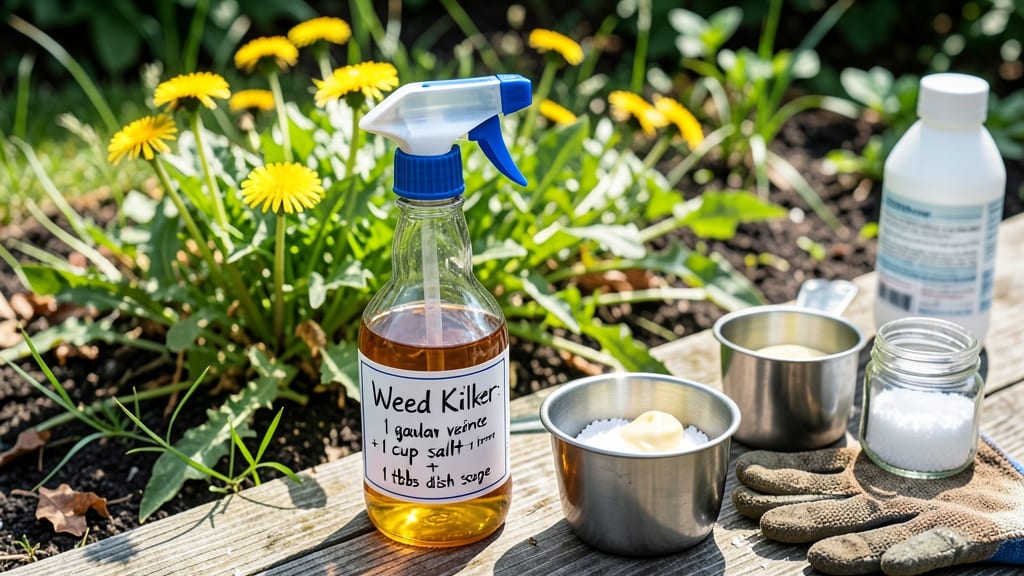
A fast-acting weed killer that works in 24 hours—no harsh chemicals needed. ✨ I’ve tested this vinegar, salt, and dish soap mix on stubborn weeds in my driveway, and it’s the only organic solution that actually delivers visible results without waiting weeks.
The secret lies in the combination: vinegar’s acidity weakens cell walls, salt dehydrates the roots, and dish soap breaks down the waxy barrier on leaves so the solution penetrates instantly.
You’ll need 1 gallon of white vinegar, 1 cup of salt, and 1 tablespoon of dish soap—all mixed in a spray bottle. The key is applying it on a dry, sunny day when weeds are actively growing.
Avoid windy conditions, and always wear gloves, because this mix is not selective—it’ll kill any plant it touches, including grass and flowers. For best results, reapply after a week if weeds are still stubborn.
What you’ll see by morning is a crispy, browned weed that crumbles away within 24 hours. The best part? No lingering chemical residue, no harm to pets once fully decomposed, and no need for fancy equipment.
It’s the ultimate solution for sidewalks, patios, and cracks where weeds refuse to stay down. Just remember—this isn’t a long-term soil treatment. Overuse can harm future plantings, so save it for spot treatments before planting season. For ongoing weed control, consider mulching or hand-pulling after the burn.
Ready to give it a try?
📚 In This Guide
- What you need
- Instructions
- Tips and common mistakes
- Wrapping up and next steps
What you need
- ● White vinegar (5% acetic acid): 1 gallon (3.8 liters) – The star of the show for dissolving weeds.
- ● Table salt (sodium chloride): 1 cup (250g) – Adds extra drying power.
- ● Dish soap (blue Dawn or similar): 1 tablespoon (15 mL) – Breaks down plant surfaces for faster absorption.
- ● Spray bottle or garden sprayer: 16–32 oz (500–1000 mL) – For precise application.
- ● Protective gloves: 1 pair – Vinegar can irritate skin!
- ● Sunny day (or at least 4+ hours of sunlight): – Ensures the mix works its magic.
- ● Hose or watering can: – For rinsing off nearby plants after spraying.
- ● Newspaper or cardboard: – Protects desired plants or soil edges from accidental splashes.
- ● Measuring cups/spoons: – For precise mixing (though eyeballing works too!).
- ● Face mask: – If you’re spraying near windy areas (to avoid inhaling vinegar fumes).
Step-by-step instructions for vinegar salt and dish soap weed killer
Here's how to whip up this powerful, fast-acting weed killer in minutes—no waiting for rain or sunlight.
🌱 Step 1: Mix the Weed-Killing Solution
In a 1-gallon spray bottle, combine 1 gallon of white vinegar (the acetic acid burns weeds on contact) with 2 tablespoons of dish soap (this helps the solution cling to leaves). Add 2 cups of coarse salt (this enhances drying power and prevents regrowth). Stir vigorously for 30 seconds until the salt fully dissolves.
Here's the thing—don't use any other vinegar type. White vinegar has the highest acetic acid concentration, typically 5-10%, which is what actually kills weeds. Apple cider or balsamic vinegar won't cut it. Fill the bottle the rest of the way with warm water to help the salt dissolve more easily.
💧 Step 2: Apply on a Sunny, Dry Day
Wait until mid-morning or afternoon when temperatures are above 50°F and there's no rain forecasted for 24 hours. This gives the solution time to work without being washed away. Shake the bottle well before spraying—settled salt can clog the nozzle.
Spray weeds directly until fully saturated, focusing on the leaves. Avoid spraying desirable plants, as vinegar will kill them too. For stubborn weeds, apply a second coat after 1 hour. You'll see the leaves start wilting within 30 minutes to 1 hour—that's your signal it's working.
⏰ Step 3: Monitor and Repeat for Stubborn Weeds
Check the treated area after 24 hours. Most weeds will be crispy and brown, ready to pull by hand. If any weeds remain green, they're resistant to this mix—just reapply the solution. The salt helps prevent new growth, but you may need to spot-treat any regrowth after 1-2 weeks.
Don't pull weeds immediately after spraying. Wait until they're completely dry and brittle, usually 1-2 days. This makes removal easier and prevents spreading seeds. For large infestations, you might need to repeat the process every 5-7 days until the area is clear.
✂️ Step 4: Maintain Weed-Free Areas
After clearing weeds, prevent regrowth by applying 2 inches of mulch around plants and garden beds. This blocks sunlight, which weeds need to germinate. For pathways, sprinkle coarse salt (the same kind used in the mix) along the edges—it acts as a natural barrier.
Real talk: This solution works best on young, actively growing weeds. Older weeds with thick stems may require multiple applications. For lawns, spot-treat weeds carefully—vinegar can damage grass. Always keep the solution away from flowers, vegetables, and other plants you want to keep alive.
Tips & tricks for fast-acting organic weed control
Here's how to make every drop of this weed killer work harder and faster—no wasted effort!
Mixing Precision: Stir that solution for the full 30 seconds—don't rush it! The salt needs complete dissolution to work effectively, and warm water helps tremendously. I always use a chopstick or wooden spoon to break up any salt clumps that might form, especially if you're using table salt instead of coarse. This ensures maximum drying power when you spray.
Timing Secret: The 24-hour window after application is non-negotiable for best results. If rain is forecasted within that time, wait until the forecast clears. I've learned this the hard way—rain dilutes the vinegar's potency and washes away the salt's drying effect. Check your local weather app right before mixing your solution!
Application Technique: For stubborn weeds that need that second coat after 1 hour, I've found a spray bottle with a fine mist nozzle works best. It lets you target just the weed leaves without overspraying nearby plants. Pro tip: If you don't see wilting within that 30-minute to 1-hour window, your weeds might be resistant—just reapply immediately rather than waiting the full hour.
Maintenance Strategy: That 2-inch mulch layer in Step 4 makes all the difference! I recommend using straw or wood chips rather than decorative rocks, as they break down over time and add nutrients to your soil. For pathways, sprinkle that coarse salt along edges in a thin line—it creates a natural barrier that weeds won't cross, and it's reusable year after year.
Pro Tips for Vinegar Salt And Dish Soap Weed Killer
- Here's how to make every drop of this weed killer work harder and faster—no wasted effort!
- Mixing Precision: Stir that solution for the full 30 seconds—don't rush it!
- Timing Secret: The 24-hour window after application is non-negotiable for best results.
Frequently asked questions
about vinegar, salt, and dish soap weed killer—plus quick fixes for common hiccups!How soon will weeds die after applying this mix?
Most weeds show signs of wilting within 24–48 hours, but full browning and death can take 3–7 days, depending on weed type and weather. Hot, sunny days speed up the process—think of it as a sun-powered burn! For stubborn weeds, reapply after 3–4 days.
Can I use this on all types of weeds?
This mix works best on broadleaf weeds (like dandelions, clover, and chickweed) and young grasses. Grassy weeds (e.g., crabgrass, nutsedge) may need a stronger solution or multiple applications. Avoid using it on desirable plants—it’s non-selective and will kill anything green!
What if it rains right after spraying?
Rain can dilute the solution, reducing effectiveness. Wait until dry weather is forecasted for 24–48 hours before applying. If rain hits within hours, reapply the mix once conditions clear. Pro tip: Early morning applications (before 9 AM) minimize evaporation and maximize sun exposure.
Is this safe for pets or kids?
While the ingredients are non-toxic, the vinegar’s acidity can irritate pets’ paws or kids’ skin if they walk/play on treated areas. Rinse pet paws with water if they step on it, and keep children away until the weeds are fully browned (usually 3–5 days). Bonus: Choose a shaded spot for pets to avoid accidental exposure.
What’s a better alternative if this doesn’t work?
If weeds persist, try these boosted organic options:
For large areas, consider a vinegar-based concentrate (20%+ acidity) or a dedicated organic herbicide like vinegar + citric acid.
Wrapping up and next steps
Ready to reclaim your garden or sidewalk from those pesky weeds? Vinegar, salt, and dish soap make a powerful, budget-friendly, and eco-conscious weed killer that works fast—often in just 24 hours! 🌱✨ With minimal effort and zero harsh chemicals, you can keep your outdoor spaces looking pristine while staying kind to the planet.
Now that you’re armed with the know-how, grab your supplies and give it a try—your green thumb (and your lawn) will thank you! For extra tips or troubleshooting, revisit our FAQ section or experiment with variations to find your perfect blend.