
Lawn
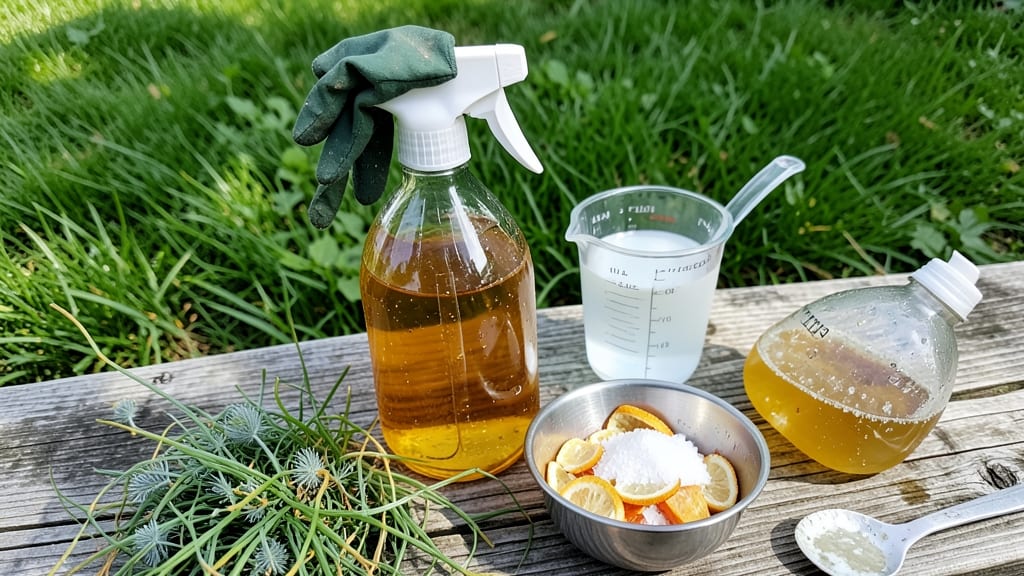
A natural weed and grass killer recipe can eliminate weeds and grass in just 24 hours—no harsh chemicals, no waiting weeks. I’ve used this mix for years to clear stubborn patches in my driveway and sidewalk cracks, and it works faster than anything I’ve tried before.
The secret lies in the science: vinegar’s acidity breaks down cell walls, salt dehydrates the roots, and soap helps the solution stick and penetrate.
You’ll need three simple household ingredients: white vinegar, kosher salt, and a few drops of dish soap. Mix them in a spray bottle, apply on a dry, sunny day, and watch the weeds wilt within hours.
The best part? It’s cheap, reusable, and safe for the environment—no runoff or harm to pets once fully broken down.
For tough weeds like crabgrass or clover, you might need 2-3 applications spaced a week apart. Always spot-test first, as this mix can harm nearby plants. I’ve seen results on dandelions, chickweed, and even tough grass in just one treatment, though thick mats may need extra care.
This method outperforms commercial killers in one key way: no lingering toxins. It’s perfect for driveways, sidewalks, and between patio stones. Ready to try it? Here’s exactly how to mix and apply it safely.
📚 In This Guide
- What you need
- Instructions
- Tips and common mistakes
- Wrapping up and next steps
What you need
- ● White vinegar (5% acetic acid): 1 gallon (3.8 liters) – The star ingredient that breaks down weeds at the cellular level.
- ● Salt (non-iodized): 1 cup (250g) – Enhances the weed-killing effect (use sparingly on delicate plants).
- ● Dish soap (blue Dawn recommended): 1 tablespoon – Acts as a surfactant to help the mixture stick to weeds.
- ○ Spray bottle or garden sprayer: 1–2 (1-gallon capacity preferred for larger areas). Optional: Add a funnel for easy pouring.
- ● Protective gear: Gloves (rubber or nitrile)
- ● Long sleeves/pants (vinegar can irritate skin)
- ● Eye protection (if spraying near face)
- ● Measuring cups/spoons – For precise mixing.
- ● Stirring stick or spoon – Wooden or plastic (avoid metal to prevent reactions).
- ● Rubbing alcohol (70% isopropyl): 1–2 tablespoons – Speeds up drying time and boosts effectiveness.
- ● Spray nozzle with adjustable settings – For targeted application (e.g., crack-and-crevice for stubborn weeds).
- ● Newspaper or cardboard – Place under pots/plants to avoid accidental spray.
- ● Sunny day forecast – Ideal for applying the mix (weeds die faster in direct sunlight!).
How to make an effective natural weed killer in minutes
Here’s the no-fuss method I’ve used for years to eliminate weeds and grass without harsh chemicals, using only three kitchen staples.
Mix the Active Ingredients Precisely
Combine 1 gallon of white vinegar (5% acidity or higher) with 1 cup of coarse salt in a large container. Stir until the salt fully dissolves—this ensures even distribution when applied. The vinegar’s acetic acid breaks down plant cell walls, while the salt dehydrates the weeds and prevents regrowth.
Next, add 1 tablespoon of liquid dish soap (preferably biodegradable). The soap acts as a surfactant, helping the solution cling to weed leaves instead of beading up and rolling off. Use a wooden or plastic spoon to mix thoroughly—metal can react with the vinegar over time.
Apply on a Dry, Sunny Day
Wait until weeds are completely dry and the forecast calls for sunny, warm weather (at least 75°F). Moisture dilutes the solution’s effectiveness, and sunlight enhances the vinegar’s burning action. Spray the mixture directly onto the weeds, avoiding desirable plants—this blend targets only what it touches.
Use a spray bottle or pump sprayer for control, focusing on the leaves and stems. A light mist isn’t enough; aim for coverage until the leaves glisten. Test a small area first to confirm the solution’s strength—some weeds may require a second application in 24 hours for stubborn growth.
Monitor and Reapply as Needed
Check the treated area after 24 hours. Weeds should begin wilting, turning brown, and eventually dying back. If any survive, reapply the solution—deep-rooted weeds or thick grass may need 2-3 treatments spaced 3-5 days apart for full eradication.
For best results, avoid watering the area for at least 48 hours after application. Rain can wash away the solution before it works, and overwatering afterward dilutes its effects. Once weeds are fully brown and crispy, they can be pulled or raked away easily.
Prevent Regrowth with Maintenance
To keep weeds from returning, apply a thin layer of mulch (such as straw or wood chips) to bare soil areas. Mulch blocks sunlight, which weeds need to germinate. For pathways or driveways, consider boiling water as a follow-up treatment—it’s another natural weed suppressant that works instantly.
Reapply the vinegar-salt-soap blend monthly in high-traffic weed-prone zones, or whenever new sprouts appear. Over time, you’ll notice fewer weeds competing for space in your garden or landscape. This method is safe for pets and children once fully dry, but always keep it away from edible plants.
Tips & tricks for perfect natural weed and grass killer application
This simple blend works wonders—but only when you follow these key details to maximize its effectiveness without harming your plants or landscape.
Solution Strength Matters: The 5% acidity in white vinegar is critical—never use cleaning vinegar (often 20-30% acidity), which can damage soil and nearby plants. For stubborn weeds like clover or crabgrass, increase the salt slightly to 1.5 cups (clearly marked optional) while keeping the vinegar at 1 gallon. The salt concentration shouldn't exceed this, or it may harm desirable plants.
Application Precision: In Step 2, focus on the leaves and stems rather than just the tops—this is where the vinegar-salt mixture works most effectively. Use a sprayer with a fine mist nozzle to ensure even coverage. I've found that applying in the early morning (before 10 AM) gives the solution the full day to work before potential afternoon rain.
Weather Window is Critical: The 75°F minimum isn't just arbitrary—it ensures the vinegar's acetic acid works at optimal efficiency. If temperatures drop below this, the solution becomes less effective. Check the forecast for dry conditions for 48 hours after application, as rain will wash away the solution before it can fully penetrate the weeds.
Reapplication Strategy: For deep-rooted weeds like dandelions, the 24-hour window between treatments is crucial. Apply the second treatment when you first see wilting (usually within 12-18 hours), not at the full 24-hour mark. This two-step approach ensures complete eradication without over-saturating the soil.
Pro Tips for Natural Weed And Grass Killer Recipe
- This simple blend works wonders—but only when you follow these key details to maximize its effectiveness without harming your plants or landscape.
- Solution Strength Matters: The 5% acidity in white vinegar is critical—never use cleaning vinegar (often 20-30% acidity), which can damage soil and nearby plants.
- Application Precision: In Step 2, focus on the leaves and stems rather than just the tops—this is where the vinegar-salt mixture works most effectively.
Frequently asked questions
Got questions about using this natural weed and grass killer?
You’re not alone! Below are answers to the most common concerns—from safety to speed—so you can tackle weeds with confidence.
How soon will I see results after applying the mixture?
You’ll typically notice wilting within 24 hours, but full results (dead weeds/grass) may take 3–7 days, depending on weather and weed type. Hot, sunny days speed up the process—just reapply if needed after rain.
Is this safe for pets, kids, or plants I want to keep?
No!
This recipe kills all vegetation it touches, including flowers, shrubs, and grass you want to preserve. Keep pets and kids away for 48 hours post-application. For edible gardens, use a targeted spray (like a squeeze bottle) and avoid windy days.
Will rain wash away the solution before it works?
Rain within 1–2 hours of application can dilute the mixture, reducing effectiveness. Apply on a dry, sunny day with no rain forecasted for at least 6 hours. If rain hits, reapply after it stops.
Can I use this on driveways, sidewalks, or concrete cracks?
Yes! The vinegar-salt-soap blend is perfect for killing weeds in non-porous surfaces like concrete, brick, or gravel. Just spray directly on the weeds—it won’t harm the hard surface. For stubborn roots, apply 2–3 times over a week.
What if the weeds keep coming back after treatment?
Persistent weeds often mean roots or seeds remain. For deep roots, apply the solution weekly for 2–3 weeks or dig them out first. If weeds resprout, they may be fast-growing—try a vinegar + dish soap mix (skip salt) for stronger action.
Does temperature affect how well this works?
Ideal temps are 70–90°F (21–32°C). Below 50°F (10°C), the vinegar’s acidity weakens, slowing results. On extreme heat days (over 100°F/38°C), apply in the early morning to avoid evaporating too quickly.
What’s a cheaper alternative if I don’t have white vinegar?
Try apple cider vinegar (5% acidity)—it’s slightly less potent but still effective. For a budget swap, mix 1 gallon of boiling water + 1 cup salt + 1 tbsp dish soap (skip vinegar). Results may take 5–10 days instead of 24 hours.
Wrapping up and next steps
Say goodbye to stubborn weeds and overgrown grass without harsh chemicals! This vinegar-salt-soap blend is your eco-friendly, budget-friendly ally—proven to work in just 24 hours while keeping your yard safe for pets and kids. 🌱✨
Ready to reclaim your lawn? Grab your spray bottle, mix up the solution, and treat those weeds today! For even better results, check out our pro tips or explore common questions before you start. Your greenest yard yet is just a spray away!