
Watering
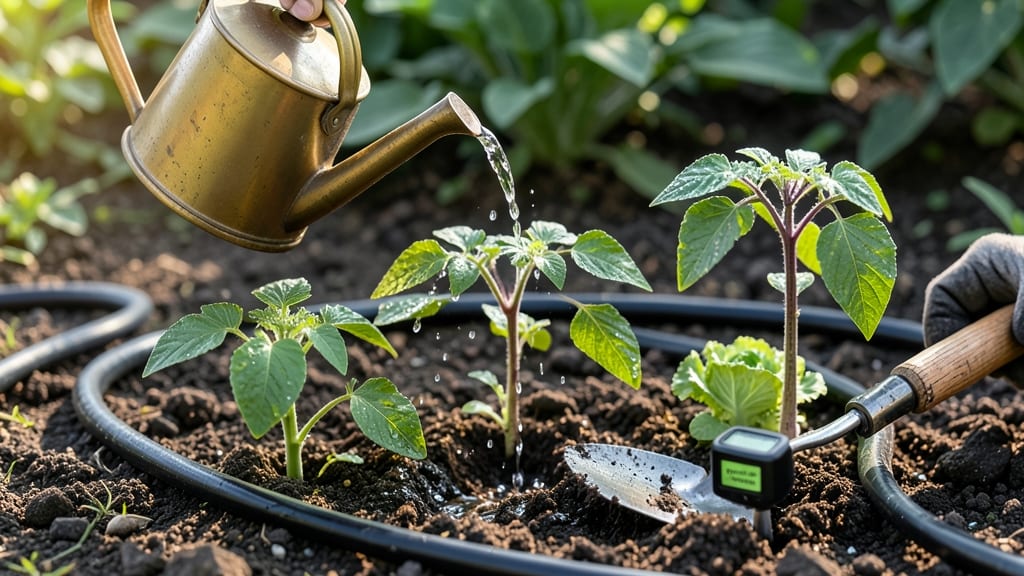
The soil check method: when to water newly planted vegetables
Newly planted vegetables are delicate—they need just the right amount of water to establish strong roots without drowning. Overwatering suffocates roots, while underwatering stresses young plants. The key is checking soil moisture before watering, not following a rigid schedule.
Different vegetables have unique needs: leafy greens like lettuce prefer consistent dampness, while root crops like carrots need evenly moist (but not soggy) soil. Let’s master the soil check method to water with confidence.
Start by understanding your garden’s soil type. Sandy soil drains quickly, requiring more frequent watering, while clay holds moisture longer. Loamy soil (ideal for most veggies) balances drainage and retention.
Before watering, test the soil’s moisture level using three simple methods: the finger check, weight test, and visual inspection. These techniques replace guesswork with science-backed cues.
Step-by-Step Soil Check Method
-
Step 1: Finger Check (1-2 Inches Deep)
Stick your index finger 1-2 inches into the soil near the plant’s base. If it feels dry, water immediately. If damp (like a wrung-out sponge), wait 1-2 days. For seedlings, check daily—they need moisture constantly.
-
Step 2: Weight Test (Lift a Clod)
Grab a handful of soil. A light clod means it’s dry; a heavy clod signals excess moisture. Ideal soil should feel crumbly but moist, like a damp sponge. Adjust watering based on this tactile feedback.
-
Step 3: Visual Inspection (Surface Cues)
Observe the soil surface. Cracked or dusty soil needs water, while shiny or puddled areas indicate overwatering. For container-grown veggies, check the top inch—if it’s dry, water until it drains from the bottom.
-
Step 4: Adjust for Vegetable Type
Leafy greens (e.g., spinach, kale): Keep soil consistently moist—water every 1-2 days in hot weather. Root crops (e.g., carrots, radishes): Allow soil to dry slightly between waterings—water every 2-3 days to prevent splitting. Fruiting plants (e.g., tomatoes, peppers): Water deeply 2-3 times per week, encouraging root growth.
-
Step 5: Time of Day Matters
Water in the early morning (before 9 AM) to reduce evaporation and fungal risks. Avoid evening watering, which promotes mildew. Use a soaker hose or drip irrigation to deliver water directly to roots.
For newly transplanted seedlings, the first week is critical. Water gently every 1-2 days, keeping the soil evenly moist but not soggy. Use a spray nozzle to avoid disturbing the soil around delicate roots.
Mulch with straw or shredded leaves to retain moisture and regulate temperature—this reduces watering frequency by 30-50%.
Watch for visual stress signs in your plants. Wilted leaves (especially in the afternoon) often mean underwatering, while yellowing leaves or mushy stems signal overwatering.
Adjust your soil checks based on these cues. Drought-tolerant veggies like Swiss chard or okra can handle slightly drier soil, while heat-sensitive plants like cucumbers need frequent moisture.
Climate plays a huge role in watering frequency. In hot, dry climates (e.g., desert regions), you may need to water daily for young plants, while humid climates (e.g., Pacific Northwest) might require watering every 2-3 days.
Always factor in rainfall: skip watering if you’ve had ½ inch of rain in the past 24 hours.
Tools like a moisture meter ($15-$25) can simplify the process, especially for large gardens. Insert the probe 1-2 inches deep and follow the meter’s readings. For organic gardeners, a wooden dowel works too—tap it into the soil; if it comes out clean, water is needed.
Remember: deep watering encourages roots to grow downward, making plants more resilient. Aim to wet the soil to a depth of 6-8 inches for most vegetables. Shallow watering leads to weak, shallow roots that struggle in dry spells. Pair your soil checks with this deep-watering technique for the best results.
By mastering the soil check method, you’ll water your newly planted vegetables just enough—no more, no less. This approach saves time, water, and prevents the heartbreak of lost seedlings. Start today with a simple finger test, and watch your garden thrive from the ground up.
Watering frequency guide by vegetable type and climate
Newly planted vegetables have delicate root systems that need consistent moisture to establish properly—but overwatering can suffocate them. The key is understanding how climate and soil type affect water needs.
In hot, dry climates, most vegetables need daily watering for the first 2 weeks, while humid regions may only require every 2-3 days. Let’s break down the best practices for your garden’s conditions.
Your local climate zone (USDA hardiness zone) plays a huge role.
For example, Zone 9-10 (arid Southwest) plants like tomatoes and peppers need deep watering every morning, while Zone 5-6 (cool Midwest) varieties like lettuce thrive with shallow, frequent watering. Soil type matters too—sandy soil drains quickly, while clay soil holds moisture longer.
Always check 1-2 inches below the surface before watering again.
🌱 SUMMARY TABLE: Watering Frequency for Common Vegetables
For seedlings, focus on light, frequent watering to prevent root shock. Use a spray nozzle or drip irrigation to avoid disturbing young plants.
As they mature, adjust to deep, infrequent watering—this encourages stronger root growth. Mulching with straw or shredded leaves helps retain moisture and reduces evaporation, especially in hot climates.
Watch for visual cues like wilted leaves (underwatering) or yellowing foliage (overwatering). Leafy greens like lettuce and spinach need more frequent watering than root vegetables like carrots or beets. Always water at the base of the plant to prevent fungal diseases from splashing water onto leaves.
In humid climates, reduce watering slightly to avoid fungus growth, while dry climates may require extra watering during peak heat. A moisture meter ($10-$20) takes the guesswork out of watering—insert it 1-2 inches deep to check soil moisture before watering again.
Adjust your schedule based on weather forecasts too; heatwaves mean more water, while rainy periods may require a pause.
Remember, consistency is key. Newly planted vegetables need steady moisture to thrive, but overwatering can be just as harmful as underwatering. Start with the soil check method, adjust for your local conditions, and soon you’ll have a thriving garden with minimal effort. Happy growing! 🌿