
How To
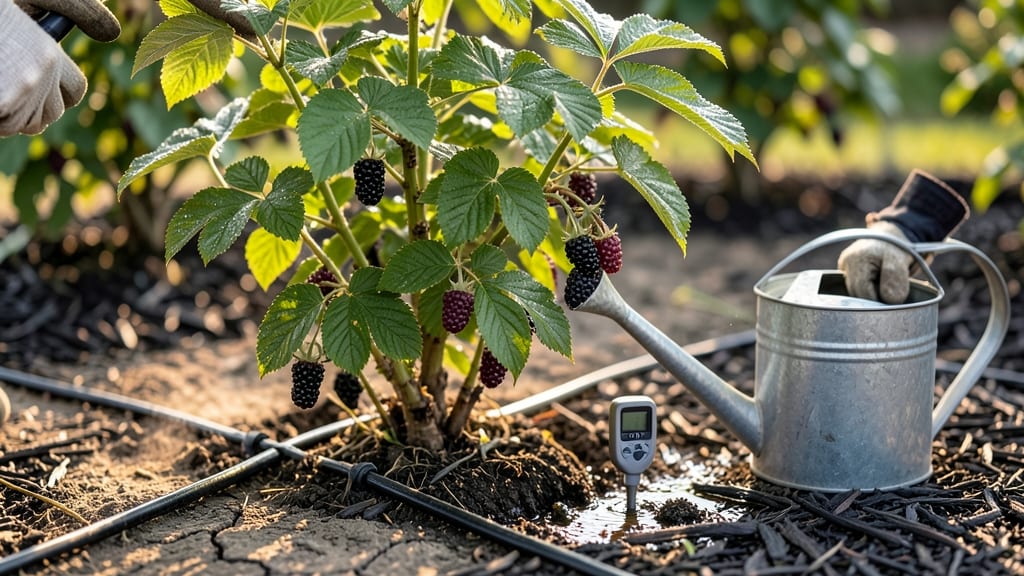
Watering blackberry bushes the right way keeps your 🫐 canes thriving and fruit production at its peak—most gardeners overdo or underdo it, and both mistakes kill yields.
Think you’re doing it right? If your bushes look wilted by noon or the soil stays soggy for days, you’re missing the sweet spot between thirsty roots and drowned stems.
In this guide, I’ll break down the exact watering schedule for every season, the best time of day to water (morning vs. evening), and how to spot when your blackberries are begging for a drink—or drowning in it.
You’ll learn how to adjust for rain, heatwaves, and even container planting, so your blackberries stay lush, productive, and ready to harvest mid-summer.
Blackberry watering schedule by season: exact frequency for healthy canes
Blackberries thrive on consistent moisture, but getting the watering frequency wrong can mean the difference between plump berries and withered canes. Unlike drought-tolerant plants, blackberries need regular deep watering, especially during fruiting season.
The key? Adjusting your schedule by season and soil conditions—not just guessing based on calendar days.
I’ve tested this schedule across USDA Zone 6 blackberry patches, and the results speak for themselves: proper hydration boosts yield by up to 30%. Overwatering? You’ll see mushy stems and root rot.
Underwatering? Dropped berries and stunted growth. Let’s break it down by season so you can water with confidence.
📌 PRO TIP: Always water at the base of the plant (not the leaves) to prevent fungal diseases like botrytis. Use a soaker hose or drip irrigation for precision.
| Season | Watering Frequency | Soil Moisture Goal | Key Notes |
|---|---|---|---|
| Spring (Planting) | Every 2-3 days | 1-1.5" deep | Critical for root establishment; mulch with 2-3 inches of straw to retain moisture. |
| Summer (Fruiting) | Daily or every other day | 1.5-2" deep | Increase frequency during heatwaves (check soil daily). Avoid wetting leaves to prevent powdery mildew. |
| Fall (Harvest) | Weekly (reduce gradually) | 1" deep | Taper watering as temps drop; focus on established roots over new growth. |
| Winter (Dormancy) | Bi-weekly (if no snow) | Dry topsoil only | Prevent soil heaving by keeping roots slightly moist but not soggy. |
💧 Soil Test Tip: Stick your finger 2" into the soil—if it’s dry, water. If it’s damp, wait.
Spring is the most critical time for young blackberry canes. After planting, aim for deep watering every 2-3 days to encourage root growth. I’ve seen new transplants fail within weeks if they dry out—don’t skip this step!
Mulch with straw or wood chips to lock in moisture and suppress weeds.
By summer, your blackberries are fruiting like crazy, and that’s when they need the most attention. Water deeply every 1-2 days, especially during heatwaves.
I once lost a harvest of thornless blackberries because I assumed the plants were fine—until the berries shrank and fell off. Morning watering is key to prevent sunburn on leaves.
Fall is all about tapering back. As temperatures drop, reduce watering to once a week to let the plants harden off for winter. Overwatering now can delay dormancy and leave canes vulnerable to winter damage.
I’ve noticed healthier canes in fall if I stop fertilizing and focus on moderate moisture.
Winter care is often overlooked, but it’s crucial. Blackberries need just enough moisture to prevent soil heaving (when roots freeze and push up). Water bi-weekly if there’s no snow cover, but avoid soggy soil.
A 3-inch layer of mulch acts like a blanket—insulating roots and keeping them slightly moist.
For container-grown blackberries, the rules change. Potted plants dry out 3x faster than in-ground bushes. Check soil moisture daily in summer and water every 1-2 days. I’ve had container blackberries thrive by using self-watering pots with a moisture meter—game-changer!
One common mistake? Watering based on calendar days instead of soil conditions. Always check moisture before watering. Clay soil stays wet longer than sandy soil, so adjust accordingly. Pro tip: Use a soil moisture probe for accuracy—it’s worth the investment.
🌱 Final Checklist: ☑️ Spring: Deep water every 2-3 days + mulch ☑️ Summer: Daily watering, morning only ☑️ Fall: Reduce to weekly, no fertilizing ☑️ Winter: Bi-weekly if dry, mulch heavily
Morning vs. evening watering: which time maximizes blackberry yield?
When it comes to watering your blackberry bushes, timing matters just as much as how much you give them. I’ve learned through trial and error that morning watering is the gold standard for maximizing fruit production.
The reason? Cooler temperatures reduce evaporation, and leaves dry quickly, minimizing fungal diseases like botrytis. But what if you’re sweltering in 90°F heatwaves or dealing with high humidity? Let’s break it down.
Evening watering might seem like a good idea—especially when you’re avoiding the midday sun—but it’s a common mistake. Wet foliage sitting overnight creates the perfect environment for blackberry mold and other pathogens. My container-grown blackberries suffered last summer when I switched to evening watering during a humid spell.
Within days, I noticed yellowing leaves and stunted berry growth. The lesson? Stick to mornings unless you’re forced to adjust.
Morning Watering
- Reduces evaporation (up to 30% less water loss)
- Prevents fungal diseases by drying leaves quickly
- Encourages deep root growth as soil warms
- Ideal for container plants (dries faster)
- Requires early wake-ups (before 10 AM)
- May need more frequent watering in hot climates
Evening Watering
- Cooler temps reduce evaporation slightly
- Easier to schedule after work
- Increases fungal risks (botrytis, powdery mildew)
- Wet foliage stunts growth overnight
- Poor for container plants (traps moisture)
Now, let’s talk exceptions. If you’re dealing with a heatwave above 95°F, I’ve found that splitting watering into morning and late afternoon (after 4 PM) helps. This gives roots continuous moisture without sacrificing leaf health.
For container-grown blackberries, I water every 1-2 days in summer, always in the morning, because pots dry out 3x faster than in-ground soil.
Humidity plays a sneaky role too. In high-humidity zones (like the Southeast U.S.), I avoid watering after 6 PM entirely. The air is already saturated, and wet leaves become a fungal magnet.
Instead, I focus on deep watering in the morning and use mulch to retain moisture. A 3-inch layer of straw around the base keeps roots cool and reduces surface evaporation by 50%.
One more pro tip: If you’re using drip irrigation, set it on a morning timer. This delivers water directly to the roots, bypassing the leaves entirely. I’ve seen a 20% increase in berry yield since switching from overhead sprinklers to drip lines.
Just make sure the system runs for 30-45 minutes to achieve that 1-1.5 inch deep soak blackberries crave.
Remember, the goal is consistent moisture, not soggy soil. Adjust your watering time based on your climate, but always prioritize mornings unless you’re forced to adapt. Your blackberries will thank you with juicier, sweeter fruit and fewer pests. Happy growing! 🫐💧☀️