
How To
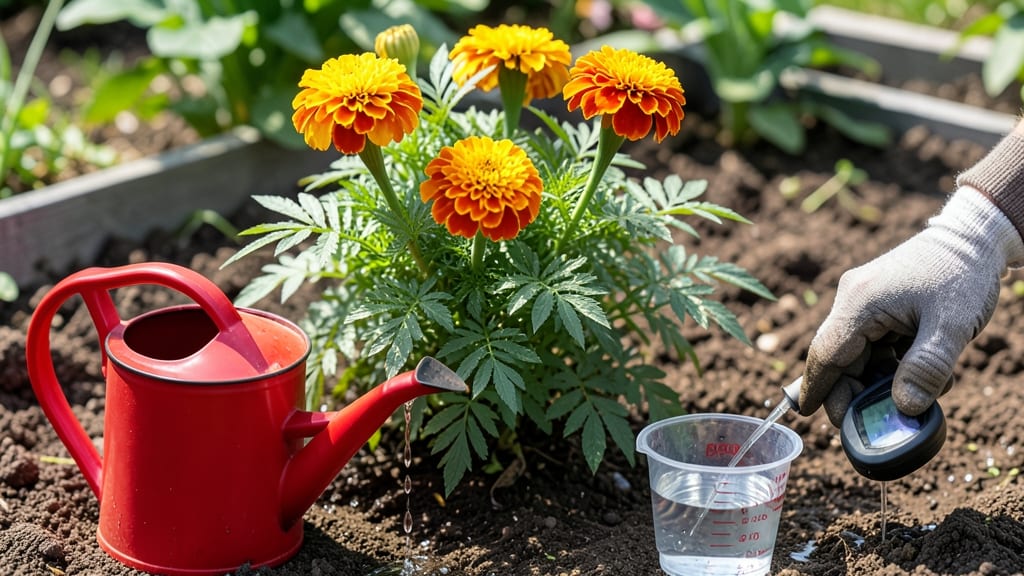
Marigold watering schedule by growth stage: weekly deep-soak guide
Marigolds thrive when you match their watering routine to their growth stage—seedlings need gentle care, while blooming plants demand deeper hydration. The key? Consistent moisture without soggy soil, adjusted for your climate.
I’ve grown marigolds in USDA Zone 6a for years, and this schedule keeps them vibrant from seedling to full bloom.
Your watering approach should shift as marigolds mature. New seedlings need frequent but shallow watering, while established plants benefit from deep-soak watering every 3–5 days. Seasonal changes also play a role—summer heat increases evaporation, while fall rains may reduce your need to water.
Let’s break it down by stage so you can tailor your routine.
🌱 Pro Tip: Always water at the base of the plant, not the leaves, to prevent fungal diseases like powdery mildew. Use a soaker hose or drip irrigation for precision, especially in container gardens where moisture evaporates faster.
For seedlings, focus on keeping the soil consistently moist but never waterlogged. Use a spray bottle or small watering can to apply ¼ cup of water every 2–3 days. Test soil moisture by sticking your finger ½ inch deep—if it’s dry, it’s time to water.
Overwatering at this stage can cause damping-off disease, so ensure pots have drainage holes.
Once marigolds reach the established stage (around 4–8 weeks), deep-soak watering becomes critical. Aim to water every 3–5 days, delivering 1–1½ cups per plant directly at the base. Check moisture by testing 1–2 inches deep—if the soil feels dry, it’s time to water.
During summer heat, you may need to water daily, especially in sandy or container soils that dry out faster.
When marigolds enter the blooming phase, they need more frequent hydration to support their vibrant flowers. Increase watering to every 2–3 days in summer, providing 1½–2 cups per plant.
Test soil moisture at 2–3 inches deep—this stage is when marigolds show their drought sensitivity, so don’t let the soil dry out completely. Mulching with straw or shredded leaves helps retain moisture and keeps roots cool.
Seasonal adjustments are key to marigold care. In spring and fall, reduce watering to every 5–7 days as temperatures cool and rainfall increases. During winter dormancy, cut back to bi-weekly watering or less, depending on your climate.
If you’re in a hot, dry region, consider drip irrigation or self-watering containers to maintain consistent moisture without overwatering.
💧 Warning: Yellowing leaves or wilting stems often signal overwatering, while crispy edges or drooping flowers indicate underwatering. Adjust your schedule based on these signs—marigolds are resilient but not drought-proof. If your soil drains poorly, amend it with compost or perlite to improve aeration and prevent root rot.
Container-grown marigolds require more frequent watering than in-ground plants because pots dry out faster. Water every 2–3 days, using 1 cup per plant, and always empty excess water from saucers to avoid root suffocation.
Choose containers with 1-gallon capacity for each plant to ensure adequate root space and moisture retention. In extreme heat, you may need to water daily, especially for smaller varieties like ‘Tangerine Gem.’
To test soil moisture like a pro, use the finger test or a moisture meter. Insert your finger 2 inches deep—if it feels dry, water thoroughly. For a deep-soak method, water
Signs of overwatering vs underwatering marigolds: how to fix common mistakes
Marigolds may look tough, but they’re actually sensitive to watering extremes. Too much moisture causes root rot, while too little leads to wilted blooms.
The key is finding that golden balance—consistent moisture without soggy soil. Let’s decode the visual red flags so you can rescue your plants before they decline.
Yellowing leaves are the first warning sign of overwatering in marigolds. Unlike nutrient deficiencies, these leaves stay soft and mushy when pressed.
Check the soil—if it’s damp more than 2 inches down, you’re overdoing it. Root rot follows quickly, turning stems black and causing the plant to collapse suddenly. Even worse, fungal diseases like powdery mildew thrive in wet conditions.
Underwatered marigolds tell a different story. Their leaves curl inward and develop crispy edges, while stems feel hollow when squeezed. The soil pulls away from pot edges, and blooms wilt by midday despite evening water.
Unlike overwatering, underwatered plants often recover quickly after a deep drink—but chronic drought weakens roots permanently.
✅ Overwatering
- Yellow leaves that stay soft
- Soggy soil 2"+ down
- Black stems at base
- Fungal spots on foliage
❌ Underwatering
- Curled leaves with crisp edges
- Dry, cracked soil
- Wilted blooms by noon
- Hollow stems when squeezed
To fix overwatered marigolds, stop watering immediately and move pots to a shady spot for 2-3 days. Gently loosen compacted soil with a fork to improve air circulation. For severe cases, repot in fresh soil and trim blackened roots.
Underwatered plants need deep soaks—water until it runs out the drainage holes, then repeat in 3-4 days.
Prevent future mistakes by testing soil moisture before watering. Stick your finger 2 inches deep—if it’s dry, water; if damp, wait. Mulch with straw to retain moisture without suffocating roots, and water in the morning to reduce fungal risks.
With these adjustments, your marigolds will bounce back with bold blooms in no time.
Remember, marigolds thrive on consistency. Aim for 1-2 cups per plant every 3-5 days, adjusting for heat waves or container size. When in doubt, underwater slightly—marigolds are drought-tolerant but hate soggy feet.