
Light Requirements
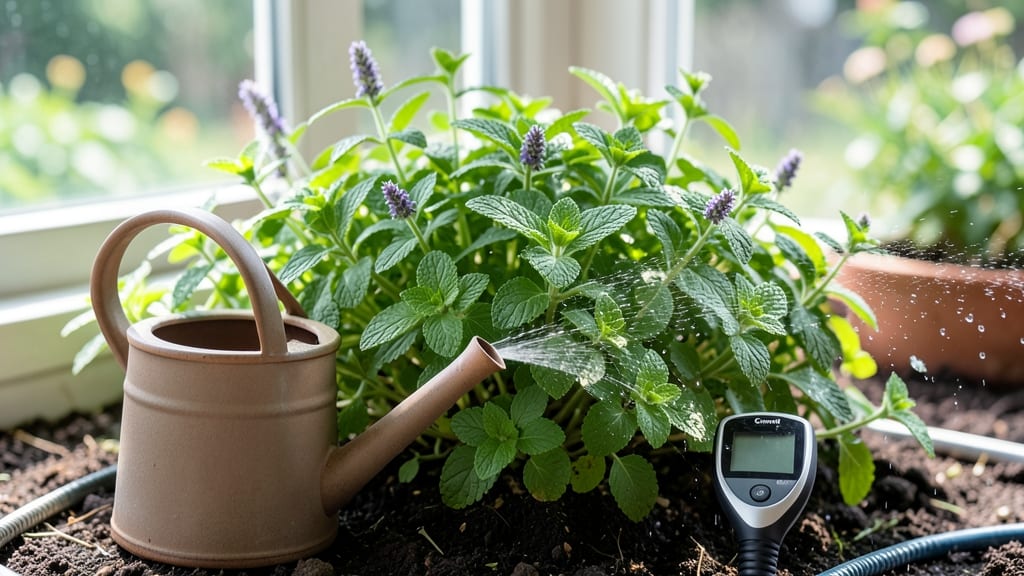
Ideal watering schedule for mint: how often and how much
Mint is a thirsty herb that needs consistent moisture to thrive, but too much water can drown its roots. The key is finding that sweet spot—keeping soil damp but never soggy.
As a rule, I water my mint 1-2 times per week, adjusting based on weather and container size. Potted mint dries out faster than in-ground plants, so it needs more frequent attention.
Before grabbing your watering can, always check the soil. Stick your finger about 1 inch deep—if it feels dry, it's time to water. If it's still moist, wait another day.
This simple soil moisture test saves mint from both underwatering and overwatering. Morning watering is ideal because it gives leaves time to dry before evening, reducing fungal risks.
Here’s a quick reference for how much water mint needs based on its growing conditions:
In hot, dry climates, mint can lose moisture quickly, especially in containers. I’ve found that adding a layer of mulch around the base helps retain moisture and keeps roots cool.
For in-ground mint, mulch also suppresses weeds, which compete for water. If you notice the soil drying out faster than usual, increase watering by 20-30% during heatwaves.
Humid regions, like the Southeast, require a gentler touch. Mint in these areas can suffer from overwatering because excess moisture lingers in the soil. I adjust by spacing waterings 5-6 days apart and always checking for soggy soil before watering again.
A well-draining pot with drainage holes is a game-changer for humid climates.
Seasonal changes also demand adjustments. During spring and summer, mint grows rapidly and needs more frequent watering—sometimes daily in extreme heat. In fall and winter, growth slows, and I reduce watering to every 5-7 days for potted mint or bi-weekly for in-ground plants.
Always monitor the weather; a sudden rainstorm can mean skipping your next watering session.
One common mistake I see is watering mint on a schedule without checking the soil. Mint is resilient but not drought-tolerant, so blindly following a routine can lead to stress.
Instead, use the finger test and adjust as needed. If the top 1-2 inches of soil are dry, it’s time to water—regardless of what your calendar says.
For container-grown mint, I’ve found that self-watering pots or wicking beds are a lifesaver. They maintain consistent moisture without the risk of overwatering. If you’re using a standard pot, ensure it has drainage holes and never let mint sit in standing water.
Yellowing leaves or mushy stems are red flags for root rot, a common issue with overwatered mint.
Pro tip: Group your mint with other water-loving herbs like basil or parsley to create a microclimate that retains moisture. This works especially well in container gardens or raised beds. Just avoid pairing it with drought-tolerant plants like rosemary, which have very different water needs.
With the right watering routine, your mint will reward you with lush, fragrant leaves all season long. Start with the soil moisture test, adjust for your climate, and don’t forget to mulch. Soon, you’ll have a thriving mint patch that’s perfect for teas, cocktails, or fresh salads! 🌿
Signs of overwatering vs underwatering mint: what to watch for
Mint plants are surprisingly sensitive to water imbalances, and spotting the difference between overwatering and underwatering can save your herb garden. Both issues cause leaf problems, but the fixes—and visual clues—are completely different. Let’s break down what to watch for so you can keep your mint thriving.
When your mint shows yellowing leaves that feel mushy to the touch, it’s often a sign of overwatering. The edges may also develop brown, crispy spots as roots suffocate in soggy soil.
Meanwhile, underwatered mint leaves turn yellow but feel dry and brittle, with edges curling inward like a taco. Both scenarios start with color changes, but the texture is your key clue.
For overwatered mint, the first step is always to stop watering immediately. Let the soil dry out completely before watering again, and consider repotting into a container with drainage holes if your current setup traps moisture.
If the roots smell foul or look black, trim them back to healthy tissue and treat with a fungicide to prevent spread.
If your mint is underwatered, give it a thorough drink in the morning so the leaves have time to dry before evening. After reviving it, adjust your watering routine to every 2-3 days for potted mint or every 4-5 days for in-ground plants.
A 2-inch layer of organic mulch will help lock in moisture and reduce evaporation.
Pay attention to your mint’s growth pattern too—healthy plants grow 2-3 inches per week and produce new leaves at the tips. If growth stalls or leaves turn brown and brittle, revisit your watering habits.
Consistency is key: mint prefers moist but not soggy soil, and a quick finger check in the top inch will tell you if it’s time to water.
Remember, mint’s roots are shallow, so they dry out faster than deeper-rooted plants. In hot climates, you may need to water daily, while cooler months can stretch watering to once a week. Adjust based on your plant’s signals—it’s the best teacher!