
Landscaping
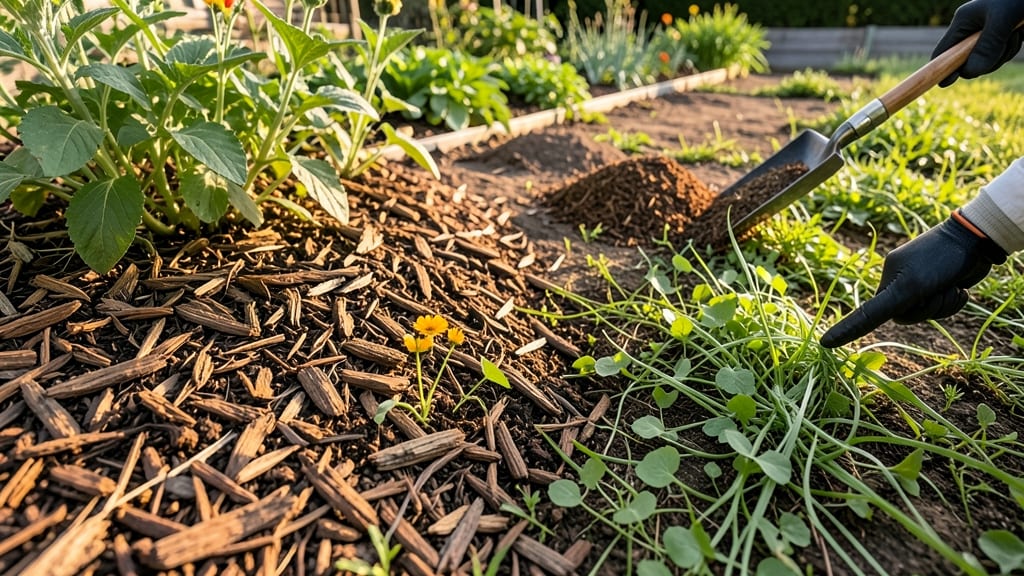
Mulch does keep weeds from growing by blocking sunlight, which prevents weed seeds from germinating, but effectiveness depends on thickness (3–4 inches) and material (straw, wood chips, or landscape fabric). It also retains soil moisture and regulates temperature, reducing weed competition.
Mulch works as a natural weed barrier by creating a physical shield that starves out weed seeds before they sprout. 🌱 The thicker the layer—ideally 3–4 inches—the better it blocks light, which is what weed seeds need to germinate.
Organic mulches like straw or wood chips also break down over time, adding nutrients to the soil while suppressing weeds, whereas inorganic options like landscape fabric focus purely on light deprivation. I've seen the biggest difference in high-traffic garden beds where consistent mulch application keeps weeds from taking over.
However, mulch isn't a magic solution—it requires regular maintenance. Over time, organic mulches decompose and thin out, so you'll need to replenish them annually. Edge control is also key: if mulch piles up against plants or walkways, it can create a moist environment that actually encourages weed growth.
The right balance of material, thickness, and upkeep makes mulch one of the most effective low-maintenance weed control methods for gardens and landscapes.
💡 In This Article
- How Mulch Suppresses Weeds: Science and Mechanisms
- Best Mulch Types and Application Tips for Weed Control
How mulch suppresses weeds: science and mechanisms
Mulch suppresses weeds primarily through light deprivation—a process called allelopathy when combined with chemical inhibition from decomposing organic materials. When you spread a 3–4 inch layer of mulch, it blocks 90–95% of sunlight from reaching the soil surface, where most weed seeds lie dormant.
Without light, seeds can't photosynthesize and germinate. This is why even a thin layer of mulch (like 2 inches) can reduce weed growth by 70% compared to bare soil, according to studies from the University of Georgia.
The type of mulch matters too. Organic options like straw or wood chips decompose over time, releasing nutrients that further inhibit weed seeds. For example, wood chips release tannins that act as natural herbicides, while straw breaks down into a fine, dense mat that smothers weeds.
In contrast, inorganic mulches like landscape fabric focus solely on blocking light, offering no soil enrichment. The key difference? Organic mulches improve soil health long-term, while inorganic mulches provide immediate but temporary weed control. 🌱
Moisture retention plays a secondary but critical role. Mulch reduces soil temperature fluctuations by 10–15°F, keeping the ground cooler and drier—conditions that weed seeds dislike. For instance, crabgrass, a common weed, requires warm, moist soil to sprout.
A 3-inch mulch layer can keep soil temperatures 10°F cooler than exposed ground, effectively starving out these weeds. This is why mulched gardens in hot climates see up to 80% fewer weeds than unmulched areas.
Even the texture of mulch affects weed suppression. Fine, granular mulches like shredded bark create a dense barrier that blocks light more effectively than chunky options. Meanwhile, coarse mulches (like pine straw) allow more light penetration but excel at retaining moisture.
The best approach? Layering—start with a 2-inch base of coarse mulch for moisture control, then top with 1–2 inches of fine mulch for light deprivation. This two-layer system maximizes both weed suppression and soil health.
One often-overlooked mechanism is nutrient competition. As organic mulch decomposes, it releases nutrients that benefit your plants more than weeds. For example, nitrogen-rich mulches like grass clippings encourage lawn grasses to outcompete dandelions for resources.
This biological competition further reduces weed populations without chemicals. The result? A garden where your intended plants thrive while weeds struggle to establish. 💪
Finally, consider the seasonal effects. In spring, when weed seeds are most active, mulch prevents germination entirely. By summer, any seeds that slip through the blockade face dry, shaded conditions—ideal for stopping their growth.
This seasonal suppression is why mulched beds often require 50% less weeding than unmulched ones. The science is clear: mulch doesn’t just hide weeds—it systematically starves them out through light, moisture, and nutrient control.