
Watering
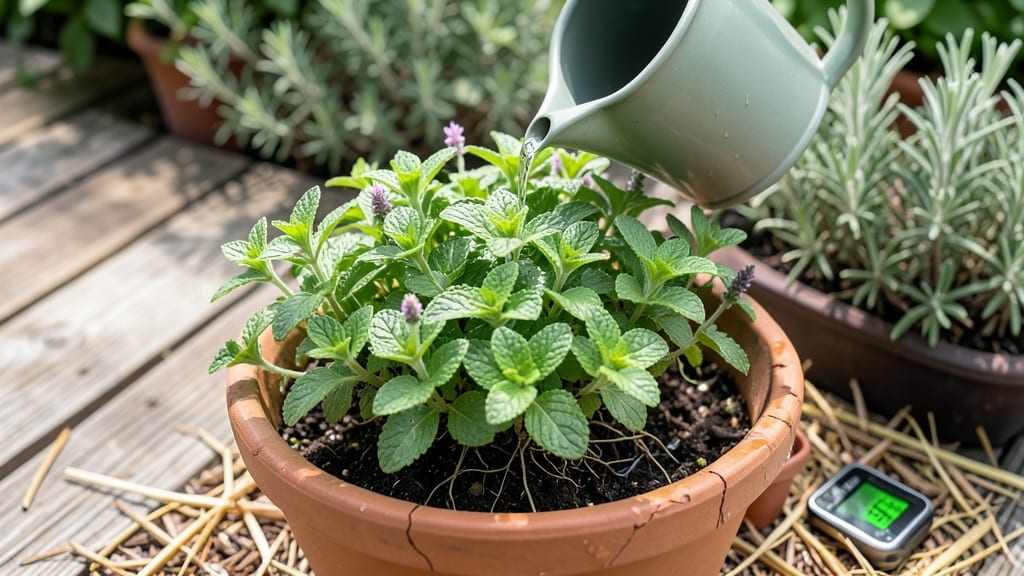
Watering a mint plant the right amount keeps it thriving without drowning its roots — the trick is 1 to 1.5 cups per watering, adjusted for soil and pot size.
Struggling to keep your mint plant thriving without it turning into a sad, mushy mess? Overwatering or underwatering can both kill your plant — so getting the watering schedule just right is the secret to lush, fragrant mint that spreads (or stays contained) exactly how you want.
Mint loves moisture but hates soggy soil, which is why morning watering works best: it gives roots time to dry slightly before nightfall. Too much water leads to yellow leaves and root rot, while too little causes crispy edges and stunted growth.
Below, I break down the exact schedule for containers vs. garden beds, how to check soil moisture like a pro, and the one simple fix that saves wilting mint every time.


Optimal mint watering schedule by season: when and how much
Mint thrives on consistent moisture but despises soggy roots—this seasonal schedule keeps your plant lush without drowning it. The key is adjusting water volume and frequency based on temperature, container size, and humidity levels.
In spring and fall, mint needs moderate watering, while summer heat demands daily checks and winter dormancy requires minimal hydration.
For potted mint, aim for 1 to 1.5 cups per watering (250-375ml), while garden beds need 1-2 inches of water per week. Always water at the soil level to prevent fungal spores from splashing onto leaves.
Morning watering is ideal—it gives roots time to dry slightly before nightfall, reducing root rot risk.
🌿
In spring, mint awakens from dormancy, so monitor soil moisture closely—water when the top inch feels dry. Use your finger as a gauge: press gently into the soil.
If it springs back, wait another day. Humidity matters: in dry climates, mint may need watering every 2-3 days, while humid areas can stretch to 4-5 days between waterings.
Summer is the most critical season for mint watering. With temperatures soaring, daily or every-other-day watering is often necessary. Look for wilting leaves by midday as a sign it's thirsty.
For container-grown mint, place pots in shallow trays filled with water to encourage wicking—this keeps roots hydrated without over-saturating the soil.
Fall signals a slowdown in growth, so reduce watering frequency to every 5-7 days. The goal is to keep soil slightly moist, not soggy. If your mint is in a garden bed, mulch with 2-3 inches of straw to retain moisture and regulate soil temperature.
This layer also suppresses weeds, which compete for water.
Winter care depends on your climate. In
Signs your mint plant is overwatered or underwatered (and how to fix it)
Mint plants thrive on consistency, but getting the water balance wrong can turn your fragrant herb into a sad, droopy mess. Overwatering and underwatering both cause stress—one leads to mushy stems and mold, while the other results in crispy, brittle leaves.
The key is learning to read your plant's signals before it's too late.
Start by checking the soil moisture with your finger. Stick it about an inch deep—if it feels damp, hold off on watering. If it's bone dry, it's time to hydrate.
But visual cues are just as important. Yellowing leaves or moldy soil scream overwatering, while wilting or crispy edges mean your mint is thirsty.
⚠️ callout warning⚠️ How Much to Water Mint Plant
Mint loves moisture but hates soggy roots. In pots, water every 2-3 days (or when the top inch of soil feels dry). In garden beds, every 4-5 days is ideal. Avoid watering at night—this invites fungal diseases. Always use well-draining soil and pots with drainage holes to prevent root rot.
If your mint leaves are turning yellow and mushy, it's likely drowning in water. Root rot is the silent killer here—check the roots for a brown, slimy texture. The fix? Stop watering immediately, trim any mushy roots with sterilized scissors, and repot in fresh, well-draining soil.
Let the soil dry out completely between waterings for a week or two to reset the plant.
On the flip side, wilting or crispy leaf edges mean your mint is parched. Unlike overwatered plants, underwatered mint won’t recover overnight. Give it a deep drink by soaking the soil until water runs out the drainage holes.
After that, adjust your watering schedule to keep the soil consistently moist but not soggy. Mulching around the base helps retain moisture and keeps roots cool.
Don’t ignore mold or white fuzz on the soil surface—this is a red flag for overwatering. Powdery mildew can also appear if the air isn’t circulating well. To fix this, improve airflow by spacing plants apart, prune crowded growth, and water at the base of the plant (not overhead).
If mildew has set in, spray with a baking soda solution (1 tsp baking soda + 1 quart water) to combat the fungus.
Regularly pruning your mint isn’t just about keeping it tidy—it’s a way to monitor its health. Snip back leggy stems to encourage bushier growth, and always use clean tools to avoid spreading disease.
If your mint is struggling, repot it into a larger container with fresh potting mix. This refreshes the roots and gives your plant a fighting chance to bounce back.
Remember, mint is resilient, but it won’t tolerate neglect. Check soil moisture daily during hot spells, and adjust your watering routine based on your plant’s response. With the right balance, you’ll have vibrant, aromatic mint that’s ready for harvesting all season long. 🌿