
Tools
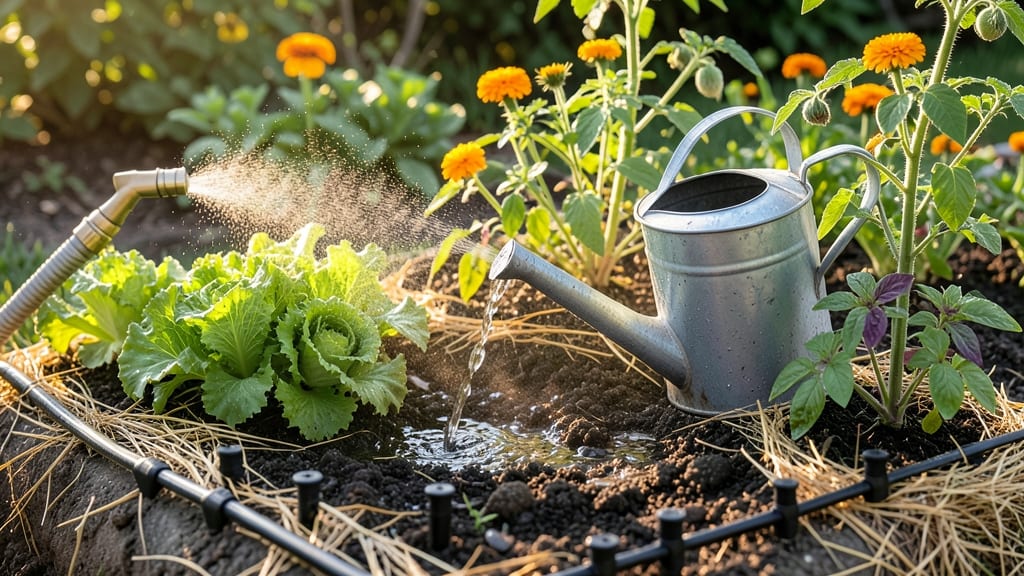
Watering your garden bed properly is the difference between lush, productive plants and struggling seedlings 🌱 — and timing matters just as much as the amount.
Struggling with uneven water distribution or wilting plants despite frequent watering? The secret to thriving garden beds lies in when (not just how much) you water—directly impacting root depth, soil health, and harvest size.
Morning watering lets roots drink deeply before the heat evaporates moisture, while evening sessions can invite fungal problems. But it’s not just about the clock—soil type, plant needs, and even your local climate play a role.
Below, I’ll break down the science-backed timing tricks, water-saving techniques, and telltale signs your garden bed is thirsty or drowning—so you can grow stronger, healthier plants with less waste.


Optimal watering times for garden beds by plant type & climate
Watering your garden bed at the wrong time can mean the difference between lush, productive plants and struggling, disease-prone crops. Morning watering is often recommended, but the best time depends on your plant type and local climate.
For example, leafy greens like spinach and lettuce thrive with consistent moisture, while root crops like carrots and potatoes need deeper, less frequent watering to develop properly. Understanding these differences ensures your watering schedule aligns with your plants' needs.
The sun's intensity plays a huge role in evaporation rates. In hot, dry climates, water can evaporate up to 50% faster during midday, meaning morning watering (before 9 AM) is critical. Meanwhile, in cooler, humid regions, evening watering might work—but only if you avoid wetting foliage to prevent fungal diseases.
Let's break down the science-backed timing strategies that will transform your garden's health and productivity.
Leafy greens like kale, Swiss chard, and arugula need frequent, shallow watering to keep their tender leaves hydrated. These plants prefer consistent moisture in the top 1-2 inches of soil, which means watering daily or every other day in hot weather. Root crops, on the other hand, benefit from deep, infrequent watering to encourage roots to grow downward. Think of it like training your plants to develop strong, resilient root systems that can access water deep in the soil.
Seasonal adjustments are just as important as plant type. During spring and fall, when temperatures are moderate, watering in the early morning (between 6-9 AM) gives plants time to absorb moisture before the heat of the day.
In summer, when evaporation rates skyrocket, consider watering twice a day: once in the morning and once in the late afternoon (after 4 PM) to minimize water loss. In winter, reduce watering frequency significantly, as many plants enter dormancy and require far less moisture.
For leafy greens, the goal is to maintain even moisture without overwatering, which can lead to rot or fungal issues. These plants have shallow roots, so watering in the morning allows excess moisture to evaporate during the day, reducing the risk of disease.
If you're growing spinach or lettuce, aim for 1-1.5 inches of water per week, splitting it between two watering sessions to keep the soil consistently damp but not waterlogged.
On the other hand, root crops like carrots and beets need a different approach. Watering them in the late morning (after 9 AM) gives the soil time to warm up, which encourages roots to grow deeper and stronger.
These plants thrive with deep, infrequent watering—think of it as a workout for their roots. In sandy soil, you might need to water every 2 days, while clay soil can hold moisture longer, reducing the frequency to every 3-4 days.
Always water at the base of the plant to avoid wetting the leaves, which can lead to fungal problems.
Fruiting plants, such as tomatoes and peppers, are heavy drinkers and benefit from
How to water garden beds without wasting a drop: soil & technique hacks
Watering garden beds efficiently isn't just about turning on the hose—it's about smart soil management and targeted techniques that keep roots happy while conserving water. I've learned that 80% of water waste comes from poor timing or methods, like overhead sprinklers that evaporate before reaching roots.
The key? Deep, infrequent watering paired with soil-friendly hacks that lock in moisture.
First, let's tackle the biggest misconception: more water = healthier plants. In reality, overwatering suffocates roots and invites fungal diseases like powdery mildew. My go-to rule is to water until moisture reaches 6-8 inches deep—that's how you build drought-resistant roots.
But how do you know when you've hit that depth without digging? That's where soil moisture meters (or even a simple screwdriver) become your best friend.
💧 3 Water-Wasting Mistakes & How to Fix Them
Let's talk tools that make a difference. I swear by drip irrigation systems for large beds—they deliver water directly to roots at a slow, steady pace, cutting waste by up to 60% compared to sprinklers.
For smaller beds, soaker hoses are my secret weapon: they're affordable, easy to DIY, and let you customize watering zones for different plant needs.
Don't overlook the power of mulch—it's like a free water-saving blanket for your soil. Organic mulches like straw or shredded leaves break down over time, adding nutrients while retaining 30% more moisture than bare soil.
For a no-fuss solution, spread 3-4 inches around plants (but keep it 2 inches away from stems to prevent rot).
Testing soil moisture is easier than you think. Stick your finger 2-3 inches deep—if it feels dry, it's time to water. For a tech upgrade, invest in a $20 soil moisture meter.
These gadgets show you exactly when to water, saving thousands of gallons annually. Pro move: Water before 10 AM when temps are cooler, and avoid midday when 50% of water evaporates before hitting roots.
Finally, adjust your approach by season. In summer heat, water daily in the morning and use mulch to lock in moisture. In spring/fall, every 3-4 days is usually enough.
And never water when rain's forecasted—check your local weather app to sync watering with nature's schedule. Small tweaks like these add up to a thriving, water-wise garden.