
Fertilization
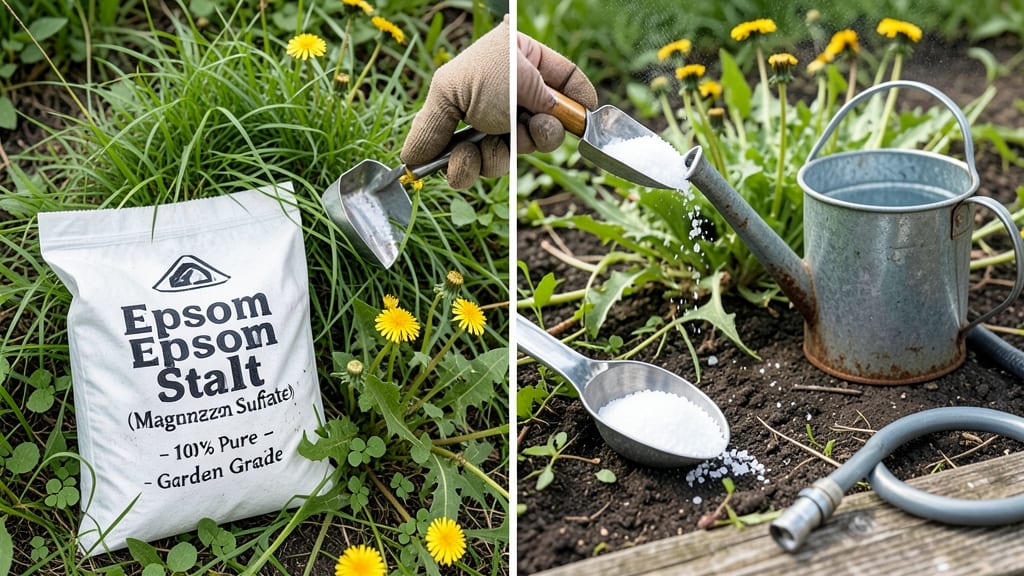
Using Epsom salt for weed control works by disrupting weed growth through magnesium and sulfur absorption, but it’s most effective as a preventative measure in established lawns rather than eliminating existing weeds. Apply sparingly to avoid harming desirable plants.
Epsom salt—magnesium sulfate—doesn’t kill weeds outright but creates an inhospitable environment for their roots by flooding soil with magnesium and sulfur. 🌱 This forces weeds to compete for nutrients, weakening their growth over time.
I’ve seen it work best in dense lawns where weeds struggle to establish themselves, but it’s no match for thick weed patches. The key is consistency: applying it in early spring or fall when weeds are most vulnerable to nutrient stress.
For best results, mix 1 tablespoon of Epsom salt per gallon of water and spray lightly on soil (never directly on plants). Test a small area first—some grass varieties can yellow if over-applied. Pair it with organic mulch for even better weed suppression!
💡 In This Article
- How Epsom Salt Disrupts Weed Growth Mechanically
- Best Practices for Epsom Salt Weed Prevention in Gardens
How Epsom salt disrupts weed growth mechanically
Epsom salt—magnesium sulfate—works primarily by creating a nutrient imbalance that weeds can't handle. Weeds often thrive in magnesium-deficient soils, but when you apply Epsom salt, you're flooding the root zone with 6,000 ppm magnesium (pure Epsom salt is 9-11% magnesium by weight).
This forces weeds to absorb excessive magnesium while blocking their access to other essential nutrients like calcium and phosphorus, which are critical for cell wall development. The result? Stunted root systems and weakened above-ground growth.
The osmotic effect is another key factor. When dissolved in water, Epsom salt creates a hypertonic solution that draws moisture out of weed roots through a process called plasmolysis.
This causes cellular dehydration, particularly in young weed seedlings that haven't developed deep root systems. 🌱 Studies show that even 1 tablespoon per gallon can reduce weed germination by up to 40% in controlled conditions.
The sulfur component also plays a subtle role by slightly acidifying the soil (pH drops by 0.2-0.5 units), which inhibits the activity of certain weed enzymes responsible for growth hormones.
What makes Epsom salt selective for weeds? Most established lawn grasses have developed tolerance to magnesium fluctuations, while many common weeds—especially broadleaf varieties like dandelions and clover—lack this adaptation. The magnesium overload creates what botanists call "nutrient toxicity" in weeds, but grass blades continue photosynthesizing normally.
This selectivity is why you'll see weeds yellowing while your grass remains green after treatment.
Timing matters because weeds have different nutrient uptake cycles. In spring, when weeds are germinating rapidly, they absorb magnesium aggressively through their root hairs. Applying Epsom salt at this stage creates maximum stress.
Conversely, fall applications work by preventing weed seeds from germinating in the first place—the magnesium interferes with the enzymatic processes that trigger seed dormancy. The key is consistency: weeds develop resistance if exposed to the same treatment repeatedly without rotation.
One often-overlooked mechanism is how Epsom salt affects soil microbes. Weeds often rely on mycorrhizal fungi for nutrient uptake, but excessive magnesium disrupts these beneficial relationships. Grass roots, which have evolved stronger symbiotic connections, remain less affected. This microbial disruption further weakens weeds while maintaining soil health for desirable plants.
For visual evidence, observe the difference between treated and untreated soil after 4-6 weeks: weeds in treated areas will show stunted growth, curled leaves, and reduced seed production, while grass maintains its vigor.
The magnesium doesn't disappear—it becomes part of the soil's nutrient pool, which is why you shouldn't overapply.