
Watering
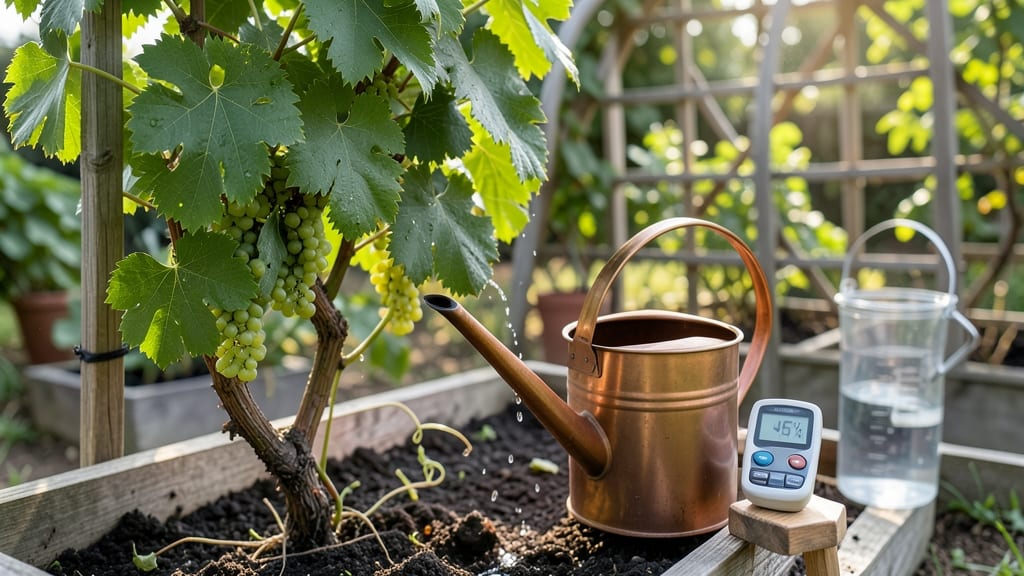
Do grape vines need a lot of water? The answer might surprise you—especially once they’re established.
Picture this: you’re watering every day, only to watch your 🍇 vines struggle with yellowing leaves or rot at the base. Overwatering is just as deadly as underwatering, and most gardeners get it wrong. The key is deep, infrequent watering that encourages strong roots—not a daily sprinkle.
In this guide, I’ll break down exactly how much water grape vines need at each stage—from spring planting to harvest season—and how to adjust for your climate. You’ll learn the right frequency, soil tests to avoid guesswork, and when to cut back in winter.
By the end, you’ll have a smart watering schedule that saves time, prevents waste, and keeps your vines thriving without the guesswork.


How much water grape vines actually need (by growth stage)
Grape vines are often misunderstood as thirsty plants, but the truth is they’re surprisingly drought-resistant once established. The key lies in their root depth—mature vines can send roots 6-10 feet deep to access moisture, while young vines need frequent, shallow watering to survive.
I’ve learned this the hard way: overwatering young vines is just as damaging as underwatering them.
Your watering strategy should change dramatically as your grape vines mature. First-year vines need consistent moisture to establish roots, while mature vines (3+ years old) can handle drought-like conditions with minimal irrigation. The secret? Deep, infrequent watering that encourages roots to grow downward rather than staying shallow.
Let’s start with newly planted grape vines, which need the most attention. During their first growing season, water 2-3 times per week to keep the top 6 inches of soil consistently moist.
Use a soaker hose or drip irrigation to deliver water directly to the root zone—this prevents leaf diseases that thrive in wet foliage. I’ve found that morning watering (before 10 AM) is ideal because it gives leaves time to dry, reducing fungal risks like powdery mildew.
For second-year vines, you can ease up slightly but maintain deep watering sessions. Aim for 1 inch of water per week, delivered in 2-3 inches at a time.
This encourages roots to grow deeper, which is crucial for drought resilience. Test soil moisture by sticking your finger 4-6 inches deep—if it’s dry, it’s time to water. If it’s still damp, wait another day.
Once your vines reach maturity (3+ years), they become remarkably drought-tolerant. At this stage, I water every 10-14 days during summer, delivering 3-4 inches of water per session.
The goal is to saturate the soil deeply so roots can access moisture when needed. Mulch heavily (4-6 inches of straw or wood chips) to retain moisture and regulate soil temperature. In arid climates, mature vines might only need watering every 3-4 weeks if rainfall is adequate.
During fruiting season (summer), grape vines demand the most water—especially if you’re growing table grapes or wine grapes. Consistent moisture at this stage ensures large, flavorful grapes.
I’ve seen underwatered vines produce small, hard grapes with poor sugar content, while overwatered vines develop split berries and fungal issues. The sweet spot? Deep watering every 5-7 days during peak heat.
Winter care is where many gardeners go wrong. Dormant grape vines need minimal water—just enough to prevent the soil from freezing solid. I water monthly with 1 inch of water during dry spells, but I never water if the ground is frozen.
The goal is to keep roots slightly moist without creating soggy conditions that invite root rot. In snowy climates, a light snow cover provides natural insulation and moisture.
To avoid guesswork, I recommend using a soil moisture meter or the finger test. Stick your finger 6 inches deep—if the soil feels dry, water deeply. If it’s still moist, wait. Never water on a schedule without checking soil conditions first. Cl
Signs of overwatering vs. underwatering in grape vines (with fixes)
Grape vines show clear visual stress when watered incorrectly. Overwatering creates soggy soil and yellow leaves, while underwatering causes crispy edges and wilting. Both problems stunt fruit production, so learning to spot these signs early is crucial for healthy vines.
I’ve seen overwatered vines develop mushy stems and powdery mildew on leaves—this happens when roots suffocate from excess moisture. Underwatered vines, on the other hand, show brown leaf tips and drooping canes, signaling the plant is conserving water by shutting down growth.
Overwatering vs. Underwatering in Grape Vines
Overwatering
- Yellowing leaves (especially lower leaves)
- Mushy stems at soil line
- Powdery mildew on leaf surfaces
- Root rot (black, foul-smelling roots)
- Slow growth despite frequent watering
Underwatering
- Crispy brown edges on leaves
- Wilting canes even in morning
- Dry, cracked soil around roots
- Premature leaf drop
- Small, hard grapes (poor fruit development)
For overwatered vines, I always check the soil first—stick your finger 2 inches deep. If it’s damp, hold off on watering. Aerate compacted soil with a garden fork to help roots breathe. Fungal infections from overwatering often need neem oil sprays to treat.
When vines show underwatering signs, I adjust my schedule to deep watering sessions instead of frequent shallow drinks. Drip irrigation works best—it delivers water slowly to the roots where it’s needed most. Avoid watering leaves to prevent disease.
Remember, grape vines hate soggy feet but also struggle in drought. The key is consistent moisture—not too much, not too little. Test soil weekly during growing season to stay in that sweet spot.
If you’re unsure, pull back a little. Grape vines are tough—they’ll bounce back from mild underwatering faster than they recover from root rot. Observe your vines daily for early signs and adjust before damage sets in.