
Watering
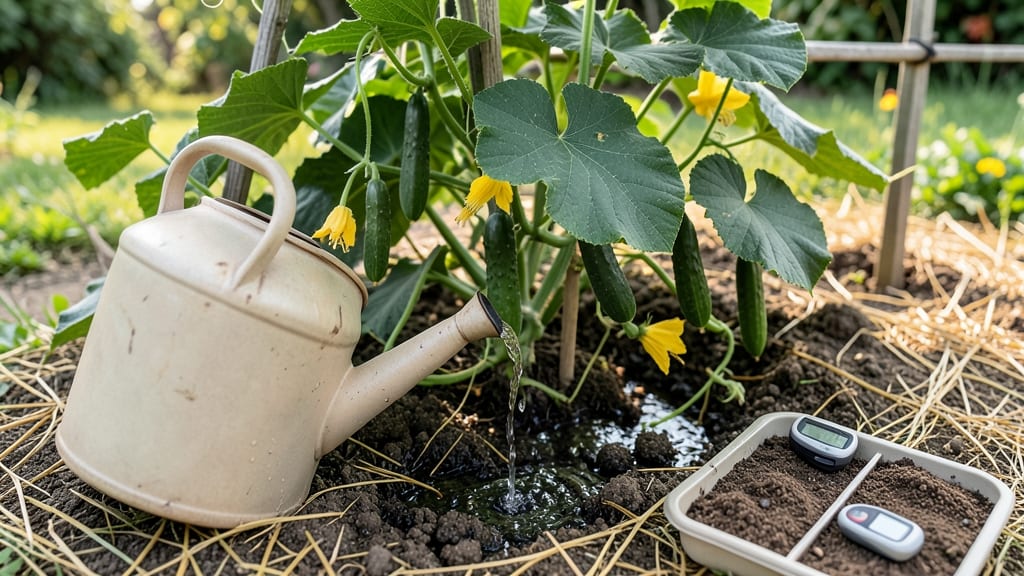
Cucumbers need a lot of water to thrive, but the key isn’t just dumping gallons of it—it’s about delivering the right amount at the right time to keep those vines lush and your harvest crisp.
Picture this: your 🥒 plants look healthy one day, then suddenly droop by noon like they forgot to drink. That’s a classic sign you’re either underwatering or overdoing it, both of which can turn your garden into a sad, wilted mess.
The trick? Deep, consistent moisture that keeps roots happy without drowning them.
Most gardeners assume cucumbers are low-maintenance thirst-quenchers, but their water needs shift dramatically from seedlings to fruiting stage. Too little water means bitter, stunted fruit; too much invites rot and fungal diseases. I’ve seen both disasters firsthand—and trust me, neither is pretty.
In this guide, you’ll learn the exact watering schedule for your cucumbers, how to spot over- or under-watering before it’s too late, and the best techniques (like drip irrigation vs. hand-watering) to keep your plants perfectly hydrated all season long.


How much water cucumbers actually need (science-backed guidelines)
Cucumbers are notorious water guzzlers, but their thirst changes dramatically as they grow. Seedlings need gentle moisture to avoid rotting, while flowering plants demand steady hydration for pollination. During fruiting stages, inconsistent watering leads to bitter cucumbers or cracked skins. Understanding these shifts prevents wasted water and poor harvests.
The key to perfect cucumbers lies in soil moisture consistency, not just volume. A 1-2 inch deep watering every 1-3 days keeps roots hydrated without drowning them. However, containers dry faster than in-ground beds, requiring daily checks in summer heat.
Humidity also plays a role—dry air increases evaporation, while high humidity can trap moisture and invite fungal diseases.
| Growth Stage | Water Frequency | Soil Moisture Goal | Key Factors |
|---|---|---|---|
| Seedlings (0-2 weeks) | Every 2-3 days | Keep top 1 inch moist | Light watering to avoid damping-off |
| Vegetative (2-4 weeks) | Every 3-4 days | 1-2 inches deep moisture | Encourage vine growth |
| Flowering (4-6 weeks) | Daily in heat, every 2 days otherwise | Consistent 1.5-2 inches | Critical for pollination success |
| Fruiting (6+ weeks) | Daily (1-2 inches) | Never let soil dry completely | Prevents bitter taste and cracking |
| Containers (All stages) | Daily (morning) | Check top 1 inch hourly in heat | Pots dry out 3x faster than ground |
During the seedling stage, cucumbers need barely damp soil—overwatering causes damping-off, a fungal disease that kills young plants. I use a spray bottle for seedlings, keeping only the top inch moist. Once vines appear, switch to deep watering at the base to encourage root growth downward, not outward.
The flowering stage is when cucumbers become water-dependent. Stress from dry soil causes flowers to drop before pollination, reducing your harvest. I monitor soil moisture by sticking my finger 2 inches deep—if it feels dry, it's time to water.
In high humidity (like my coastal garden), I water in the morning to prevent fungal issues like powdery mildew.
When fruiting begins, cucumbers need uninterrupted moisture. Fluctuations cause blossom end rot (black, mushy bottoms) or cracked skins. I set up a drip irrigation system for my vines, delivering 1-2 inches of water daily at the soil surface.
Mulch with straw to retain moisture and keep roots cool—this is especially critical in 90°F+ heat.
Container-grown cucumbers have different rules. Their roots have limited soil volume, so I water mine daily in summer, often twice if temperatures exceed 85°F. A 5-gallon pot may need 2 liters of water per day, while larger containers can stretch to every other day.
Always check soil moisture—containers dry out 3x faster than in-ground beds.
Environmental factors like wind and sun exposure also affect water needs. Wind increases evaporation, so I water my exposed vines 20% more than sheltered ones. Similarly, black plastic mulch raises soil temperatures, making water evaporate faster.
If your cucumbers are in full sun all day, plan to water earlier in the morning to minimize loss.
One common mistake is watering leaves instead of the soil. Wet foliage creates perfect conditions for powdery mildew, a white fungal growth that weakens plants. I always direct my hose or drip line at the base of the plant.
For container cucumbers, I use self-watering pots with reservoirs to maintain steady moisture without overwatering.
To test soil moisture like a pro, squeeze a handful of soil. If it crumbles easily, water immediately. If it stays clumped, wait a day. In sandy soil, which drains quickly, I water twice daily in extreme heat.
For clay soil, which holds moisture longer, I stretch watering to every other day unless it's a heatwave.
Remember: consistency beats volume. A deep, infrequent watering (1-2 inches every 2-3 days) outperforms light daily sprinkles, which only wet the surface. This encourages deep root growth and drought-resistant plants. For my heirloom varieties, I've found this method produces sweeter, crisper cucumbers with fewer blemishes.
Signs you're overwatering or underwatering cucumbers (and how to Fix it)
Your cucumber plants might look thirsty, but giving them too much water can be just as harmful as too little. Yellowing leaves or wilted vines often signal water stress—but the cause could be overwatering or underwatering. The key is observing both the leaves and roots for clues.
Start by checking the soil moisture 1-2 inches below the surface. Stick your finger in—if it feels dry, your plants need water. If it's soggy, you're likely overwatering. Blossom end rot on cucumbers is a classic sign of inconsistent moisture, often linked to underwatering during fruiting.
While cucumbers do need regular water, overwatering suffocates roots and invites fungal diseases like powdery mildew. Aim for 1-2 inches of water per week, adjusting for heat. Morning watering prevents evaporation and keeps foliage dry.
💧 Fix soggy soil: Improve drainage with perlite or sand. Fix dry soil: Mulch with straw to retain moisture.
Watch for leaf curl or crispy edges, which often mean underwatering. If the leaves yellow and drop, it could be overwatering—especially if the soil smells sour. Root rot (black, mushy roots) confirms excess water. Adjust your routine by watering deeply but less frequently.
For container-grown cucumbers, check soil daily—pots dry out faster. If the vines wilt by midday but perk up at night, they’re thirsty. If they stay wilted, the roots may be struggling. Adjust mulch thickness (2-3 inches) to regulate moisture and reduce evaporation.
Use a moisture meter for accuracy, especially in hot climates. Cucumbers need 1 inch of water every 2-3 days in summer, but double-check the soil—don’t rely on a schedule. Drip irrigation delivers water directly to roots, minimizing waste and disease risk.
Remember: Healthy cucumbers have deep green leaves and strong vines. If you spot white mold or stunted growth, revisit your watering habits. Balance is everything—consistency beats quantity every time. 🌱