
Pests
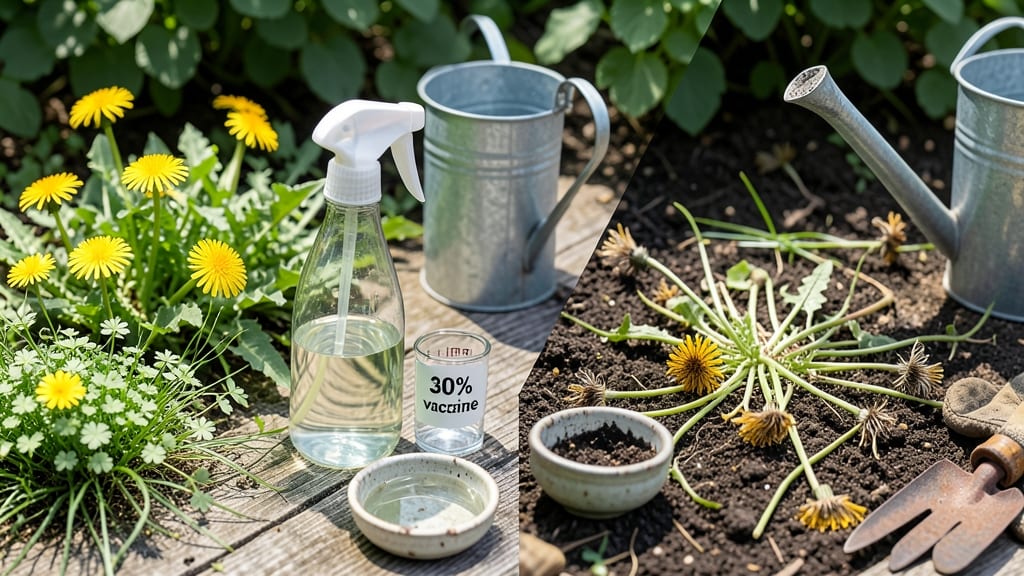
To dilute 30% vinegar for weed killer, mix 1 part vinegar with 3 parts water (1:3 ratio) for general use, or 1:1 for tough weeds, but never apply undiluted to avoid plant damage or soil pH disruption. Always test on a small area first and reapply as needed.
Vinegar's acetic acid content is what makes it effective against weeds, but its strength varies drastically between household vinegar (5%) and concentrated 30% vinegar. 🔥 The higher concentration delivers a more potent punch, but it also requires careful dilution to prevent over-acidifying your soil or harming nearby plants.
I've found that the 1:3 ratio works best for most weeds, while stubborn varieties like dandelions often need the stronger 1:1 mix. The key is timing—apply when weeds are actively growing and the sun isn't at its peak to maximize effectiveness without burning your lawn.
What's interesting is how vinegar works differently than commercial herbicides. Instead of targeting specific plant systems, it essentially "cooks" the weed from the inside out by disrupting cellular functions. This makes it particularly effective for spot treatments where you want to avoid chemical residues.
Just remember to wear gloves—vinegar can irritate skin, and the concentrated form is especially harsh. I always keep a spray bottle handy for quick touch-ups between deeper treatments.
💡 In This Article
- How Vinegar Concentration Affects Weed Killer Effectiveness
- Step-by-Step Vinegar Weed Killer Application Guide
How vinegar concentration affects weed killer effectiveness
The magic behind vinegar's weed-killing power lies in its acetic acid content. Household vinegar typically contains just 5% acetic acid, while concentrated 30% vinegar packs six times the punch.
This higher concentration means each molecule of acetic acid can penetrate weed cells more aggressively, disrupting their cellular membranes and essentially "cooking" the plant from within. The pH level of undiluted 30% vinegar sits around 2.0-2.5, which is highly acidic—similar to lemon juice but far more potent. 🔥
When you dilute 30% vinegar, you're creating a balance between effectiveness and safety. The 1:3 ratio (1 part vinegar to 3 parts water) creates a solution with roughly 7.5% acetic acid, strong enough to kill most annual weeds while being gentle enough to avoid severe soil damage.
For tougher perennials like dandelions or clover, the 1:1 ratio (15% acetic acid) delivers the extra oomph needed to disrupt their deep root systems.
What's fascinating is how this concentration affects evaporation rates—higher acetic acid solutions evaporate faster, which is why you'll often see better results with immediate application on sunny days.
Here's where things get tricky: vinegar doesn't discriminate between weeds and desirable plants. The 30% concentration is particularly aggressive—it can kill grass, flowers, and even young vegetable plants if it drifts. This is why the 1:3 ratio becomes your best friend for general use.
The diluted solution still maintains enough acidity to kill weeds (pH around 2.5-3.0) while giving you a safety margin when spraying near borders. Think of it like using a scalpel versus a chainsaw—both can cut, but one requires much more precision. 💫
What most people don't realize is how vinegar works differently on different plant types. Broadleaf weeds like chickweed and plantain respond well to the 1:3 ratio because their large surface area absorbs the acetic acid quickly.
However, grassy weeds with waxy coatings (like crabgrass) often need the stronger 1:1 mix to penetrate their protective layers. The key is observing your weeds' response—if they wilt within 24 hours, you've got the right concentration.
If they recover after a few days, you'll need to increase the vinegar proportion.
Soil composition plays a surprising role too. Sandy soils drain quickly, meaning the vinegar solution may evaporate before fully penetrating weed roots. In these cases, you might need to apply the 1:1 ratio and water immediately after to help the acetic acid seep deeper.
Clay soils, on the other hand, hold moisture better, so the 1:3 ratio often works perfectly. Always test on a small, inconspicuous area first—what works in your neighbor's yard might behave differently in your microclimate. 🌱
The timing of your application matters just as much as the concentration. Early morning or late evening applications give the vinegar solution time to work without immediate evaporation from sunlight.
During peak sun hours, the acetic acid can actually cause the weeds to "boil" from the heat, which might give you instant results but can also burn nearby plants.
I've found that applying when weeds are actively growing (spring and fall) gives the best results—dormant weeds are much harder to kill because their metabolic processes are slowed down. 💛