
Pests
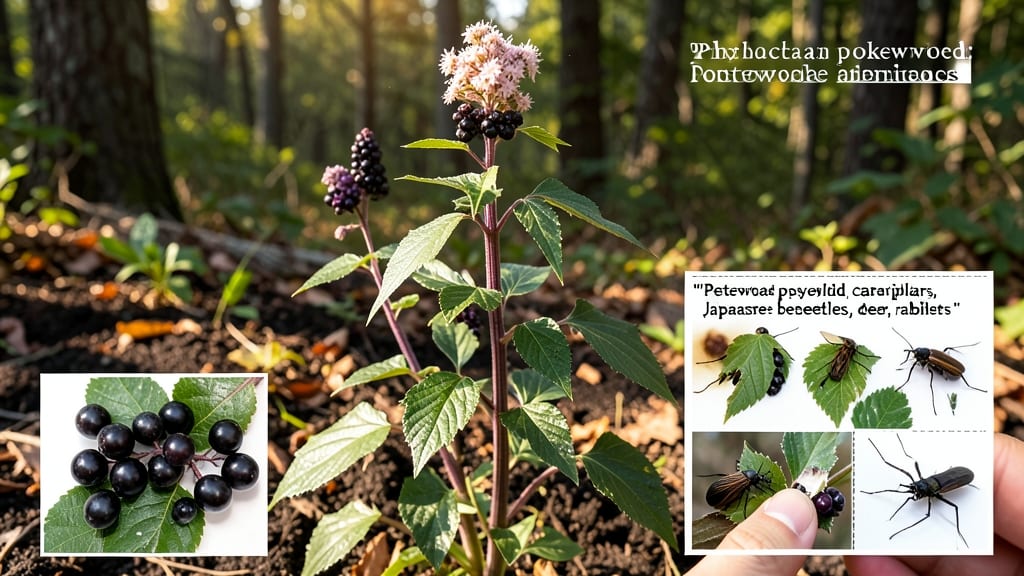
Animals and insects that eat pokeweed include deer, rabbits, quail, and Japanese beetles, which help control its growth. Birds like cardinals and robins consume its berries, while caterpillars and other insects feed on its leaves and stems.
Pokeweed's natural predators play a crucial role in keeping its spread in check, especially in gardens and wooded areas. 🌿 Deer and rabbits often browse on young shoots, while quail and Japanese beetles target the leaves, reducing the plant's vigor.
Birds like cardinals and robins are particularly effective at controlling pokeweed berries, which can otherwise spread prolifically. This ecological balance helps prevent pokeweed from becoming invasive, making these animals and insects valuable allies for gardeners.
What's interesting is how these predators focus on different parts of the plant—birds go for the berries, insects attack the foliage, and larger mammals nibble at the stems. This multi-level feeding strategy naturally thins out pokeweed populations without requiring human intervention.
However, if you're dealing with a severe infestation, you might need to take additional steps while waiting for nature to run its course.
💡 In This Article
- How Animals and Insects Control Pokeweed Growth
- Encouraging Natural Pokeweed Predators in Your Garden
How animals and insects control pokeweed growth
Pokeweed's natural predators create a multi-layered defense system against its spread. Deer, for instance, prefer the tender young shoots and stems, which contain high moisture content and minimal toxins. Their browsing habits often occur at dawn or dusk when the plants are most hydrated, making them easier to digest.
A single deer can consume up to 1-2 pounds of plant material daily, significantly reducing pokeweed's ability to establish dense thickets. 🌿
Insects play an equally critical role, with Japanese beetles being particularly effective. These beetles target the leaves, creating visible feeding patterns that weaken the plant. Their larvae, known as grubs, burrow into the soil to feed on roots, further disrupting pokeweed's growth cycle.
Meanwhile, caterpillars from various moth species specialize in defoliating pokeweed, sometimes consuming entire leaves within 24-48 hours during peak feeding seasons. This rapid defoliation forces the plant to divert energy away from seed production and toward regrowth.
Birds contribute to pokeweed control primarily through their berry consumption. Cardinals and robins are especially drawn to the plant's purple-black berries, which contain seeds that would otherwise spread prolifically. These birds often consume berries in large quantities, sometimes ingesting 50-100 seeds per day but passing only a fraction undigested.
The acidic environment in their digestive systems destroys many seeds, while those that survive are deposited in less favorable locations, reducing pokeweed's invasive potential.
What makes this ecosystem particularly effective is the timing of these interactions. Early spring sees deer and rabbits targeting young shoots, while summer brings peak insect activity. Birds then focus on berry consumption in late summer and fall, creating a staggered suppression that prevents pokeweed from dominating any single season.
This natural cycle explains why pokeweed rarely becomes overwhelming in areas with healthy predator populations.
The chemical composition of pokeweed also plays a role in how predators interact with it. While the plant contains mild toxins like phytolaccatoxin, many animals have developed tolerance or avoidance behaviors.
Deer, for example, will often nibble at the edges of leaves where toxin concentrations are lower, gradually working their way inward. Similarly, birds may selectively eat ripe berries while avoiding unripe ones, which contain higher toxin levels.
This selective feeding creates a feedback loop where only the most resilient pokeweed plants survive to reproduce.
In garden settings, this natural control system can be particularly valuable. Unlike chemical herbicides that kill all plant life indiscriminately, these predators create a balanced ecosystem where pokeweed is suppressed without harming beneficial plants.
The key is understanding these interactions—knowing that deer prefer young growth, insects target foliage, and birds focus on berries helps gardeners strategically encourage these natural controls. 🌱