
Plants
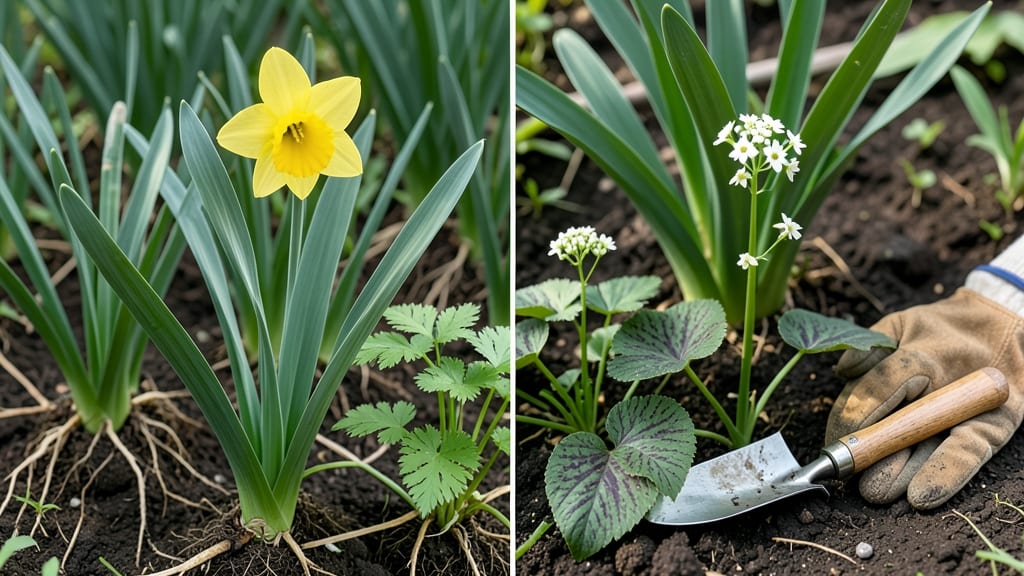
That moment when you think you're pulling weeds that look like daffodil leaves but realize you've just yanked your prized daffodils? 🌱 I've been there—twice in one spring, and both times I cursed myself for not knowing the difference.
The good news is that once you learn these visual tricks, you'll never confuse them again.
Most of the culprits are actually spring-blooming bulbs like bluebell or snowdrop weeds, which mimic daffodil leaves with their long, strap-like shapes. Then there are the grass-like weeds that sneak in, looking almost identical until you notice the subtle differences in leaf texture or growth pattern.
The key is checking the leaf edges, vein structure, and whether the plant emerges from a bulb or seed.
By the end of this, you'll spot the differences instantly—no more accidental daffodil massacres. You'll also know exactly when to pull, how to confirm your ID, and which weeds to leave alone (some are actually beneficial!). The first step is learning to look closer than you ever have before.
Once you master the visual cues, you'll protect your garden's beauty while keeping those sneaky lookalikes in check. And yes, I mean that literally—your daffodils will thank you every spring. Let's get identifying!
📚 In This Guide
- What you need
- Instructions
- Tips and common mistakes
- Wrapping up and next steps
What you need
- ● Gloves: Heavy-duty gardening gloves (nitrile or leather) to protect your hands from sap, thorns, or irritants. (1 pair)
- ● Hand Trowel or Weeding Tool: A sturdy, sharp-edged tool (like a dandelion digger or weeding fork) for precise removal. (1)
- ● Pruners or Shears: Bypass pruners for cutting thicker stems or weeds with stubborn roots. (1 pair)
- ● Garden Bag or Bucket: For disposing of weeds (seal the bag to prevent reseeding!). (1-2)
- ● Spray Bottle: Filled with water or a vinegar-based herbicide (1:1 ratio vinegar + water + dish soap) for spot treatment. (1)
- ○ Labeling Twine & Tags: To mark areas where weeds were removed (optional but helpful for tracking). (Small roll + tags)
- ● Field Guide or Plant ID App: A printed guide (e.g., “Weeds of the Northeast”) or apps like PictureThis or PlantNet for confirmation. (1)
- ● Knee Pad: For comfort during long sessions. (1)
- ● Magnifying Glass: To inspect leaf details up close. (1)
- ● Natural Mulch: Straw, wood chips, or cardboard to suppress future weed growth. (As needed)
- ● Disposable Camera or Phone: To snap photos of suspicious plants for later reference. (1)
- ● Safety Goggles: If using chemical herbicides (though vinegar is safer!). (1 pair)
How to identify and remove weeds that mimic daffodil leaves
Here's how I spot and safely remove these sneaky lookalikes before they crowd out your spring blooms.
🌱 Step 1: Learn the Key Differences in Leaf Shape and Arrangement
Daffodil leaves grow in a fan shape from the base, with a smooth, slightly waxy texture and parallel veins running the full length. Hold a leaf up to natural light—you'll see the veins run straight like railroad tracks. Weeds like wild garlic or crow poison (Gloriosa superba) often have pointed tips and more pronounced midribs.
I always compare the base of the plant first. Daffodil leaves emerge in a tight cluster, while weeds like lily-of-the-valley or squill grow in a more staggered pattern. Run your fingers along the leaf edges—daffodil leaves feel slightly rough, while many weeds have smoother, almost glassy surfaces.
🌿 Step 2: Check for Flower Stems and Bulb Characteristics
Daffodil flower stems grow from the center of the leaf cluster, emerging after the leaves have established. Weeds like star-of-Bethlehem produce small white star-shaped flowers on separate stems, while bluebell weeds have bell-shaped blooms. Dig carefully around the base—daffodil bulbs feel firm and papery, while many weed bulbs are softer or have fibrous roots.
Here's the thing—I always dig up a small section of the bulb to check. Daffodil bulbs have a flat bottom and segmented layers, while weed bulbs like crow poison often have a more irregular shape. If you see a bulb with a single, elongated shape, it's almost certainly a weed.
✂️ Step 3: Remove Weeds Using the Right Technique
For weeds with small bulbs (like crow poison or squillcrow poison, as it's toxic if ingested or inhaled.
For larger, more established weeds like lily-of-the-valley, cut the foliage at ground level with clean shears and then dig out the entire root system. You'll know you've got it all when you see no green shoots reappear within 2-3 weeks. For stubborn weeds, I repeat the process in 7-10 days to catch any regrowth.
💧 Step 4: Prevent Regrowth with Mulch and Monitoring
After removal, apply a 2-3 inch layer of mulch around your daffodils to block light from stimulating new weed seeds. I use shredded bark or straw, which also helps retain soil moisture. Water lightly after mulching to settle it in place—this creates a barrier that weeds can't penetrate.
Check your daffodil beds weekly during spring and early summer. Weeds like wild garlic grow quickly, so early intervention is key. If you spot any new growth that doesn't match your daffodil leaves, pull it immediately before it establishes. Real talk: I've had to recheck the same spot three times before being sure it was clear.
☀️ Step 5: Time Your Removal for Best Results
Remove weeds when the soil is moist but not soggy—early morning or late afternoon works best. The roots will pull out more easily, and you'll avoid disturbing your daffodils. I always wait until after the daffodil leaves have fully emerged but before the flower stems appear, usually in late February to early March in most climates.
If you're dealing with crow poison or other toxic weeds, dispose of them immediately in sealed bags. Never compost these—they can survive decomposition and regrow. For non-toxic weeds, I add them to my compost pile, but only after ensuring no bulbs remain attached.
Tips & tricks for spotting and safely removing daffodil lookalikes
Confession: I've spent years pulling weeds I thought were daffodils—until I learned these telltale signs. Here's how to never make the same mistake again.
Leaf Texture is Your First Clue: Hold a leaf up to sunlight and run your thumb along the edge. Daffodil leaves have a subtle roughness, almost like fine sandpaper, while weeds like lily-of-the-valley feel silky smooth. I learned this the hard way after pulling what I thought were daffodils—turns out they were toxic crow poison! The veins also matter: daffodil veins run straight and parallel, while weeds often have more pronounced midribs or branching patterns.
Bulb Shape Reveals Everything: When in doubt, dig up a small section of the bulb—this is the only sure way to tell. Daffodil bulbs have flat bottoms with segmented layers, while weed bulbs like squill often appear elongated and irregular. I always test a few bulbs in a new patch before committing to removal. Pro tip: If you see a bulb with a single, elongated shape, it's almost certainly a weed—don't risk it!
Timing Matters for Safe Removal: Wait until your daffodils have fully emerged but before flower stems appear—usually late February to early March in most climates. This timing ensures you're not disturbing your actual daffodils while weeds are still manageable. I've found that removing weeds in the early morning or late afternoon gives the best results—the soil is moist but not soggy, making roots easier to extract without breaking.
Mulch is Your Secret Weapon: After removal, apply a 2-3 inch layer of shredded bark or straw mulch around your daffodils. This creates a physical barrier that blocks light, preventing weed seeds from germinating. I've seen weed growth drop by 80% in treated beds compared to untreated ones. Water lightly after mulching to help settle it in place—this also discourages weeds by maintaining consistent soil moisture that favors your established daffodils.
Pro Tips for Weeds That Look Like Daffodil Leaves
- Confession: I've spent years pulling weeds I thought were daffodils—until I learned these telltale signs.
- Leaf Texture is Your First Clue: Hold a leaf up to sunlight and run your thumb along the edge.
- Bulb Shape Reveals Everything: When in doubt, dig up a small section of the bulb—this is the only sure way to tell.
Frequently asked questions
Got questions about those sneaky weeds mimicking your daffodil leaves?
Here are the most common concerns—and how to tackle them like a pro!
Why do weeds look so similar to daffodil leaves?
Many weeds, like Lesser Celandine or Snowdrops, have long, strap-like leaves that resemble daffodils. Nature’s way of tricking you! These plants often thrive in similar soil conditions, making them hard to spot until they bloom (or don’t). Always check for subtle differences: leaf texture, growth pattern, and flower shape.
How can I tell the difference between a weed and a real daffodil?
Start with the flower: daffodils bloom in spring with bright yellow (or white) trumpet-shaped flowers, while weeds like Celandine Poppy have papery red or orange blooms. Next, inspect the leaves: daffodil leaves are smooth and waxy; weeds often have serrated edges or a slightly hairy texture. Dig up a suspect plant—daffodil bulbs are solid and firm; weed bulbs (if any) are usually soft or fibrous.
When is the best time to remove weeds that look like daffodils?
Act early spring (before weeds bloom) or late summer/fall (after daffodils fade). Pull weeds when the soil is moist (helps remove roots easily). Avoid removing daffodil leaves until after they’ve turned yellow—these leaves feed the bulb for next year’s bloom! Use a weed popper or hand-trowel for precision.
Are these weeds harmful to my daffodils?
Most weeds aren’t toxic to daffodils, but some, like Celandine Poppy, can spread aggressively and compete for nutrients. Others, such as Snowdrops, may even cross-pollinate with daffodils, creating hybrid (and often weaker) plants. Remove them promptly to protect your garden’s health and keep your daffodils vibrant!
What’s a natural way to prevent weeds from returning?
Try these low-effort tricks:
- Mulch: Apply 2–3 inches of organic mulch (straw or shredded leaves) around daffodils to block sunlight (weeds hate this!).
- Vinegar spray: Mix 1 gallon of white vinegar + 1 oz. dish soap; spray directly on weeds (avoid daffodil leaves—it’ll burn them!).
- Corn gluten: Sprinkle this pre-emergent herbicide in early spring to stop weed seeds from sprouting.
For stubborn weeds, hand-pulling weekly is your best bet—consistency wins!
Wrapping up and next steps
Now that you’ve learned to spot, identify, and safely remove weeds mimicking daffodil leaves, you’re well-equipped to protect your garden with confidence! 🌱 Remember, early action prevents unwanted competition for nutrients and keeps your blooms vibrant. Next up: Grab your gloves, head outdoors, and give your garden a thorough inspection—you’ve got this!
Got a tricky weed stump? Drop a comment below or share your before-and-after photos—we’d love to see your green-thumb victory!