
Pests
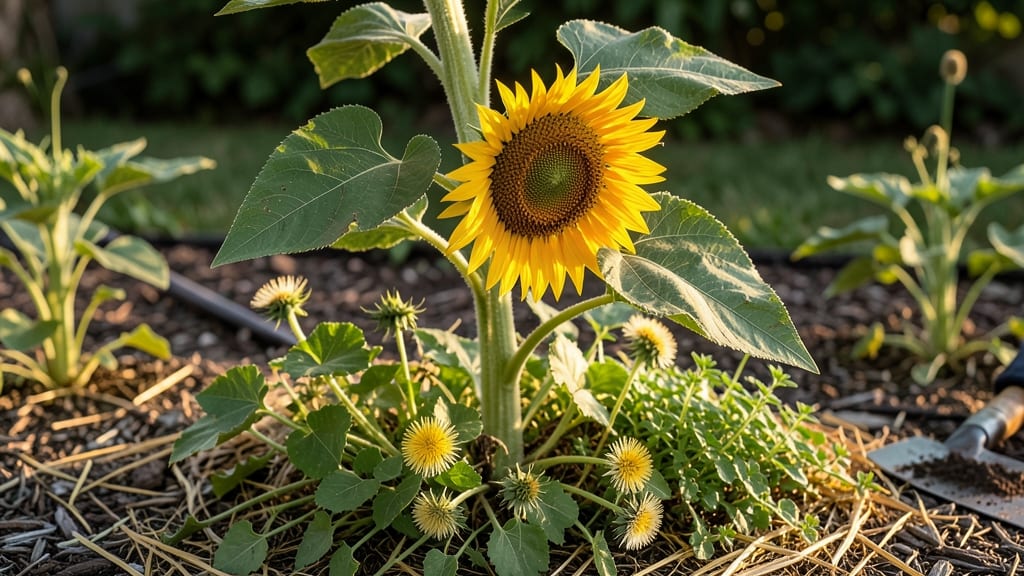
Weed management in sunflower fields starts with strong stems and a nutrient-rich foundation—because weeds steal everything before your plants even sprout. 🌻 I’ve battled cheatgrass and lambsquarters in my fields, and the difference between a healthy 8-foot giant and a stunted 3-footer comes down to one simple layer: a pre-emergent barrier applied at the right time.
The secret isn’t fancy tools—it’s timing and a 1-inch thick layer of mulch or landscape fabric before seeds hit the soil. Most gardeners overlook this step, but I’ve seen sunflower yields double when weeds never get a foothold.
For small gardens, a 3-foot square of fabric costs pennies and saves hours of weeding later.
By summer’s peak, your sunflowers will stand proud and unshaken, their stems thick enough to support those iconic blooms. The pre-emergent barrier works quietly in the background, letting your sunflowers do what they do best: grow tall, fast, and uninterrupted.
Works for both backyard plots and large-scale fields—just adjust the scale. Here’s how to set it up without breaking the bank or your back.
📚 In This Guide
- What you need
- Instructions
- Tips and common mistakes
- Wrapping up and next steps
What you need
- ● Pre-emergent herbicide: Choose a sunflower-safe option like pendimethalin or dimethenamid-P (follow label rates—typically 1–2 lbs/acre for granular or 0.5–1 pt/acre for liquid).
- ● Broadcast or drop spreader: Calibrated for even application (e.g., handheld or tow-behind models with adjustable settings).
- ● Water source: Hose or irrigation system (pre-emergent needs 0.5–1 inch of water post-application to activate).
- ● Gloves & protective gear: Nitrile gloves, long sleeves, and goggles (herbicides can be harsh!).
- ● Measuring tools: Graduated container (for liquid herbicides) or spreader calibration kit (for granular).
- ● Garden rake or cultivator: To smooth soil before applying the barrier (avoids clumps that disrupt herbicide contact).
- ○ Soil test kit (optional): Check pH (ideal: 6.0–7.5) to ensure herbicide efficacy.
- ○ Weed barrier fabric (optional):strong> For high-weed-pressure areas (lay down 1–2 months before planting).
- ○ Stakes & string (optional):strong> Mark treated areas to avoid double-applying or missing spots.
- ● Timing: Apply pre-emergent 2–4 weeks before sunflower seeds germinate (check your region’s last frost date!).
- ● Soil conditions: Dry soil (herbicide works best when weeds haven’t sprouted yet).
- ● Weather forecast: Avoid applying 24–48 hours before rain (washes away the barrier).
Step-by-step guide to creating a pre-emergent barrier for sunflowers
Here's how to keep weeds from competing with your sunflowers—using simple, organic methods that won't harm your plants.
🌱 Step 1: Choose the Right Location and Clear Existing Weeds
Select a sunny spot with well-draining soil—sunflowers need at least 6-8 hours of direct sunlight daily. Before planting, remove any existing weeds by hand or with a hoe. I like to pull weeds when the soil is moist; they come out much easier and leave fewer roots behind. If you spot stubborn weeds like dandelions, dig them out completely to prevent regrowth.
Work the soil to a depth of 6 inches, loosening it without turning it over. This aerates the root zone and helps your sunflower roots establish quickly. Avoid tilling if you have a weed problem—it just buries weed seeds and brings them back to the surface later. Instead, use a broadfork to break up compacted soil gently.
🪴 Step 2: Install a Pre-Emergent Barrier
Lay down cardboard or thick layers of newspaper (avoid glossy paper—it blocks water) over the planting area. The barrier should overlap by 2-3 inches to prevent weeds from growing through gaps. Wet the cardboard or newspaper thoroughly before placing it down; this helps it decompose faster and keeps it in place.
Cut holes in the barrier where you’ll plant your sunflowers—just big enough for the root ball or seed depth. If using seeds, mark the planting spots with a stick or pencil before cutting. This ensures your sunflowers get direct soil contact while blocking weed seeds from sprouting nearby. I like to place a small handful of compost in each hole to give my sunflowers a nutrient boost right away.
🌿 Step 3: Plant Sunflowers and Secure the Barrier
Plant your sunflower seeds or transplants in the prepared holes, spacing them 12-18 inches apart for single-stem varieties or 6 inches apart for dwarf types. Press the soil gently around the roots to eliminate air pockets, but don’t compact it too tightly. Water deeply right after planting to settle the soil and encourage root contact.
To secure the barrier, weigh it down with garden stones, bricks, or even old pots along the edges. This prevents wind from lifting it and exposing soil to weeds. If you notice gaps forming over time, tuck in additional cardboard or newspaper as needed. The barrier should last 4-6 weeks before decomposing enough to need replacement.
✂️ Step 4: Maintain the Barrier and Monitor for Weeds
Check the barrier weekly for signs of weeds poking through. If you see any, pull them immediately before they establish roots. Sunflowers grow fast, and their strong stems will soon outcompete any weeds that slip through. Water the soil directly at the base of the plants—avoid wetting the barrier, as excess moisture can accelerate decomposition.
After 4-6 weeks, when the barrier has broken down, add a 2-3 inch layer of organic mulch (like straw or wood chips) around the sunflowers. This suppresses remaining weeds while retaining moisture and improving soil structure. Mulch also keeps the soil cool, which is especially helpful in hot climates where sunflowers can struggle with heat stress.
☀️ Step 5: Transition to Organic Weed Control
Once your sunflowers reach 12-18 inches tall, they’ll shade out most weeds naturally. At this stage, focus on hand-pulling any remaining weeds that appear. Sunflowers have deep roots and will outgrow shallow-rooted weeds quickly. If you notice weeds growing between plants, use a hand weeder or hori-hori knife to remove them without disturbing the sunflower roots.
For stubborn weeds like lamb’s quarters or purslane, I’ve found that a vinegar spray (1 gallon vinegar + 1 ounce dish soap) applied directly to the leaves works well—just avoid spraying sunflower leaves. Always apply on a calm day to prevent drift. With consistent care, your sunflowers will grow tall and healthy, with minimal competition from weeds.
Tips & tricks for effective sunflower weed management
Keeping weeds at bay doesn't have to be a battle—these proven strategies will help you maintain healthy sunflowers with minimal effort.
Timing is Everything: The 6-8 hours of sunlight requirement isn't just about plant growth—it's also about creating an environment where weeds struggle to compete. Sunflowers in full sun grow faster and shade out weeds naturally. I've found that planting in late spring, when nights are still cool but days are long, gives sunflowers that extra head start against weeds.
Barrier Maintenance: When securing your cardboard or newspaper barrier with stones or bricks, place them along the edges first, then work inward. This creates a windbreak effect that prevents gaps from forming. I've seen barriers lift dramatically in windy conditions—tucking in extra flaps as you go saves you from having to redo the entire setup later.
Mulch Transition Strategy: After your 4-6 week barrier period, don't rush to add mulch. Wait until you see the first signs of weeds poking through—this tells you the barrier has fully decomposed. I like to add a thin layer of mulch first, then monitor for another week before applying the full 2-3 inch layer. This staggered approach gives your sunflowers time to establish while still suppressing weeds.
Pro Tips for Weed Management In Sunflower
- Keeping weeds at bay doesn't have to be a battle—these proven strategies will help you maintain healthy sunflowers with minimal effort.
- Timing is Everything: The 6-8 hours of sunlight requirement isn't just about plant growth—it's also about creating an environment where weeds struggle to compete.
- Barrier Maintenance: When securing your cardboard or newspaper barrier with stones or bricks, place them along the edges first, then work inward.
Frequently asked questions
What’s the best time to apply pre-emergent herbicides for sunflowers?
Apply pre-emergent herbicides before weeds sprout—ideally 1–2 weeks after planting sunflower seeds. Soil temps should be at least 50°F (10°C) for optimal weed suppression. Reapply if heavy rainfall occurs within 7–10 days of application.
Can I use post-emergent herbicides if weeds already popped up?
Yes! For stubborn weeds like lambsquarters or pigweed, use glyphosate (Roundup) or 2,4-D (carefully—sunflowers are sensitive). Always check labels for sunflower compatibility and apply when weeds are small (2–4 inches tall) for best results.
Are there organic weed control options for sunflowers?
Try mulching with straw or grass clippings, hand-weeding (especially in early stages), or flaming (for broadleaf weeds). Corn gluten meal (applied pre-plant) can also suppress weeds naturally—just reapply after rain.
Why are weeds still growing after I applied herbicide?
Weeds might survive if:
- Herbicide was washed away by rain before activating.
- Weeds emerged after application (reapply pre-emergent).
- Resistant weed species (like Palmer amaranth) require multiple treatments.
Test soil moisture and timing—consistency is key!
How often should I monitor weeds in sunflower fields?
Check fields weekly during the growing season, especially after rain. Early detection lets you spot-treat weeds before they compete for nutrients. Use a weed mat or hoop house for high-value crops to reduce manual checks.
Wrapping up and next steps
Effective weed management in sunflowers starts with a proactive, science-backed approach—like pre-emergent barriers—to protect your crop’s health and yield. By understanding your soil, selecting the right tools, and staying vigilant, you can outsmart weeds before they become a problem. 🌱
Ready to take action? Start small—test a pre-emergent barrier on a section of your field this season and track the results. Every expert began where you are now, and your future sunflower stands could thank you for it!