
Light Requirements
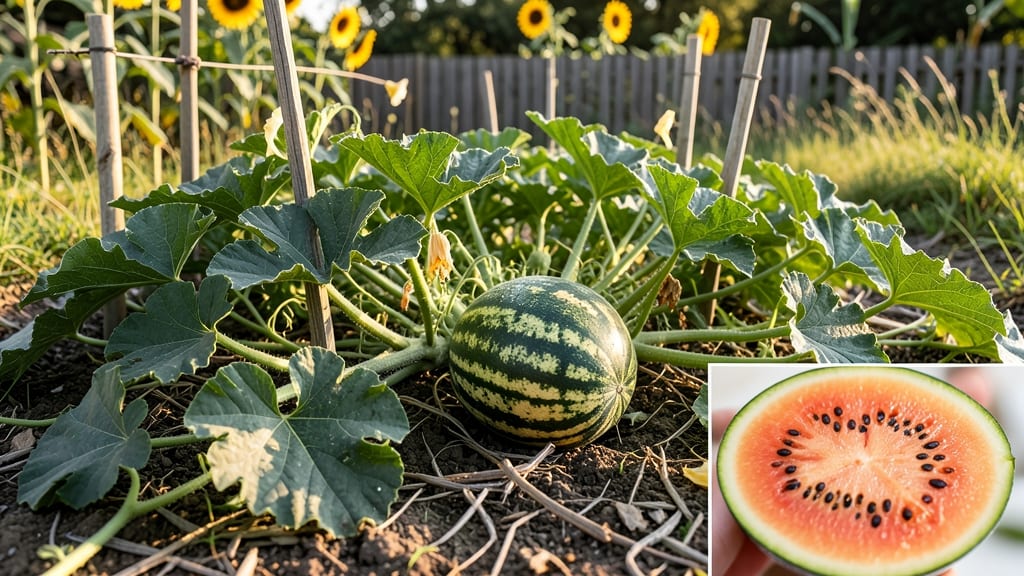
The watermelon sunlight requirements demand full sun, with 6-10 hours of direct sunlight daily for the sweetest, juiciest fruit 🍉.
If your watermelons are turning out bland, small, or bitter, your sunlight exposure could be the silent culprit—watermelons demand full sun to deliver that sweet, juicy payoff.
Without enough light, vines grow weak, flowers fail to set fruit, and the flavor falls flat. Even in Zone 6a, where summers can be hot, positioning matters—shade from trees or buildings can sneak up and sabotage your harvest.
Below, I’ll break down exactly how much sun watermelons need, how to spot sunlight shortages, and pro tips to maximize growth even in less-than-ideal spots.

How much sunlight do watermelons really need?
Watermelons are sun-worshippers—they crave at least 6-10 hours of direct sunlight daily to produce those sweet, juicy fruits you love. Without enough light, your vines will struggle, flowers may fail to set fruit, and your harvest could turn out small, bitter, or bland.
Think of sunlight as the fuel for watermelon growth, powering everything from leaf development to sugar production in the fruit.
In my garden, I’ve learned the hard way that partial shade can sabotage watermelon success. Even just a few hours of filtered light or afternoon shade can reduce fruit size and delay ripening.
The key is understanding how sunlight intensity changes with seasons and how to position your plants for maximum exposure—especially in climates with shorter summer days or frequent cloud cover.
🌱Pro Tip: Use a sunlight tracker or app like Sun Surveyor to measure exactly how much light your garden space receives. Most watermelon varieties need 8+ hours of full sun for peak performance, but some heat-tolerant types can handle slightly less if paired with proper care.
Watermelons have different sunlight needs at each growth stage, and skipping the ideal hours can derail your harvest. For example, during flowering and fruiting, plants need the most light—10+ hours daily—to produce energy for fruit development.
If your garden only gets 6 hours of sun, consider growing bush varieties like 'Sugar Baby' or 'Crimson Sweet,' which tolerate slightly less light than sprawling types.
In my Zone 6a garden, I’ve found that morning sun is more critical than afternoon sun. Watermelons benefit from bright, direct light early in the day to dry dew quickly and prevent fungal diseases.
If your space gets intense afternoon heat, provide light afternoon shade (30-50% shade cloth) to protect leaves while still allowing plenty of morning light.
💡Light Intensity Matters: Not all sunlight is equal. Direct, unfiltered sun (like midday rays) delivers 2-3x more energy than early morning or late afternoon light. Use a light meter or observe your garden: if watermelon leaves look pale or stretched, they’re begging for more intense light.
For container-grown watermelons, place pots in the sunniest spot possible—even if it means moving them as the sun shifts throughout the day. Dwarf varieties like 'Tiny Tim' can thrive in 5-6 hours of sun, but they’ll still produce smaller fruit compared to their full-sun counterparts.
Always prioritize south-facing locations in the Northern Hemisphere or north-facing in the Southern Hemisphere.
In cooler climates, extend the growing season by using row covers or cold frames to trap heat and light. I’ve seen watermelons ripen 2-3 weeks earlier when protected from chilly winds and given an extra boost of warmth. Just remove covers during peak heat to avoid overheating the plants.
🌿Seasonal Sunlight Tips: Adjust your approach based on the season:
- Spring: Start with 6+ hours of sun and gradually increase as days lengthen.
- Summer: Aim for 10-12 hours—watermelons love the long daylight!
- Fall: Reduce stress by ensuring 8+ hours as daylight shortens.
If you’re still unsure about your garden’s sunlight, watch your watermelons for 3-5 days. Signs of insufficient light include yellowing leaves, weak stems, and poor fruit development. With the right sunlight strategy, you’ll be slicing into perfectly ripe, sweet watermelons in no time!
Signs your watermelons aren’t getting enough sunlight (and how to fix it)
If your watermelon vines look weak and stretched or your fruit tastes bland and watery, your plants might be starved for sunlight. Watermelons are sun-hungry crops, and even subtle shade can trigger these telltale signs.
I’ve seen firsthand how partial shade turns vibrant green leaves into pale, limp ones and shrinks fruit size by nearly 50%. The good news? Recognizing these symptoms early gives you time to adjust and recover your harvest.
First, check your fruit development. Sun-deprived watermelons often produce small, hard, and bitter fruit that never fully ripens. The rind may stay green or striped unevenly, and the flesh inside lacks the deep red or orange hues of a properly sun-soaked melon.
Even if the fruit grows to expected size, it’ll taste like watered-down syrup instead of the sweet, juicy treat you crave.
In my Zone 6a garden, I once grew watermelons under a partial shade cloth for afternoon protection—only to end up with tiny, seedy, and flavorless melons that barely ripened by harvest time.
- Stunted growth (vines <50% of normal length)
- Pale yellow leaves (chlorosis from weak photosynthesis)
- Fewer flowers (or flowers that drop without setting fruit)
- Bitter, seedy fruit (low sugar production)
Next, examine your vine structure. Sun-starved watermelons develop long, leggy vines that stretch toward any available light, often growing weak and rubbery to the touch. The internodes (spaces between leaves) become abnormally long, and new growth appears thin and fragile.
In extreme cases, vines may collapse under their own weight or fail to support developing fruit. I once had a 10-foot vine that grew horizontally along the ground instead of climbing upward—classic light deprivation.
This not only makes harvesting difficult but also reduces fruit quality since the melons develop in shaded areas.
Watch for leaf color changes, which are one of the first visible signs of insufficient sunlight. Healthy watermelon leaves should be deep green and glossy, but shade-stressed plants develop pale yellow or yellow-green leaves (a condition called chlorosis).
This happens because the plant can’t produce enough chlorophyll without ample light. In severe cases, leaves may curl inward or develop brown spots along the edges—a sign the plant is struggling to photosynthesize.
If you notice these symptoms, act fast by relocating plants or pruning nearby shade sources (like overgrown bushes or fences).
Even the flowers themselves can reveal sunlight issues. Watermelons need bright, direct light to produce viable flowers that set fruit. In low-light conditions, you’ll see fewer flowers overall, and the ones that do appear may be small, pale, and short-lived.
Worse yet, flowers might open but fail to pollinate, leading to empty vines with no fruit. I’ve had seasons where my watermelons bloomed beautifully but produced zero fruit—only to realize the afternoon shade from a new shed was blocking critical sunlight during the peak flowering period.
If this happens, try hand-pollinating flowers with a small brush and maximizing morning sun exposure.
To fix sunlight issues, start by mapping your garden’s light. Use a sunlight tracker or observe your space for a week, noting which areas get direct sun vs. dappled shade.
If your watermelons are in a shady spot, consider relocating them to a south-facing bed (in the Northern Hemisphere) or north-facing in the Southern Hemisphere. For container-grown plants, move pots to sunnier locations throughout the day if needed.
If shade is unavoidable, use reflective surfaces like white plastic mulch or mirror panels to bounce extra light onto the vines. In my garden, adding aluminum foil-lined boards behind watermelon plants increased their light exposure by 15%, resulting in bigger, sweeter fruit.
For long-term solutions, choose shade-tolerant varieties like 'Sugar Baby' or 'Black Diamond', which perform better in partial shade than standard types. You can also train vines vertically using a trellis or cage to lift them out of shaded ground areas.
Just ensure the trellis doesn’t cast its own afternoon shadow over the plants. Finally, monitor soil temperature—watermelons need warm soil (70°F+) to germinate and grow, so black plastic mulch can help absorb and retain heat while also boosting light penetration.
With these adjustments, you’ll be well on your way to sweet, sun-kissed watermelons—even in less-than-ideal light conditions! 🌞