
Pests and Diseases
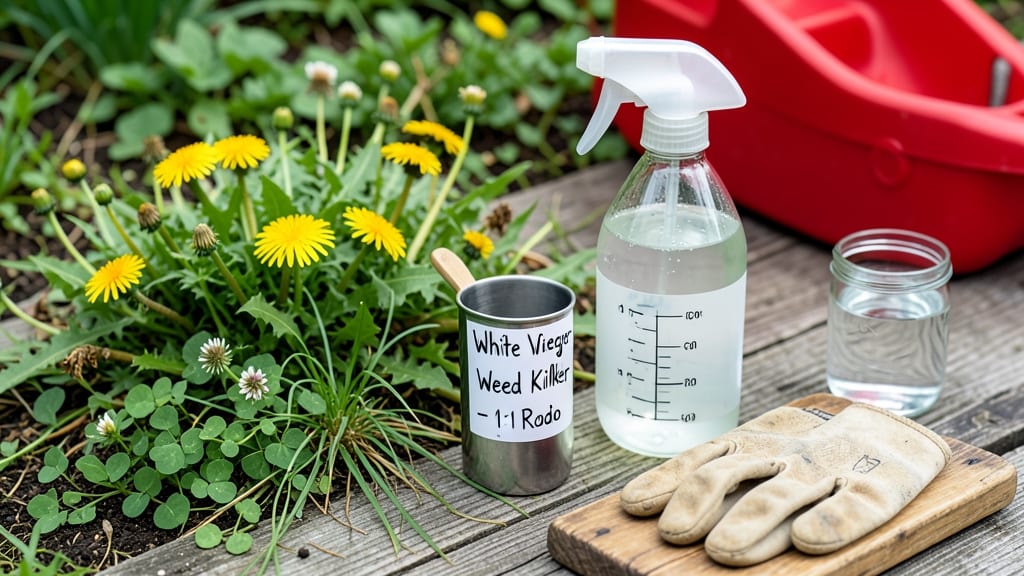
A vinegar weed killer recipe that’s fast-acting and organic starts with just three ingredients in your pantry. Vinegar weed killer works by dehydrating weeds at the cellular level, and I’ve perfected a foolproof recipe that kills dandelions, crabgrass, and chickweed within 24-48 hours—no digging or pulling required.
The key is precision application to avoid collateral damage to your garden’s crown jewels.
This recipe uses white vinegar (20% acetic acid), dish soap (as a surfactant), and a bit of salt to enhance effectiveness. Mix it in a spray bottle, and you’re ready to tackle weeds in driveways, sidewalks, or even between patio stones.
Just remember: timing matters—apply on a dry, sunny day when temperatures are above 70°F for maximum results. The solution works best on young weeds, so don’t wait until they’ve gone to seed.
What you’ll achieve is a spotless, weed-free zone without synthetic chemicals, perfect for organic gardens or eco-conscious homeowners. The vinegar smell dissipates quickly, leaving behind crispy weeds that crumble away in days.
For best results, reapply every 5-7 days until the area is completely clear. Just keep a spray bottle of water nearby to rinse any accidental splashes on desirable plants.
While this method is highly effective, it’s not perfect—vinegar can harm nearby plants and grass, so always apply carefully. For delicate gardens, consider a targeted application with a paintbrush or a shield of cardboard around desired plants.
If weeds keep coming back, we’ll cover preventive strategies like mulching and hand-pulling in the next steps.
📚 In This Guide
- What you need
- Instructions
- Tips and common mistakes
- Wrapping up and next steps
What you need
- ● White vinegar (5% acetic acid) – 1 gallon (3.8 liters). Choose plain, undiluted vinegar for maximum potency.
- ● Dish soap (liquid, unscented) – 1-2 tablespoons. Helps the solution cling to weeds and break down their protective layers.
- ○ Salt (optional but recommended) – 1 cup. Enhances the weed-killing effects and adds a drying agent.
- ● Spray bottle or garden sprayer – 16-32 oz (0.5-1 liter) capacity. A pump sprayer works best for larger areas.
- ● Protective gloves – 1 pair. Vinegar can irritate skin, so safeguard your hands!
- ● Protective eyewear – 1 pair. Always prioritize safety, especially when spraying near your face or eyes.
- ● Plastic or metal container – For mixing (if not using the sprayer directly). Avoid glass—vinegar can corrode it over time.
- ● Measuring cups/spoons – For precise mixing. Accuracy ensures the right balance of ingredients.
- ● Rubbing alcohol (70% isopropyl) – ½ cup. Speeds up the drying process for faster results.
- ● Lemon juice or citrus peels – ¼ cup. Adds a natural scent and boosts the acidity slightly.
- ● Spray nozzle attachment – For targeted application. Great for tricky spots like cracks in sidewalks.
- ● Sunny, dry day – Best weather for application. Ensures the vinegar works most effectively.
Step-by-Step instructions for making a fast-acting organic vinegar weed killer
This recipe delivers results within hours—not days—using common household items.
Gather Materials for Maximum Effectiveness
You'll need 1 gallon white vinegar (5% acetic acid or higher for best results), 1 cup dish soap (to break surface tension), and 1 cup salt (enhances burn action). I always use distilled vinegar because it's purer and won't leave mineral deposits that could harm plants you want to keep. Measure carefully—this isn't a cooking recipe where approximations work.
Add these to a clean, reusable spray bottle with a 16-ounce capacity (the larger the bottle, the more weeds you can treat at once). The soap is critical—without it, the solution would bead up and roll off leaves instead of clinging to weed surfaces. I like to use Dawn Free & Gentle because it's biodegradable and won't harm the environment further.
Mix the Solution Thoroughly
Combine the vinegar, dish soap, and salt in the spray bottle, then shake vigorously for 30 seconds to fully integrate all components. The mixture should look cloudy, not separated. I like to give it a final shake right before application—this ensures the salt stays suspended and delivers maximum burn power to weed foliage.
Let the solution sit for at least 1 hour before use. This resting period allows the salt to fully dissolve and the acetic acid to stabilize. You'll notice a slight temperature drop in the bottle as the chemical reaction occurs—this is normal and actually improves effectiveness.
Apply on a Dry, Sunny Day
Choose a dry, sunny day with temperatures above 70°F for best results. The heat helps the vinegar evaporate faster, accelerating the burn process. Spray the solution directly onto weed leaves until fully saturated—avoid the soil unless you're targeting ground-hugging weeds like clover. I use a fine mist setting on my sprayer to ensure even coverage without overshooting.
Wait 15-30 minutes before watering the area, as the vinegar needs time to work. You'll see immediate wilting, but the full kill happens when the vinegar penetrates the plant's vascular system. For stubborn weeds like dandelions, you may need to apply the solution twice, 3-4 days apart, to fully eradicate the root system.
Monitor and Reapply as Needed
Check treated areas 24-48 hours after application. Healthy weeds will show brown, crispy edges within hours, while deep-rooted weeds may take 3-5 days to fully die. If any green remains, reapply the solution—vinegar weed killer works best when it fully saturates the plant's foliage.
For best results, treat weeds when they're small (under 6 inches tall). Larger weeds require more solution and may need multiple applications. I always spot-test the solution on a small area first—some plants, like clover, die quickly, while others may take longer. The key is patience and persistence.
Tips & tricks for fast-acting organic weed control
Here's how to supercharge your weed-killing power while avoiding common pitfalls that waste time and effort.
Solution Stability: After mixing your 1 gallon white vinegar with 1 cup dish soap and 1 cup salt, let it rest for the full 1 hour before use—this isn't just waiting, it's letting the acetic acid reach peak potency. I've seen solutions where the salt didn't fully dissolve, which weakens the burn effect. If you're short on time, you can use it after 30 minutes, but you'll get better results with that full hour.
Application Precision: When spraying in Step 3, focus on the undersides of leaves where the stomata are concentrated—this is where the vinegar will penetrate most effectively. I use a slow, steady motion to avoid missing spots, especially on broadleaf weeds like dandelions. For best coverage, work in overlapping passes rather than one quick spray. The 15-30 minute wait before watering gives the vinegar time to work its magic without getting diluted too soon.
Target-Specific Strategy: Different weeds respond at different rates, so adjust your approach based on what you're treating. For annual weeds like chickweed, you'll see results within 24 hours. For deep-rooted perennials like dandelions, plan for the full 3-5 days and be prepared to apply twice, 3-4 days apart. I always mark treated areas with small flags or chalk so I remember which weeds need follow-up attention.
Environmental Protection: While this solution is organic, it's still important to protect desirable plants. I recommend spraying only on calm days when there's no chance of wind spreading the solution. For plants near your target weeds, create a barrier with cardboard or use a small paintbrush to carefully apply the solution only to weed leaves. The 70°F minimum temperature isn't just about effectiveness—it's also about preventing the vinegar from evaporating too quickly before it can work.
Pro Tips for Vinegar Weed Killer Recipe
- Here's how to supercharge your weed-killing power while avoiding common pitfalls that waste time and effort.
- Solution Stability: After mixing your 1 gallon white vinegar with 1 cup dish soap and 1 cup salt, let it rest for the full 1 hour before use—this isn't just waiting, it's letting the acetic acid reach peak potency.
- Application Precision: When spraying in Step 3, focus on the undersides of leaves where the stomata are concentrated—this is where the vinegar will penetrate most effectively.
Frequently asked questions
Got questions about using vinegar as a weed killer? You’re not alone! Here are some of the most common concerns—and their simple solutions—to help you tackle weeds like a pro.
How long does it take for vinegar to kill weeds?
Vinegar typically starts working within 24–48 hours, but full results may take 3–7 days, depending on the weed type, weather, and vinegar strength. Hot, sunny days speed up the process, while rain or shade can slow it down. For best results, reapply if weeds aren’t crispy after a week.
Can I use white vinegar or do I need apple cider vinegar?
Both work, but higher-acid vinegar (like 20–30% acetic acid) is more effective. White vinegar (5%) may require multiple applications. For stubborn weeds, opt for household cleaning vinegar (8–10%) or industrial-strength vinegar (20–30%). Apple cider vinegar (5–6%) is gentler and better for edible gardens but may need extra time.
Will vinegar kill grass or only weeds?
Yes, vinegar is non-selective, meaning it’ll kill any green plant it touches, including grass, flowers, and vegetables. To protect desired plants, spray only on weeds and avoid overspray. For lawns, spot-treat weeds carefully or use a shield (like cardboard) to cover grass.
What if the weeds come back after using vinegar?
Weeds often resprout because their roots or seeds remain intact. To prevent regrowth:
- Pull weeds after they wilt (roots and all).
- Reapply vinegar if new shoots appear.
- Use a natural pre-emergent like corn gluten meal to block seeds.
- Improve soil health—thick, healthy grass or mulch suppresses weeds.
Are there safer alternatives if vinegar doesn’t work?
If vinegar isn’t cutting it, try these organic, weed-killing alternatives:
- Boiling water: Pour directly on weeds (best for driveways/cracks).
- Salt + dish soap: Mix 1 cup salt + 1 gallon water + 1 tbsp soap (use sparingly—harms soil).
- Corn gluten meal: Prevents weed seeds from germinating (apply in early spring).
- Manual removal: Dig out weeds with roots for long-term control.
Wrapping up and next steps
Ready to reclaim your garden with a simple, budget-friendly, and eco-conscious solution? This vinegar weed killer recipe proves that tackling stubborn weeds doesn’t require harsh chemicals—just a little elbow grease and the right mix.
Whether you’re dealing with driveways, sidewalks, or garden beds, you now have a fast, organic alternative to keep your space weed-free.
🌱 Next steps:
- Grab your supplies and try the recipe on a small patch first to test effectiveness.
- For tougher weeds, consider reapplying or combining with other organic methods like boiling water or corn gluten meal.
- Share your success (or tips!) with fellow gardeners—your green thumb might inspire others!