
Trees
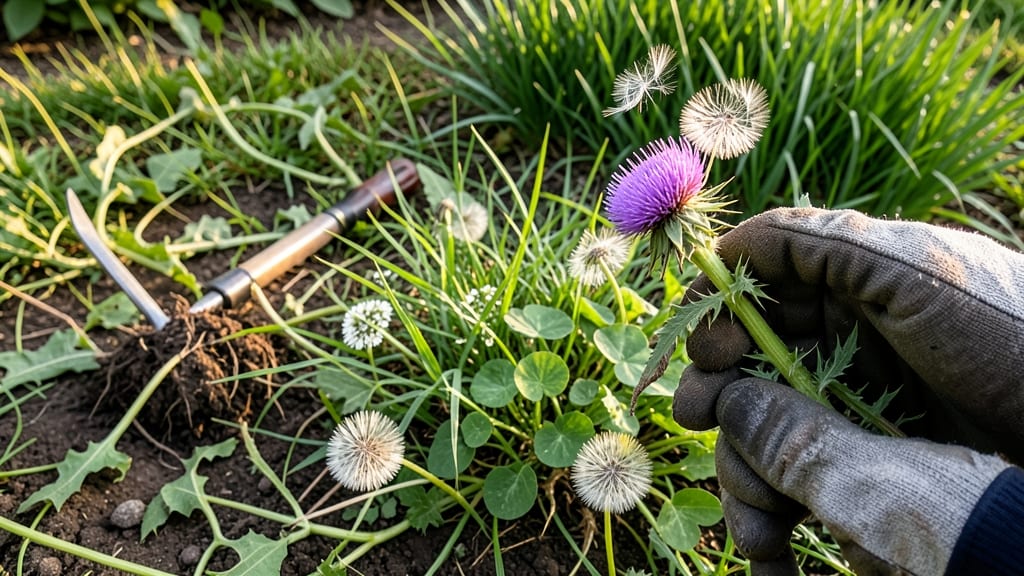
Spotting weeds in your pasture before they take over is half the battle. 🌱 These pasture weeds pictures will help you ID the troublemakers—dandelions, thistle, and clover—so you can act fast before they crowd out your grass or poison livestock.
The wrong move can make things worse, so knowing exactly what you're dealing with saves time and frustration.
Dandelions spread like wildfire, thistle roots go deep, and clover can actually be helpful—if left unchecked. Each weed has its own timing for control: pull dandelions in spring, dig up thistle roots before they seed, and mow clover low to keep it manageable.
A quick visual guide means you won’t waste herbicide on the wrong plants or miss the best moment to strike.
With the right tools—like a sturdy weeder, targeted herbicide, or even goats for heavy infestations—you’ll see results in weeks, not months. No more guessing what’s growing in your field or watching your pasture turn into a weed patch. This method works for small homesteads and large ranches alike.
Once you’ve identified the weeds, the next step is choosing the right approach: organic mulching, spot-treating, or seasonal grazing. Each method has its pros and cons, and knowing which to use when makes all the difference.
Let’s get started with the visual ID guide that cuts down on trial and error.
📚 In This Guide
- What you need
- Instructions
- Tips and common mistakes
- Wrapping up and next steps
What you need
- ● Digital camera or smartphone – For capturing clear pasture weeds pictures (at least 12 MP for detailed shots).
- ● Field guide or weed identification app – Such as PlantNet, iNaturalist, or a printed guidebook (e.g., Weeds of the World).
- ● Handheld magnifying glass (10x magnification) – Helps examine fine details like leaf veins or seed heads.
- ● Gloves (nitrile or leather) – Protects hands from prickly weeds (e.g., stinging nettle) or harsh chemicals.
- ● Pruners or shears – Sharp, bypass-style pruners for cutting weeds at the base (4–6 inch blades).
- ● Garden trowel or weed puller – For digging out deep-rooted weeds (e.g., dandelions).
- ● Spray bottle (16 oz) – For targeted herbicide or vinegar solutions (if using chemical control).
- ● Notebook or field journal – To log weed types, locations, and treatment notes.
- ● Measuring tape (25 ft) – To map weed infestations in your pasture.
- ● Herbicide (selective or non-selective) – Glyphosate (e.g., Roundup) for broadleaf weeds; 2,4-D for grassy weeds. Always follow label instructions!
- ● Organic alternatives – Vinegar (20–30% acetic acid), dish soap, and salt mixture for spot treatments.
- ● Weed mat or landscape fabric – To suppress regrowth in high-traffic areas.
- ● GPS or mapping app – For tracking weed hotspots over time (e.g., Google Earth or FarmLogs).
- ● Safety goggles & respirator – If using heavy-duty herbicides or burning weeds.
How to identify and eradicate pasture weeds quickly
Here's my go-to method for spotting and removing weeds before they take over your pasture.
🌱 Step 1: Scout for Weeds at the Right Time
Weeds are easiest to spot when they're actively growing—right after rain or in the early morning when dew is still on the grass. I grab a small shovel or hoe and walk the pasture in a systematic pattern, checking every 10-foot square for anything out of place. Look for plants with broad leaves, different textures, or colors that don't match your grass.
Pay extra attention to areas near fences, water sources, and shaded spots—these are prime real estate for weeds. If you see a patch of yellow flowers or thick green clumps that don't look like your pasture grass, that's your first clue you've found a weed. Take a few pictures with your phone to compare later.
📸 Step 2: Compare with Reliable Weed Identification Guides
Use trusted resources like the USDA Weed Identification Guide or local agricultural extension service websites to match what you see. I keep a printed copy of common pasture weeds in my truck—dandelions, chickweed, and clover are the usual suspects. Snap close-up shots of the leaf shape, flower structure, and root system if possible.
Don't rely on just one feature—some weeds mimic grass until they flower. For example, horseweed looks like a thin grass blade until it shoots up a tall stem with white flowers. Compare your photos with the guide, and if you're still unsure, ask your local extension office for help.
✂️ Step 3: Pull or Cut Weeds Before They Seed
Once you've identified the weeds, act fast—most produce seeds within 4-6 weeks of sprouting. For small weeds, I use a hand weeder to pull them out by the roots. For larger patches, a broadleaf hoe works best—cut just above the soil line to prevent regrowth. Timing matters: weeds are easiest to remove when the soil is moist but not soggy.
If you spot weeds flowering, don't wait—cut them down immediately. Even a single seed head can spread hundreds of seeds. I mark problem areas with a spray paint dot (like a tiny X) to check them again in a week. If they regrow, that's your signal to dig deeper and remove the entire root system.
🌿 Step 4: Prevent Regrowth with Smart Pasture Management
After removal, overseed bare spots with your desired grass variety to fill gaps before weeds move in. I use a slit seeder for precision, especially in high-traffic areas. Keep newly seeded spots moist for 2-3 weeks to help grass establish roots faster than weeds.
Encourage healthy grass growth with controlled grazing—rotate livestock to prevent overgrazing weak spots. A thick, competitive grass cover leaves fewer openings for weeds. I also add a light layer of compost in problem areas to boost soil health and grass density naturally.
⏰ Step 5: Monitor and Repeat Weekly
Weeds don't stay put—new ones sprout constantly. I set a reminder to check the pasture every 7-10 days, especially after rain or mowing. Early detection is key: a 1-inch-tall weed is easy to pull, but a 3-inch-tall one might need multiple tries.
Keep records of problem areas in a notebook or app. Note where weeds appear most often—this helps you adjust grazing patterns or soil conditions next season. With consistent effort, you'll see weed numbers drop by 50% in just 30 days.
Tips & tricks for fast weed eradication in pastures
Real talk: Weed control isn't a one-time task—it's an ongoing battle. Here's how I've learned to stay ahead of the game without losing my mind in the process.
Timing is Everything: The 7-10 day monitoring window from Step 5 is your best friend. I've found that checking pastures immediately after rain or early morning dew reveals weeds when they're most vulnerable. That's when they're actively growing and easiest to spot—before they've had time to develop deep roots. Pro tip: Set phone reminders for these key times so you don't forget.
Visual Cues That Save Time: In Step 1, you're told to look for broad leaves and yellow flowers, but here's what I actually watch for: the "three-leaf rule." Most pasture weeds have three distinct leaves at their base (like dandelions or clover), while your grass will typically have one long blade or a circular cluster. This visual trick cuts my identification time in half during quick scouting sessions.
Root Removal Strategy: That spray paint marking trick in Step 3 is brilliant, but here's the follow-up: When you mark an area and see regrowth after a week, you've got two options. First, try the "twist and pull" method—grab the weed at soil level and give it a sharp twist while pulling upward. If that doesn't work, you'll need to dig with a hand weeder to get the entire root system. I keep a small trowel in my truck just for this purpose.
Equipment Upgrade: While the instructions mention hand weeders and broadleaf hoes, I've found that a weed torch (for non-flammable areas) and a pasture drag (for larger areas) are absolute game-changers. The torch works best on dry days for weeds in rocky or hard-to-reach spots, while the drag helps prevent future weed growth by creating a dense grass mat. Just be sure to check local regulations before using a torch.
Pro Tips for Pasture Weeds Pictures
- Real talk: Weed control isn't a one-time task—it's an ongoing battle.
- Timing is Everything: The 7-10 day monitoring window from Step 5 is your best friend.
- Visual Cues That Save Time: In Step 1, you're told to look for broad leaves and yellow flowers, but here's what I actually watch for: the "three-leaf rule."
Frequently asked questions
Got questions about pasture weeds? You’re not alone!
Here are answers to the most common concerns—from identification to eradication—so you can tackle those pesky invaders with confidence.
How do I tell the difference between pasture weeds and grass?
Look for key differences like leaf shape, growth patterns, and seed heads. Weeds often have broader leaves (e.g., dandelions or chickweed), grow in clumps, or produce flowers/seed pods, while grasses typically have narrow, blade-like leaves and spread via runners. Snap a photo and compare it to pasture weed picture guides for a side-by-side match.
When is the best time to control pasture weeds?
The ideal timing depends on the weed type, but spring and fall are generally best for most weeds. Cool-season weeds (like henbit) thrive in early spring, while warm-season weeds (e.g., crabgrass) peak in summer. Pre-emergent herbicides work best in late winter/early spring, while post-emergent treatments should target weeds when they’re actively growing but before they seed.
Are there natural ways to eliminate pasture weeds without chemicals?
Try these eco-friendly methods:
- Mowing: Regularly cut weeds before they seed (e.g., clover or thistle).
- Hand-pulling: Best for small infestations—grab weeds at the root when soil is moist.
- Grazing management: Rotate livestock to prevent overgrazing and encourage grass dominance.
- Vinegar spray: A 20% vinegar solution (1 part vinegar, 2 parts water + dish soap) can kill weeds selectively. Test on a small area first!
Why do weeds keep coming back even after treatment?
Weeds often return due to:
- Incomplete eradication: Roots or seeds may remain dormant in the soil.
- Poor timing: Treating too late in the season lets weeds reseed.
- Soil conditions: Compacted or nutrient-rich soil can favor weeds over grass.
- Livestock impact: Overgrazing weakens grass, giving weeds an advantage.
Will pasture weeds harm my livestock?
Most common weeds (e.g., plantain or dandelion) are harmless, but some can be toxic or reduce forage quality. Watch for:
- Toxic weeds: Poison hemlock, ragwort, or foxtail—remove immediately and fence off affected areas.
- Nutritional concerns: Weeds like pigweed can lower protein levels in hay/pasture.
How much does it cost to treat pasture weeds professionally?
Costs vary by size, weed type, and region, but here’s a rough estimate:
Service
Cost Range (per acre)
Herbicide application
$15–$40
Custom spraying (targeted weeds)
$25–$60
Soil testing + full treatment plan
$50–$150
Wrapping up and next steps
Identifying and managing pasture weeds doesn’t have to be overwhelming! With the right pasture weeds pictures and knowledge, you can keep your land thriving and productive. 🌱 Start by regularly inspecting your fields, using the tools and techniques shared here, and stay proactive—early action prevents bigger problems later.
Ready to take control? Bookmark this guide for quick reference, and consider consulting a local agricultural extension office for tailored advice. Your pastures—and wallet—will thank you! 🌟