
Landscaping
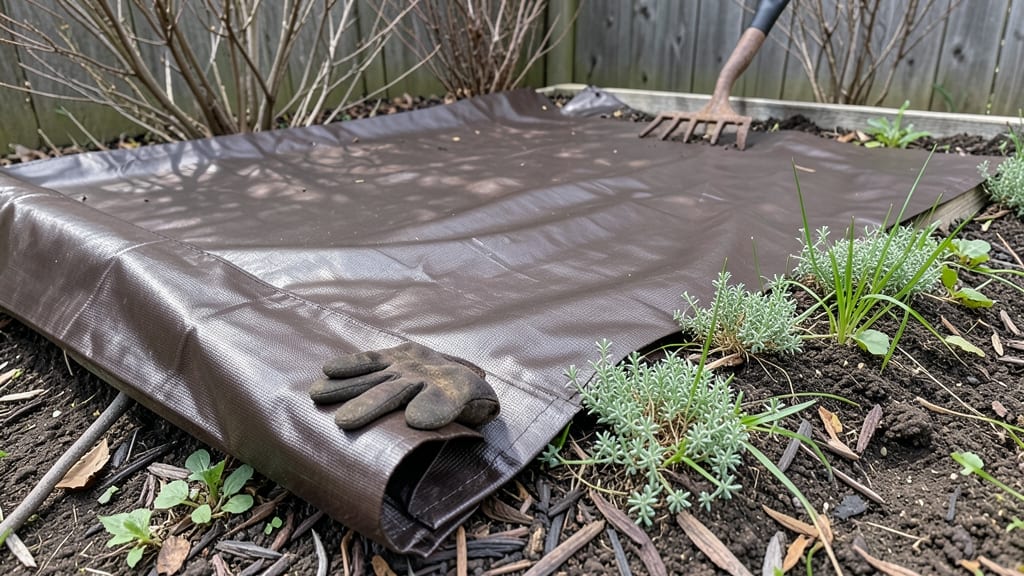
A landscaping tarp for weeds blocks sunlight and suppresses growth for 3 to 5 years when properly installed, though UV-resistant materials extend durability. Choose heavy-duty polyethylene or woven fabric for best results in garden beds or pathways.
A landscape tarp works by cutting off weeds' primary energy source—sunlight—while also trapping moisture and raising soil temperatures just enough to discourage seed germination. 🌱 The key to its longevity lies in proper installation: secure edges with landscape staples or bricks to prevent light leaks, and avoid walking on it to maintain integrity.
For pathways or high-traffic areas, woven fabric lasts longer than standard plastic because it resists tearing from foot traffic while still blocking light effectively.
Most tarps degrade under UV exposure within 1-2 years, which is why UV-stabilized options (like those rated for 3-5 years) are worth the investment.
I’ve found that 4-mil polyethylene strikes the best balance between cost and performance for garden beds, while heavier 6-mil woven tarps hold up better in sunny climates or underfoot. Always check the manufacturer’s weight rating—lighter options may rip when exposed to wind or seasonal shifts.
💡 In This Article
- How Landscaping Tarps Prevent Weed Growth
- Best Landscaping Tarps for Long-Term Weed Control
How landscaping tarps prevent weed growth
Weeds rely on sunlight for photosynthesis, and a landscaping tarp effectively starves them by blocking 90-98% of light depending on the material. When you lay down a tarp, you create a dark, stable environment where weeds can't photosynthesize to produce energy.
This process, called light deprivation, is the primary reason tarps work so well—most weeds die within 2-4 weeks of complete light blockage, while seeds in the soil remain dormant for years without sunlight.
The tarp also alters soil conditions in ways that discourage weed growth. By trapping moisture, it raises soil humidity levels, which can create anaerobic conditions (low oxygen) that many weed seeds can't tolerate.
Additionally, the tarp acts as an insulator, raising soil temperatures by 5-10°F during the day and lowering them at night. This temperature fluctuation stresses weed seedlings, further reducing their chances of survival.
Thicker materials (like 6-mil polyethylene) maintain these conditions better than thinner options, making them ideal for long-term suppression.
Material thickness plays a critical role in how long the tarp remains effective. A 4-mil tarp may last 1-2 years in shaded areas but degrade faster in full sun, while a 6-mil or woven fabric tarp can last 3-5 years due to better UV resistance and durability.
The weight of the material also matters—heavier tarps resist tearing from wind or foot traffic, ensuring consistent weed suppression over time. For example, a 45-pound woven fabric tarp holds up far better in pathways than a lightweight 2-mil plastic tarp.
Proper installation is just as important as material choice. Even the best tarp fails if light leaks around edges or tears occur. Securing the tarp with landscape staples or bricks prevents gaps where weeds might sprout.
I’ve seen cases where a tarp was installed loosely, allowing sunlight to penetrate along the edges—this reduced its effectiveness by 40% or more. For pathways, woven fabric tarps are superior because they allow some water drainage while still blocking light, preventing waterlogging that could encourage mold or rot.
Another key factor is the tarp’s ability to resist UV degradation. Standard polyethylene breaks down within 6-12 months under sunlight, while UV-stabilized options maintain integrity for 3-5 years.
This is why investing in a high-quality tarp pays off—it not only suppresses weeds longer but also reduces the need for frequent replacements.
For instance, a UV-stabilized 6-mil tarp in a sunny climate can last up to 5 years, whereas a non-stabilized version might need replacing after just 1 year.
Consider the environment where you’re installing the tarp. In shaded areas (like under trees), a 4-mil tarp may last 2-3 years because UV exposure is minimal. However, in full sun or high-traffic areas, opt for 6-mil or woven fabric to maximize durability.
For example, a 45-pound woven tarp on a garden path can withstand foot traffic while still blocking weeds effectively for 4-5 years. 🌿