
Shrubs
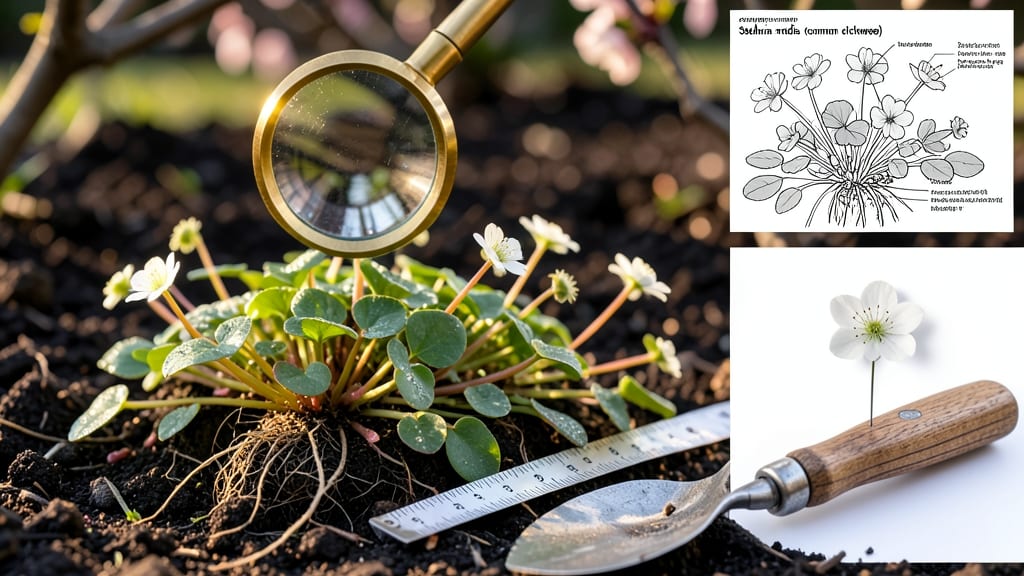
Identifying chickweed starts with noticing its delicate, oval leaves that look like tiny clover sprouts but grow in neat rows along the stem. 🌱 I used to mistake it for young lettuce or even clover until I learned the key difference: chickweed’s stems are smooth and hairless, while clover’s are fuzzy.
This little weed thrives in shady, moist spots—often where grass struggles—making it a sneaky garden invader that can smother other plants if left unchecked.
The real giveaway? Chickweed’s branching habit—it spreads in a low, sprawling mat with stems that root at the nodes, creating a dense carpet. Unlike clover, which forms three-leaf clusters, chickweed leaves grow in pairs along the stem, and its stems often develop small, star-shaped white flowers in spring.
Grab a magnifying glass if you’re unsure: the leaf edges are smooth, not toothed like young lettuce, and the plant has a slightly slimy texture when you rub it between your fingers.
Why does this matter? Chickweed isn’t all bad—it’s edible and even used in herbal remedies—but in gardens, it competes with your prized plants for nutrients and space. If you pull it too late, you’ll end up with more seeds scattered across your soil.
The best time to tackle it is early spring or fall, when the plants are young and haven’t spread too far. A quick hand-pulling session now saves hours of weeding later.
Pro tip: Compare it side by side with clover or creeping Charlie (Glechoma hederacea), which has square stems and square-shaped leaves. Chickweed’s oval leaves and smooth stems are dead giveaways. Once you spot these details, you’ll never confuse it again—and your garden will thank you for the early intervention.
📚 In This Guide
- What you need
- Instructions
- Tips and common mistakes
- Wrapping up and next steps
What you need
- ● Hand lens or magnifying glass – A 10x magnification lens helps examine tiny details like leaf shape and stem texture.
- ● Field guide or plant ID app – Apps like iNaturalist or PictureThis can cross-reference your findings.
- ○ Gloves (optional but recommended) – Protects hands from prickly stems or potential allergens.
- ● Small notebook & pen – Jot down observations like leaf arrangement, stem color, and habitat.
- ● Camera or smartphone – Capture close-ups of leaves, stems, and flowers for later comparison.
- ● Plastic bag or container – For safely collecting a sample (if needed) to verify ID later.
- ● Pruners or trowel – For digging up roots if you want a full specimen.
- ● UV flashlight (blacklight) – Chickweed often fluoresces under UV light, making it easier to spot at night.
- ● Ruler or measuring tape – Chickweed is tiny—measuring leaves (usually ½–1 inch long) helps confirm ID.
- ● Local foraging group or expert – A quick photo consult can save guesswork!
Step-by-Step guide to identifying chickweed in your garden
Here’s how to spot this common weed—its delicate features fool even experienced gardeners.
🌱 Step 1: Examine the Leaves for Distinctive Shape
Chickweed leaves grow in pairs along the stem, each shaped like a tiny oval with a pointed tip—almost like a miniature clover leaf but smoother. Hold a leaf up to natural light: you’ll notice a faint, almost translucent vein running down the center. This is your first clue. The leaves are usually ½ to 1 inch long and grow opposite each other, never alternating like true clover.
Run your thumb along the leaf’s edge—chickweed leaves feel slightly fuzzy to the touch, almost like a soft velvet. This texture is a dead giveaway, especially when compared to the smoother leaves of clover or speedwell. If you’re unsure, pluck a few leaves and compare them side by side.
🌿 Step 2: Check the Stems for Tiny White Hair
The stems are the next key identifier. Chickweed stems are slender, 6 to 12 inches long, and covered in fine white hairs that give them a silvery sheen. Run your fingers along the stem—you’ll feel a slight roughness, unlike the smooth stems of most clovers. These hairs aren’t just for show; they help the plant retain moisture in dry conditions.
Look closely at where the leaves attach to the stem. Chickweed’s stems often branch out at sharp angles, creating a zigzag pattern. This is another way to tell it apart from clover, which has a more uniform, rounded growth habit. If you see these hairy, branching stems, you’ve likely found chickweed.
☀️ Step 3: Inspect the Flowers for Star-Shaped Blooms
When chickweed flowers, it produces tiny, five-petaled white blooms that resemble tiny stars. These flowers grow in clusters at the tips of the stems and are usually ¼ inch wide. They bloom in late spring and early summer, often when other weeds are still dormant. If you spot these delicate flowers, you can confirm your identification.
Here’s the thing—chickweed flowers don’t last long. They open in the morning and close by afternoon, which is why you might miss them if you’re not checking regularly. If you see any remnants of these star-shaped blooms or their tiny seed pods, that’s another sign you’re dealing with chickweed.
💧 Step 4: Look at the Roots for a Weak, Fibrous Structure
Gently dig up a small section of the plant to examine the roots. Chickweed has a shallow, fibrous root system that spreads horizontally rather than growing deep. The roots are thin and brittle, breaking easily when pulled. This is a key difference from clover, which has a more robust root structure.
If you’re trying to remove chickweed, this weak root system is both a blessing and a curse. It means the plant won’t survive if you pull it out completely, but it also means it can regrow quickly from even small pieces left behind. Always pull chickweed carefully and check the soil for any remaining root fragments.
✂️ Step 5: Compare with Common Look-Alikes
Chickweed often mimics clover, speedwell, or even young lettuce plants. To confirm your identification, compare the plant to known chickweed images or a field guide. Pay attention to the leaf arrangement, stem texture, and overall growth habit. Chickweed tends to grow in dense mats, while clover forms more distinct clumps.
If you’re still unsure, try the "squeeze test." Chickweed stems and leaves release a slightly sticky, milky sap when crushed. This sap is another unique trait that sets it apart from other weeds. If you see this sap, you can be confident you’ve identified chickweed correctly.
Tips & tricks for spotting chickweed like a pro
Even seasoned gardeners get fooled by chickweed's deceptive charm—here's how to avoid the mix-ups.
Leaf Texture Test: In Step 1, when examining those ½ to 1 inch leaves, don't just look—touch! The fuzzy texture is your secret weapon. I learned this the hard way after pulling what I thought was clover, only to find chickweed creeping back. Run your thumb along the edge: if it feels like soft velvet, you've got chickweed. This texture difference is more reliable than shape alone, especially in dim light.
Stem Hair Inspection: Step 2's silvery stems are a game-changer for identification. The fine white hairs aren't just decorative—they're moisture-retaining superheroes. When checking for these hairs, do it on a dry day. Damp stems lose their silvery sheen, making them harder to spot. I've found that morning inspections work best when dew is still present but hasn't turned stems slick.
Timing for Flowers: The ¼ inch star-shaped blooms in Step 3 are fleeting—literally. They only open in morning sunlight and close by afternoon. My pro tip: Set a reminder for early morning inspections during late spring to early summer. If you spot these delicate flowers, you've got your confirmation. The closed buds look like tiny white buttons, which can also help with identification if you're checking later in the day.
Root Removal Strategy: When dealing with the shallow, fibrous roots in Step 4, think of them like dandelion roots—easy to pull but persistent. I've found that using a small hand trowel to loosen the soil first makes removal much easier. The key is to get the entire root system—even small pieces can regrow. For stubborn patches, I recommend checking the soil for any remaining root fragments with a gloved hand after pulling.
Pro Tips for Identify Chickweed
- Even seasoned gardeners get fooled by chickweed's deceptive charm—here's how to avoid the mix-ups.
- Leaf Texture Test: In Step 1, when examining those ½ to 1 inch leaves, don't just look—touch!
- Stem Hair Inspection: Step 2's silvery stems are a game-changer for identification.
Frequently asked questions
Got questions about spotting chickweed? You’re not alone! Here are some of the most common queries—and their answers—to help you navigate this tricky little plant with confidence.
Is chickweed poisonous or safe to eat?
Chickweed is completely edible and safe for humans (and even pets in moderation). It’s packed with vitamins A, C, and K, plus omega-3s. Just avoid consuming it if you’re allergic to plants in the Stellaria family—or if it’s been sprayed with pesticides. When in doubt, harvest from organic soil or pesticide-free areas!
How can I tell chickweed apart from clover or other weeds?
Chickweed has smooth, oval leaves with a single vein (unlike clover’s trifoliate leaves) and tiny white flowers on long stems. Press a leaf—if it feels succulent and slightly sticky, it’s likely chickweed. Pro tip: Clover leaves have three leaflets, while chickweed’s are opposite pairs along the stem.
When is the best time of year to find chickweed?
Chickweed thrives in cool weather and is most abundant in early spring and fall. It often dies back in summer heat but may resurface after rain. Look for it in shady, moist areas—like garden beds, lawns, or under trees—where other plants struggle. Morning harvests work best since dew can make identification easier!
What should I do if I accidentally eat a plant I thought was chickweed but might be something else?
If you’re unsure about a plant, don’t eat it—especially if it has milky sap, thorns, or a bitter taste. Mild stomach upset can happen with misidentified plants, but serious reactions are rare. For peace of mind, double-check with a field guide or local foraging group before consuming. When in doubt, skip it!
Can I use chickweed to control weeds in my garden?
Yes! Chickweed is a natural ground cover that suppresses weeds by outcompeting them for sunlight and nutrients. Simply mow or mulch it to keep it in check. Avoid pulling it by hand—its shallow roots can spread easily. For best results, let it grow in shady or problem areas where you don’t want other weeds to take over.
Wrapping up and next steps
Now that you’ve mastered the art of spotting chickweed—from its tiny, oval leaves to its delicate stems and starry flowers—you’re well on your way to becoming a foraging pro! 🌱 Remember, when in doubt, always double-check with a field guide or expert to avoid mix-ups with lookalikes.
Ready to put your new skills to use?
Your next step? Harvest responsibly—gather only what you need, leave some for wildlife, and enjoy chickweed in salads, teas, or even as a soothing skin remedy. Happy foraging! 🌿