
How To
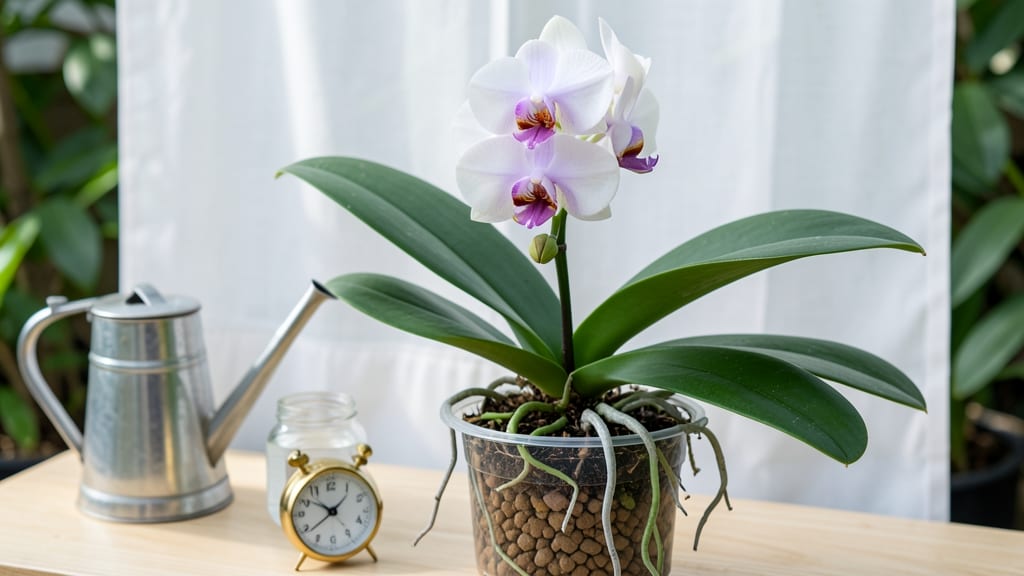
Watering orchids in clay pebbles requires a precise schedule—typically every 7 to 10 days—to keep their roots moist without drowning them in stagnant water.
If you’ve ever watched your orchid’s roots turn mushy or its leaves wrinkle from thirst, you know how quickly things can go wrong. The key lies in understanding how clay pebbles drain differently than soil, and why a quick dunk isn’t always the answer.
Humidity, temperature, and pot size all play a role in how often you should water. A small pot in a dry room might need a drink sooner than a larger container in a steamy bathroom.
Below, I’ll break down the exact signs to watch for and how to adjust your routine for year-round success.
You’ll learn how to check for the perfect moisture balance, spot early warning signs of over- or under-watering, and even tweak your schedule for seasonal changes. No more guesswork—just thriving orchids with roots that stay happy and healthy.
Optimal watering frequency for orchids in clay pebbles by season
Orchids grown in clay pebbles thrive on a precise watering schedule that differs dramatically between seasons. Unlike traditional soil, clay pebbles offer excellent drainage but require careful monitoring to avoid root dehydration or rot.
The key lies in understanding how temperature, humidity, and light exposure shift with each season and adjusting accordingly. For example, a Phalaenopsis orchid in summer may need watering every 5-7 days, while the same plant in winter could survive on biweekly watering.
Clay pebbles create a hydroponic-like environment where roots absorb moisture quickly but also dry out faster than in bark mix. This makes root color your best indicator: healthy roots should be silver-green when dry and green when hydrated.
If roots stay dark green or mushy, you're overwatering. Conversely, wrinkled leaves signal underwatering. The pot's weight also helps—lift it when dry; it should feel light before watering.
Seasonal changes dramatically impact your orchid's needs. During spring and summer, higher evaporation rates and increased transpiration mean more frequent watering. In fall and winter, cooler temperatures slow moisture loss, reducing the need for water.
Even indoor conditions vary: a sunny windowsill in winter can dry clay pebbles faster than a shady corner. Always pair watering frequency with environmental factors for optimal results.
Here’s how to adjust your watering routine based on the season, including humidity levels and temperature ranges that influence moisture needs:
In spring, orchids emerge from dormancy and need gradual rehydration. Start by watering every 5–7 days and monitor root color closely. If your home has low humidity (below 40%), consider using a humidifier or placing the pot on a pebble tray.
Spring is also the time to fertilize lightly (every 4–6 weeks) to encourage new growth, but avoid fertilizing if roots show signs of stress.
During summer, orchids in clay pebbles may need watering as often as every 4–5 days, especially in hot, dry climates. Always water in the morning to allow excess moisture to evaporate during the day. If your orchid’s leaves feel soft or
5 Signs your orchid needs water (or needs to dry out)
Orchids in clay pebbles rely on subtle cues to signal their moisture needs. Unlike traditional soil, this airy medium drains quickly, so roots can’t hold excess water.
Misreading these signs often leads to root rot or dehydration. I’ve learned the hard way—overwatering my Phalaenopsis turned its roots mushy in just 48 hours!
Start by examining the roots. Healthy orchid roots should be firm and silvery-green when moist. If they look shriveled or grayish-green, your orchid’s thirsty. But watch out—dark brown roots mean rot, not hydration. This is where many gardeners go wrong!
Pot weight is your next clue. Lift your orchid’s container—if it feels light as a feather, it’s time to water. Clay pebbles dry out faster than bark mix, so don’t wait until the pot feels bone-dry. Aim for 70% dryness between waterings to mimic tropical forest conditions.
🌱 Numbered Highlights: 5 Signs Your Orchid Needs Water (or Needs to Dry Out)
- 1. Roots look wrinkled or grayish-green → Needs water immediately. Soak the pot for 10-15 minutes to revive them.
- 2. Pot feels lighter than expected → Clay pebbles are dry. Water until liquid drains from the bottom for 2-3 minutes.
- 3. Leaves lose turgidity (feel soft) → Underwatering. Plump leaves mean optimal hydration; droopy ones need a drink.
- 4. Roots turn dark brown/mushy → Overwatering. Remove affected roots and repot in fresh clay pebbles to prevent rot.
- 5. Growth slows or stops → Moisture imbalance. Adjust watering based on season—spring/summer needs more, winter needs less.
Don’t ignore leaf turgidity. Press a leaf gently—if it springs back, your orchid’s hydrated. But if it stays dented, it’s underwatered. Pro tip: Use a wooden skewer to check moisture. Insert it into the pebbles; if it comes out clean, water your orchid.
Watch for growth patterns too. New pseudobulbs or flower spikes signal your orchid’s happy with its care. But if growth stalls or leaves yellow, re-evaluate your watering routine. My Dendrobium bloomed twice as much after I cut watering in half during winter!
Remember, clay pebbles dry faster than other mixes. In low humidity (below 40%), water every 5-7 days. In humid conditions (above 60%), stretch it to 10-14 days. Always use room-temperature water to avoid shocking the roots.