
How To
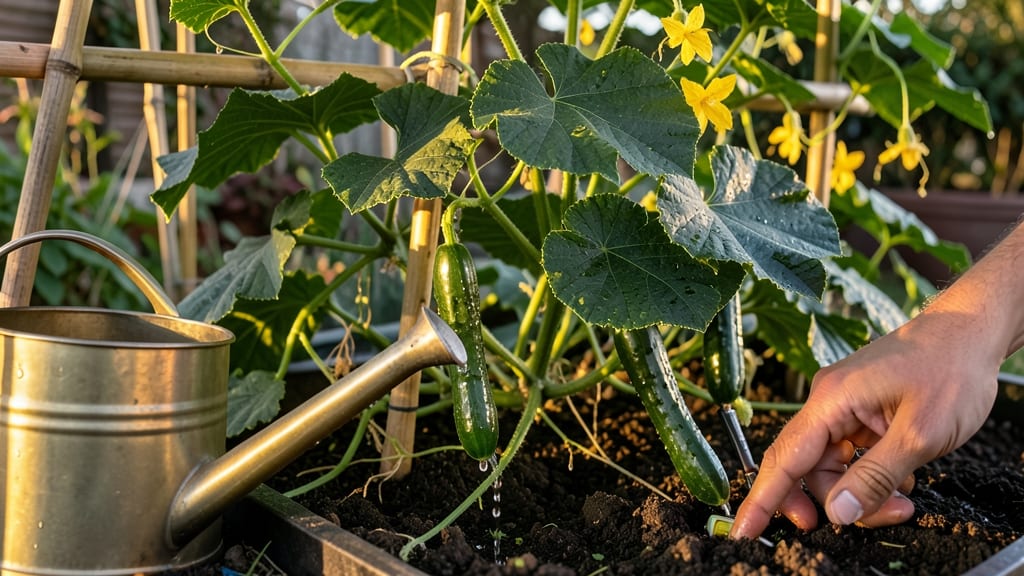
Watering cucumbers the right way keeps those 🥒 vines thriving and your harvest bountiful—here’s the exact schedule to follow based on soil, stage, and climate.
Struggling to keep your cucumber plants happy? Overwatering or underwatering can turn your thriving vines into a sad, wilted mess—and the key to consistent moisture is simpler than you think.
Most gardeners water cucumbers daily, but that’s a guess, not a rule. The real secret lies in a soil dry test that tells you exactly when to water, whether you’re growing them in-ground or in containers.
Below, I break down the stage-by-stage watering plan, how to spot overwatering vs. underwatering, and why morning watering saves your crop from disease.
The perfect cucumber watering schedule by growth stage (with soil test tricks)
Cucumbers are thirsty plants that need consistent moisture to thrive, but getting the balance right can feel like walking a tightrope. Too little water and your vines wilt; too much and you risk root rot or blossom-end rot.
The key lies in understanding their stage-specific needs and using simple soil tests to guide your watering routine. Whether you're growing in containers or in-ground, these tricks will help you keep your cucumbers hydrated without drowning them.
I've learned through years of gardening that cucumbers have three critical growth stages—each with unique watering demands. Seedlings need gentle hydration, flowering plants demand steady moisture, and fruiting vines require deeper, more frequent watering.
Climate plays a huge role too: hot, dry summers mean more frequent watering, while cooler spring days allow for slightly longer intervals. Let's break down the perfect schedule and how to test your soil moisture like a pro.
My go-to method for testing soil moisture is the simple finger test. Stick your index finger about 1-2 inches into the soil near the plant's base. If it feels dry at that depth, it's time to water.
For seedlings, check the top inch daily—you'll see how quickly their soil dries out. As plants mature, you'll need to dig deeper, especially during the fruiting stage, when cucumbers demand the most water to support heavy harvests.
Pro tip: Use a soil moisture meter for precise readings if you're growing in containers or dealing with sandy soil.
Climate makes all the difference in your watering routine. In hot, dry summers, I water my cucumbers every morning before 10 AM to prevent evaporation and fungal diseases. During
5 Signs your cucumbers are overwatered or underwatered (and how to fix it)
Cucumbers are thirsty plants, but too much or too little water can spell disaster. I’ve seen wilting vines from drought and mushy roots from overwatering—both are heartbreaking.
The key is spotting the signs early and acting fast. Let’s break down the 5 red flags and how to fix them before your crop suffers.
First, check your soil moisture—stick your finger about 1 inch deep. If it’s dry, underwatering is likely. If it’s soggy, you’re overdoing it. Cucumbers need consistent moisture, not puddles or bone-dry soil. Let’s dive into the visual clues that’ll save your harvest.
💧 How Often to Water Cucumbers: The Fix-It Guide
- 🌱 Seedlings: Water every 1-2 days, keeping soil moist but not soggy. Use a spray bottle to avoid disturbing roots.
- 🌿 Flowering Stage: Increase to daily watering if soil feels dry. Focus on deep watering to encourage root growth.
- 🍆 Fruiting Stage: Water every other day in heatwaves, or daily if soil dries quickly. Morning watering prevents fungal diseases.
- 🌡️ Hot/Dry Climates: Water early morning to reduce evaporation. Use mulch to retain moisture for up to 3 extra days.
- 🌧️ Rainy Seasons: Reduce watering to every 3-4 days. Ensure pots have drainage holes to prevent root rot.
Yellowing leaves are a common sign of both overwatering and underwatering. For underwatered cucumbers, leaves curl inward and feel crispy. If the lower leaves yellow first, your plant is thirsty. Water deeply until it drains from the bottom of the pot or soil.
On the flip side, overwatered cucumbers show yellowing leaves too—but they’ll feel mushy and droop even when watered. Check for blossom-end rot (black, sunken spots on fruits), a classic overwatering symptom. Cut back on watering and improve drainage by adding perlite or sand to the soil.
Wilting is another critical warning sign. If your cucumber plant wilts in the morning, it’s likely underwatered. If it wilts even after watering, roots may be rotting from overwatering. Trim any blackened roots and repot in fresh, well-draining soil.
Adjust your watering routine based on the season. In summer heat, cucumbers may need watering twice daily, while spring or fall might only require every 2-3 days. Always water at the base of the plant, not the leaves, to prevent diseases like powdery mildew.
With these fixes, your cucumbers will bounce back in 7-10 days. Keep an eye on your plants, and don’t hesitate to adjust your watering—your harvest depends on it! 🥒